






AI CONSULTING SERVICES

Prioritize the Right AI Project Before You Invest

Tech.us reviews your workflows, data, systems, and risk, then gives you a ranked list of AI use cases and a plan for building them in a sensible order.

Most AI plans are not wrong about what to build. They are wrong about what to build first, and that choice sets the cost of everything after it.

0 +
0 +
0 +

Trusted by organizations that depend on technology

Where AI Plans Come Apart

A Good Use Case in the Wrong Order Still Fails

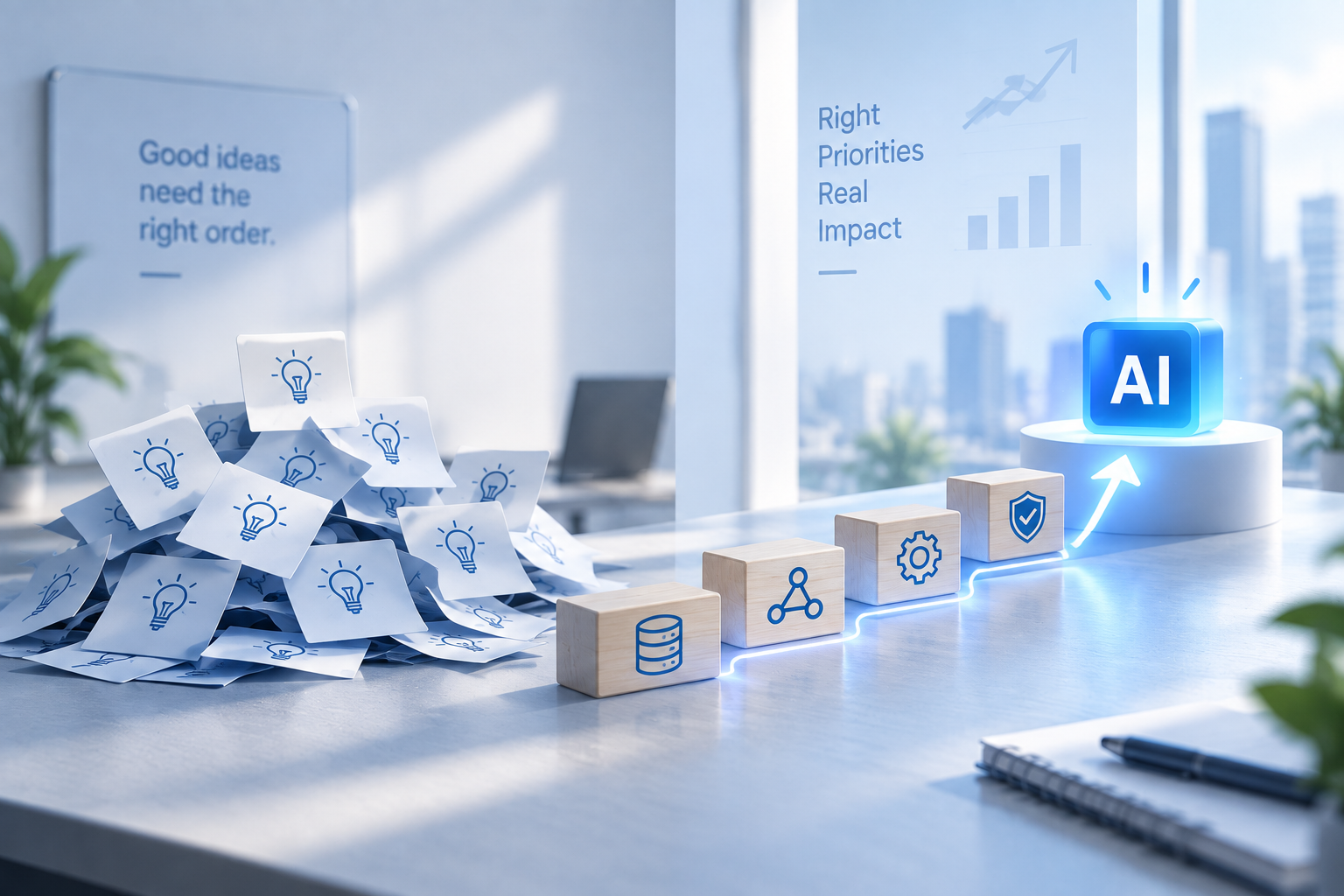
Producing a list of AI ideas is not difficult. Almost every organization already has one, usually longer than it needs to be.

The hard part is deciding what comes first. The first project decides which data gets cleaned, which systems get connected, and which controls get built. Choose well and the second project costs a fraction of the first. Choose badly and you pay for the same groundwork twice, or you fund a system that cannot reach the data it needs.

That decision is worth making on evidence rather than on whichever idea had the most enthusiastic sponsor in the room.

ai-plans-priority-order

From AI Ideas to a Plan

AI Consulting Decides What Gets Built and What Gets Left Alone

ai-ideas-to-plan

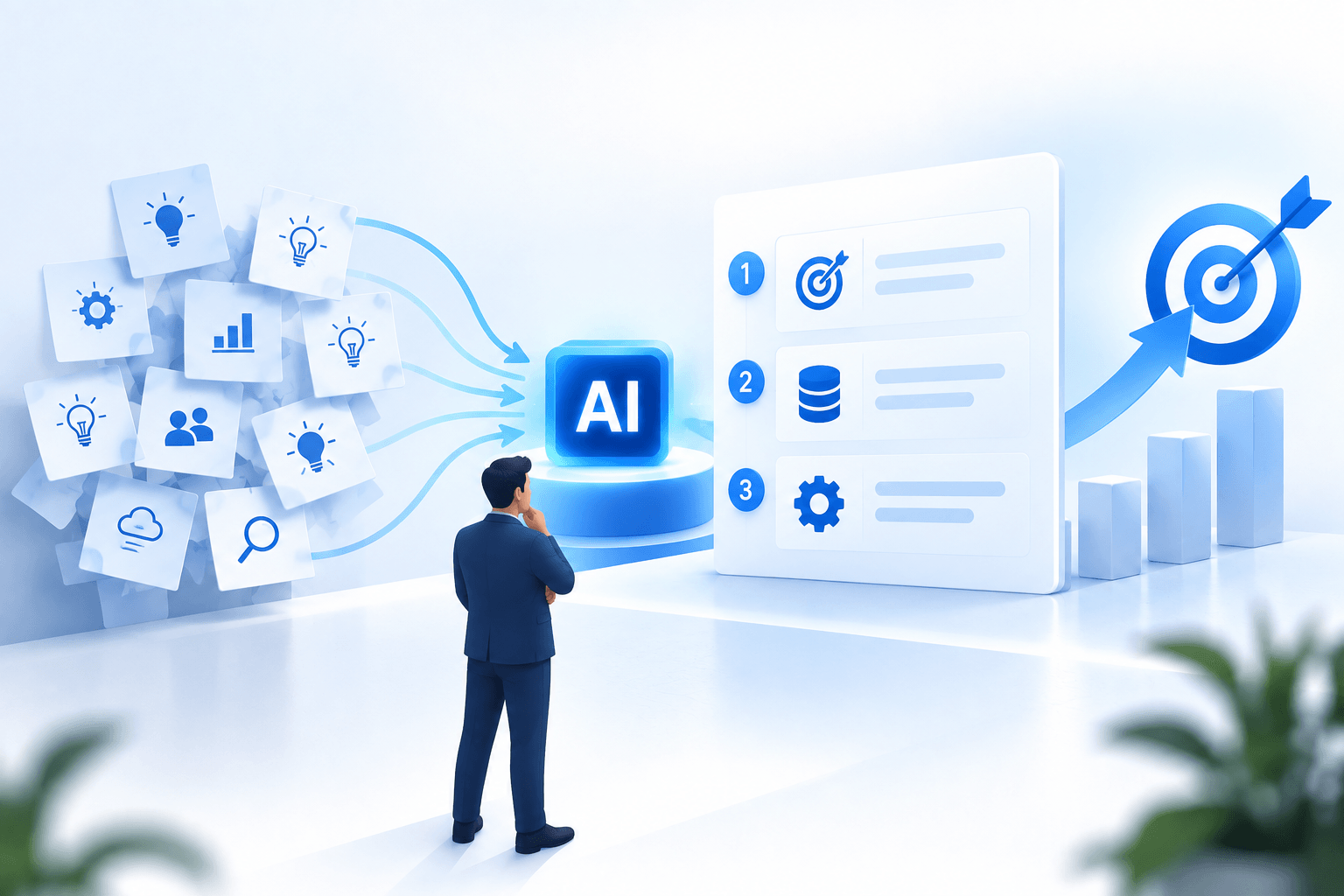
AI consulting is advisory work that happens before development. It establishes which use cases justify investment, what has to be in place before they can be built, in what order they should run, and what each one is likely to cost against the value it returns.

A useful AI consulting engagement should leave you able to answer:

  • Which processes in our business would actually improve with AI
  • Whether our data and systems can support those use cases today
  • Which one should be built first, and what depends on it
  • What an incorrect output would cost us in each workflow
  • Whether the data can go to an outside model provider or has to stay with us
  • What the build costs, what the running cost looks like at real volume, and what comes back

Where an engagement cannot answer those questions, it has produced a point of view rather than a plan.

Core Services

The Consulting Work That Precedes a Build Decision

These run as one engagement or separately. Organizations that already know their use case usually start at prioritization. Those asked for a full AI plan generally need all of it.

AI Readiness Assessment

We rate whether your organization can support the AI it wants to build today, and name what is blocking each use case.

  • Data condition and structure review
  • Systems and integration feasibility
  • Ownership and accountability mapping
Use-Case Discovery and Prioritization

We surface candidates from how your processes actually run, then score each one on the same measures.

  • Function-by-function use-case discovery
  • Feasibility screening against real data
  • Published scoring your team can challenge

AI Roadmap Development

We arrange the surviving use cases by dependency, so shared groundwork lands ahead of the projects relying on it. 

  • Dependency mapping across use cases
  • Shared foundation identification
  • Alignment to your budget cycle

Cost and ROI Modeling

We price the build and the running cost per use case against the value expected, with every assumption written down. 

  • Inference and infrastructure cost at real volume
  • Confidence ranges on expected change
  • Adjustable assumptions for your finance team

Generative and Agentic AI Advisory

We advise on where language models, retrieval, and autonomous agents fit, and where a simpler system is the better answer. 

  • Model selection and build-versus-adapt guidance
  • Single agent against multi-agent structure
  • Human approval points in autonomous workflows

Data Readiness Advisory

Where data is the blocker, we define and price the remediation separately, so it appears on the roadmap as real work. 

  • Source system and duplication review
  • Entity resolution requirements
  • Remediation scoped and priced as its own phase

AI Governance and Risk Advisory

We define what your organization needs to record about its AI systems and who is accountable for each one. 

  • System inventory and ownership model
  • Risk tiering by consequence
  • Human review placement in critical workflows

AI Proof of Concept Design

We define what a contained build has to prove, so the result is a measured outcome rather than a demonstration. 

  • Success criteria agreed in advance
  • Evaluation set and test data definition
  • What production would add beyond the POC

WHY AI PROJECTS STALL

Six Reasons a Sensible Idea Never Reaches Production

We check for these before ranking anything, because each one changes what a use case costs or whether it can be built at all.

  1. Nobody owns the decision it improves

    The benefit is real, but no single person is accountable for the process. Without an owner there is nobody to define success or accept the output, and the project stalls after the demo.

  2. The same record appears under three names

    The information is available, but the same customer or part is recorded differently in each system. No model answers reliably on that foundation, so the data work becomes its own priced project first.

  3. There is no usable way into the system

    Reading from and writing to an existing application is often the largest part of the build. Where no interface exists, most of the work is integration engineering, and the estimate has to say that plainly.

  4. Nobody has priced a wrong answer

    How much checking, review, and approval a system needs depends entirely on what an error costs. Skip that question and the control layer arrives late, which is when it becomes expensive and unpopular.

  5. The data is not allowed to leave

    Some workloads cannot be sent to an outside model provider. That single restriction shapes the whole architecture, so it has to be settled while the plan is being written.

  6. The cost was only checked at pilot size

    A system that costs little to run for ten users can cost a great deal at ten thousand. Ongoing cost decides whether a use case is worth building, so we price it at real volume.

AI Readiness

What We Rate in a Readiness Assessment

A readiness assessment answers one question: can your organization support the AI it wants to build today, and if not, what is missing. We rate each area and name the specific gap.

Data

Where the required information lives, what condition it is in, whether the same entity is recorded consistently across systems, and how much history is available.

Systems and integration

Which applications the AI would need to read from or write to, whether they expose usable interfaces, and what integration work that implies.

Access and permissions

How users are identified today and what each role is allowed to see, since an AI system should not widen anyone's access beyond their existing permissions.

Ownership

Who would be accountable for a system once it is live, who signs off on its output, and who handles it when something looks wrong.

Governance

What records your organization needs to keep about AI decisions, what your industry requires, and what evidence your teams have to be able to produce.

Cost and infrastructure

What you run today, what an AI workload would add, and what the ongoing cost looks like at realistic volume.

AI USE CASE EVALUATION

What We Score Each Use Case On

Each use case is scored from 1 to 5 on the same five measures. We show the scores rather than handing over a ranked list, because the reasoning is what your team needs in order to challenge us.

  1. Business value

    What decision or process improves, who owns it, and what that person does differently once the system exists. A benefit nobody can describe in those terms cannot be measured later either.

  2. Data readiness

    Whether the information exists in usable form and what preparing it would take. A low score here does not disqualify a use case. It means the data work becomes the first phase.

  3. Integration effort

    What the system has to read and change, and whether those applications can be connected at all. This is usually the largest single line in a build estimate, so it carries real weight.

  4. Cost of a wrong answer

    What an incorrect output costs in this specific workflow and who absorbs it. This sets how much checking and human review the system needs, which affects both the budget and adoption.

  5. Where the data is allowed to go

    Whether the workload can use an outside model provider or has to stay inside your own environment. This constrains the architecture before design begins, which moves the whole cost profile.

WHAT YOU GET

Groundwork Before the Projects That Depend on It

Roadmaps go wrong when they list projects in order of appeal. Ours orders them by dependency, which sometimes puts something unexciting first.

Phase 1

Prove and Prepare

The highest-scoring use case, built as a contained version against criteria agreed beforehand, plus whichever groundwork the most later use cases rely on.

Phase 2

Production and Reuse

That use case moves into production with the integration, permissions, and monitoring it now needs. Use cases sharing its foundations follow, and cost less.

Phase 3

Extension

Use cases blocked at assessment and now unblocked, plus the ideas that only make sense once earlier systems are running and producing data.

Every item on the roadmap carries the kind of system it calls for, where it can be deployed, what has to exist before it starts, and who owns it on your side.

HOW WE MODEL RETURN

A Number Is Only as Good as What Sits Under It

An ROI figure with hidden assumptions is a decoration. We write the assumptions down and leave them adjustable, so your finance team can substitute their own view and watch the payback move.

The build cost

Engineering effort by phase, data preparation, integration work, the checking and review layer the error cost calls for, and the controls the deployment restriction requires.

The running cost

Inference cost at your expected volume, hosting and infrastructure, monitoring and maintenance, and the human review that stays in the workflow permanently.

The value

The process measure that changes, where it stands today, how much of a change is expected, and how confident we are in that range. Where a benefit is real but cannot be measured from what we can see, it is recorded as a stated benefit outside the calculated case.

What we leave out

Industry benchmark percentages applied to your business, and value credited to effects nobody in your organization has agreed to track.

HOW WE WORK

Evidence First, Then a Plan You Can Fund

Every step produces something your team can see and question, so nothing arrives as a surprise at handover.

Agree what you are trying to change

We establish the outcome you want and who owns each affected process. Where stakeholders name different goals, that disagreement is itself a finding.

Assess readiness

We rate the six readiness areas against your actual environment rather than sending a questionnaire and taking the answers at face value.

Surface the use cases

We work through the functions in scope with the people doing the work, so the list comes from process reality.

Score and test the premise

Each use case gets scored, and for the strongest we test the technical assumption on your own material, where optimism usually breaks.

Sequence and price

We order the surviving use cases by dependency, price each one, and check the sequence against your budget cycle and delivery capacity.

Hand over and support the decision

We present the findings and walk your team through the scoring, then stay available while finance and security raise the questions that decide it.

HOW TO WORK WITH US

Three Ways an Engagement Can Start

The right starting point depends on how much is already settled internally. Smaller engagements often expand once the first findings hold.

Discovery and Feasibility Assessment

A structured assessment to identify use cases with meaningful business value, confirm technical viability, and define a practical order of work before development begins.

Advisory Alongside Delivery

Consulting that continues while a build runs, covering architecture decisions, scope changes, and the questions that surface once a system meets real data.

Dedicated AI Advisory Team

AI engineers and data specialists working as an extension of your internal team, for organizations with ongoing requirements that should not each start as a separate engagement.

WHY TECH.US

AI Consulting Grounded in Delivery Experience

We are an engineering firm that consults, which changes what our estimates are based on and what we are willing to say.

We Estimate From Delivery Experience

Our figures come from having done the work. Across more than 1,500 projects we have seen how long integration takes and where data preparation expands.

We Test the Premise on Your Own Material

Before a use case reaches the top of the list, we check the assumption behind it against your real data. Surviving that counts for more than a capability list.

A Finding of No Is a Real Outcome

Where a use case does not justify a build, or where groundwork has to come first, we write that. Cheaper to hear now than during implementation.

We Recommend Controls We Maintain Ourselves

Our guardrails and governance frameworks are built in-house rather than held purely as third-party dependencies. When a plan assumes a specific control, we can confirm it is achievable.

Deployment Restrictions Shape the Plan Early

Where information has to stay inside your environment, private deployment is an input to the ranking. It changes which use cases score well and what they cost.

AI-Assisted Code Is Reviewed by an Engineer

Where an assessment produces prototype code, anything written with AI assistance goes through human review before reaching a client system. Authorship speed does not move accountability.

why-choose-techus

Selected Work

Plans That Became Systems

See how assessment findings turned into production builds, and how the estimate compared with the result.

View All Case Studies

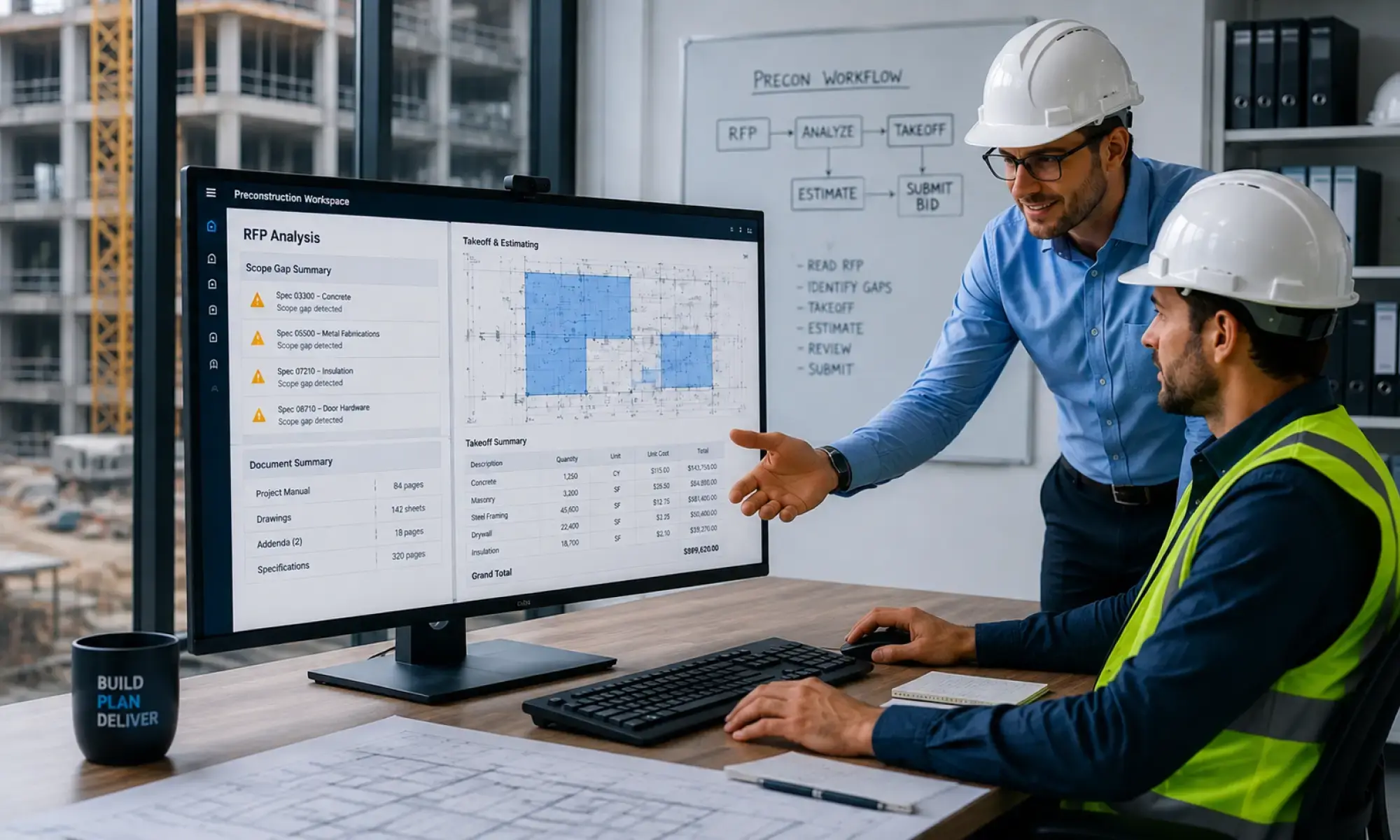
AI-Powered Takeoffs From Complex Construction Drawings

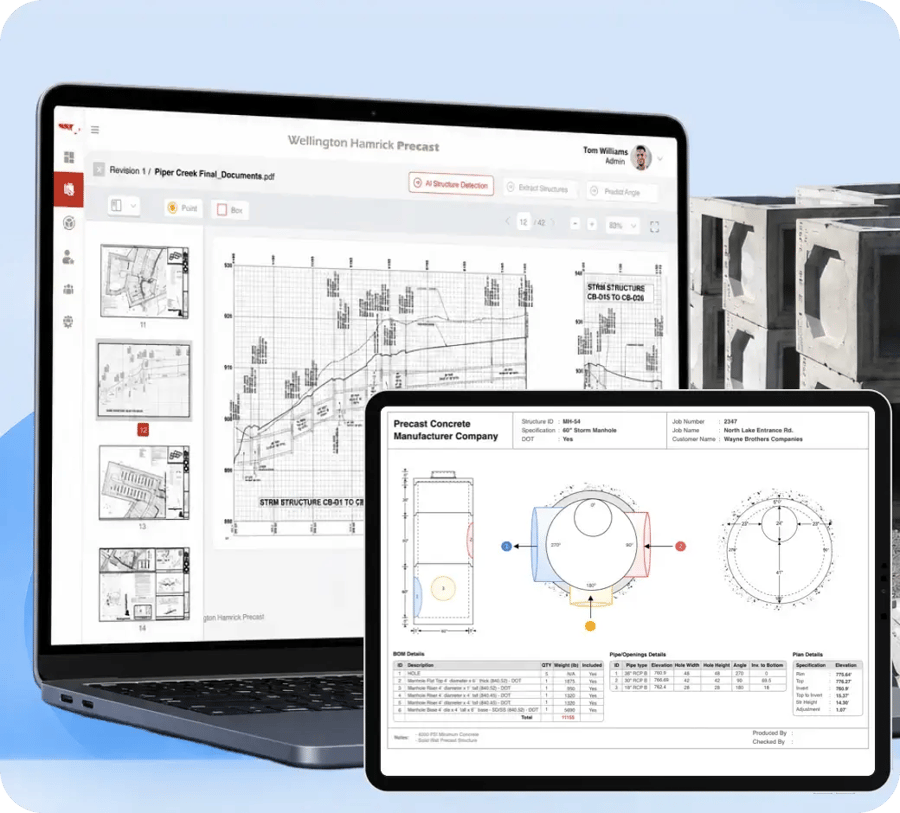
A precast concrete manufacturer partnered with Tech.us to bring AI into the estimating workflow. The system uses OCR, computer vision, and generative AI to identify, extract, and visualize structures, pipes, and components from complex construction drawings.

Read the Case Study
Wellington Hamrick Precast AI takeoff automation tool shown on laptop and tablet

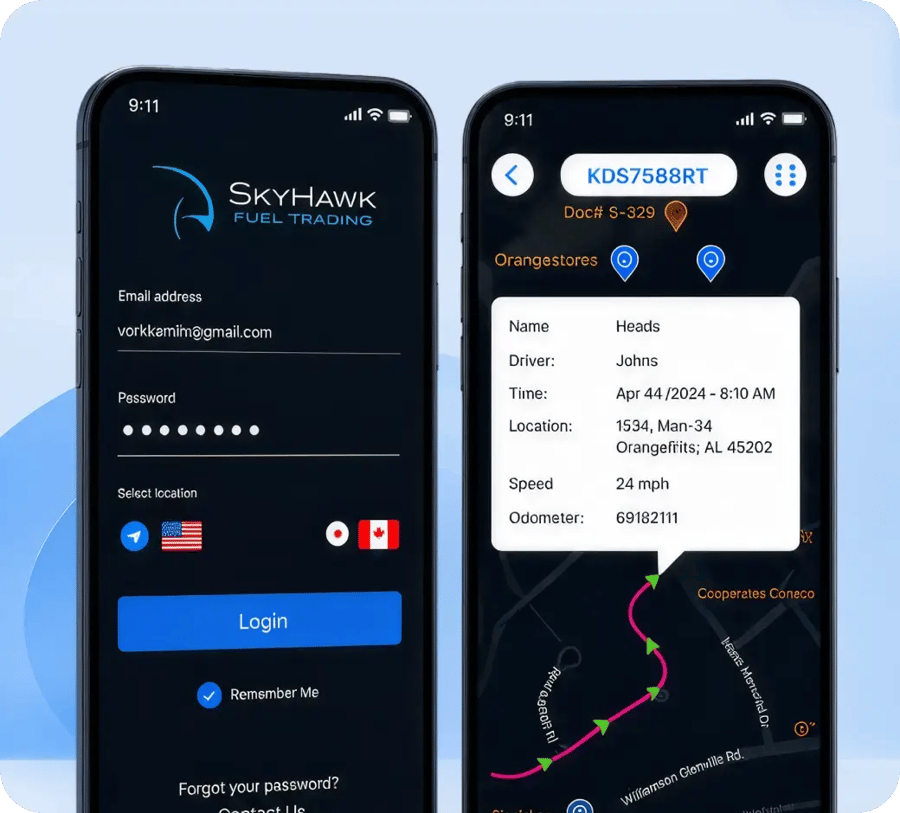
Mobile Fleet Visibility Built for Field Operations

SkyHawk by TELUS needed a streamlined mobile experience for its Connect Anywhere platform. Tech.us built the core experience around real-time asset tracking, fleet activity, secure configuration, and map-based operational visibility.

Read the Case Study
SkyHawk by TELUS mobile app screens showing fleet tracking and login

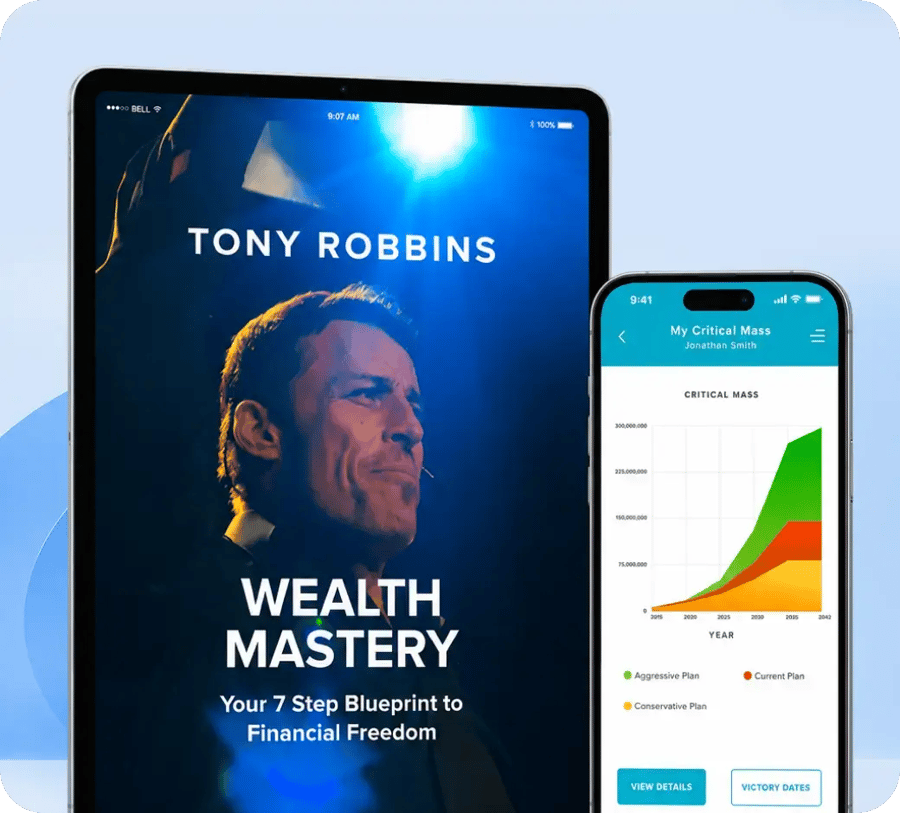
Personalized Financial Technology Built to Scale

Tech.us helped bring Wealth Mastery to life as a digital platform that puts personalized financial planning tools directly in users' hands while supporting a large and growing audience.

Read the Case Study
Tony Robbins Wealth Mastery app shown on tablet and phone

INDUSTRY EXPERIENCE

The Right AI Starting Point Depends on Your Industry

AI priorities change from one sector to another. We evaluate each use case against the way your industry operates and the constraints it faces.

Explore All Industries

RECOGNITION

Recognized for AI and Technology Delivery

Tech.us is recognized by leading industry platforms for its work in artificial intelligence and custom software development.

TechReviewer Award
Mobile App Daily — Top Web Development Company
DesignRush — Top AI Development Company
Mobile App Daily — Top AI Company
Clutch — Top App Development Company

TECH STACK

Technology We Use

We work across commercial and open-weight models, agent frameworks, retrieval systems, document and vision AI, speech tools, and the infrastructure needed to run and monitor them in production.

Our recommendations reflect the use case, performance on your data, cost at scale, data-processing requirements, and what your team can maintain.

Agentic AI & Orchestration

Agentic AI Agentic AI
AI Agents AI Agents
Multi-Agent Systems Multi-Agent Systems
Agentic Workflow Automation Agentic Workflow Automation
Model Context Protocol (MCP) Model Context Protocol (MCP)
Agent-to-Agent Protocol (A2A) Agent-to-Agent Protocol (A2A)
Agent Memory and Reasoning Agent Memory and Reasoning

FAQ

Questions Buyers Ask About AI Consulting

AI consulting is advisory work that happens before development. It establishes which use cases justify investment, whether your data and systems can support them, in what order to build them, and what each costs against the value returned. 

Consulting decides what to build and in what order. Development builds it. The useful question is whether the team writing the plan could deliver it, since people who would have to build something price it differently. 

Cost depends on how many functions are in scope, the condition of your data, and whether the engagement includes technical validation on your own material. A single-function assessment sits at the lower end, a cross-functional plan well above it. We define scope, outputs, and commercial structure before work begins. 

It depends on scope and on how quickly system access can be arranged, which is usually the longest lead time. A single-function assessment is considerably shorter than a plan covering several departments. We set the schedule after the scoping conversation. 

A few questions separate the options. Can they deliver what they recommend, or would the plan be priced by someone else. Will they show their scoring, or only the conclusion. Do they test assumptions against your actual data. Will they say when a use case does not justify investment. Do their figures include running cost at real volume. 

Find Out Which AI Projects Are Worth Funding

Bring us the ideas you are weighing. We will assess what is worth building first, what it depends on, and what it costs.

Schedule an AI Consultation

Readiness rating · Scored use cases · Ordered roadmap · Cost and value model