
Overview
Why Should Your Business Need Seamless SaaS Adoption
It sounds easy, right? But that’s how businesses find themselves paying for three project management platforms that do the same thing, or discover that their sales app won’t talk to their HR system at all. To make these choices on the go means businesses missing out on real synergy and wasting budget.
- When you build a SaaS adoption strategy, you’re drawing a roadmap for how every tool will fit with your business needs and future plans.
- You avoid paying for overlapping solutions and set clear parameters for data management and security.
- You create a training plan so your team actually gets value out of each tool, and doesn’t struggle with constant change.
Why Businesses Are Turning to SaaS
Cost Efficiency That Makes Sense
Scalability Is Built Right In
Remote Accessibility Changed the Game
Industry-Specific SaaS Transformations
- Healthcare SaaS applications now speed up patient management and telehealth services, that grow annually. Data security and compliance like HIPAA integration come built-in, removing huge burdens from providers.
- When it comes to financial software solutions for compliance, trading platforms, and analytics help firms react faster to markets and regulations. This sector leads SaaS revenue across the globe.
- Retail SaaS powered e-commerce and inventory platforms make it simpler to respond to shifting customer demands, as they track sales in real-time and scale for seasonal swings without heavy IT investment.
Building Your SaaS Adoption Strategy Step by Step
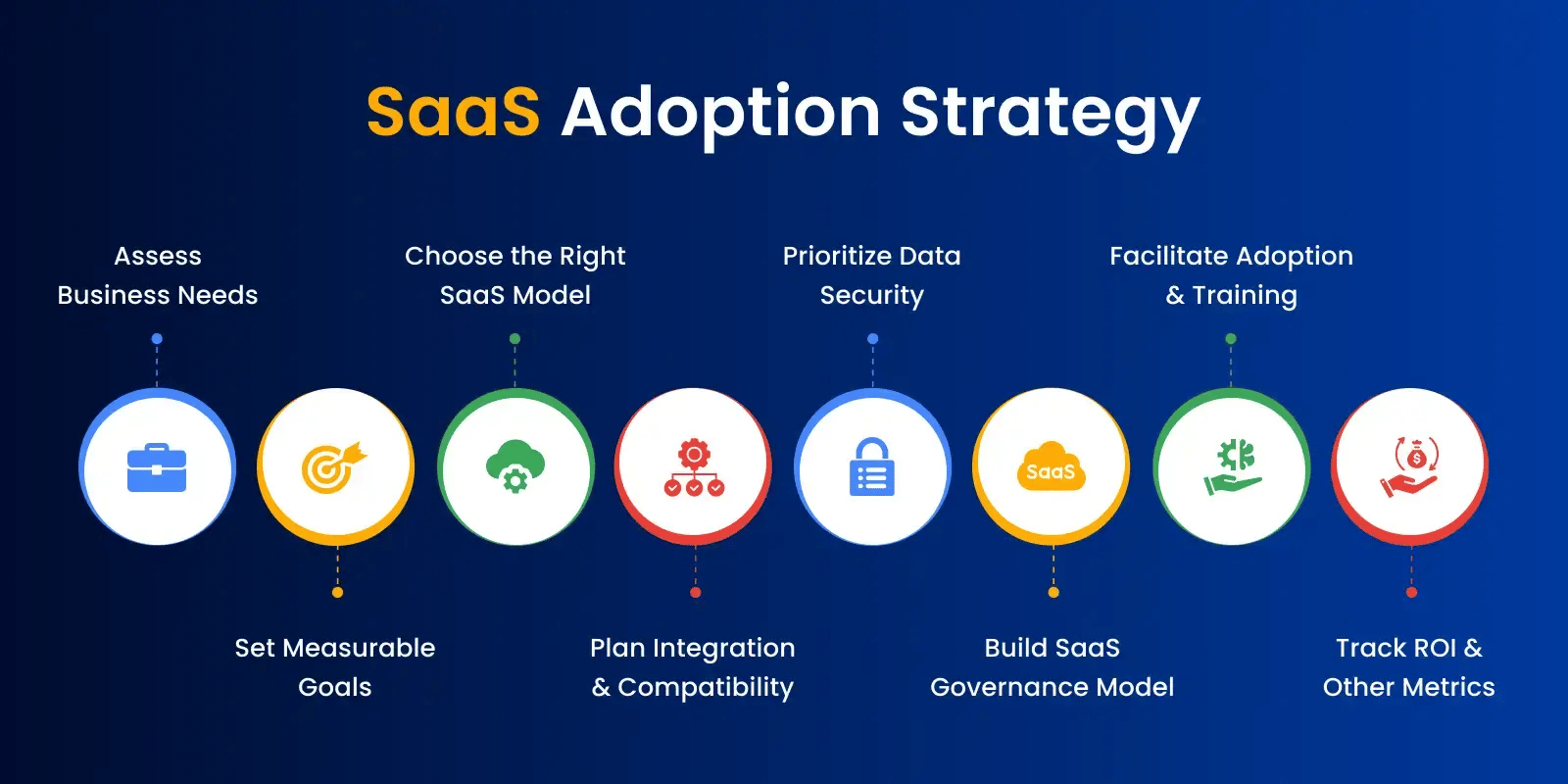
Setting measurable business objectives for SaaS investment
- Align SaaS goals tightly with business priorities
- Use quantitative targets (e.g., reduce manual processes by 30%)
- Involve key stakeholders to ensure shared objectives
- Revisit and adjust goals as business needs evolve
Choosing the right SaaS portfolio for your size and industry
- Prioritize tools with demonstrated success in your sector
- Balance specialized solutions with versatile platforms
- Consider total cost of ownership beyond licensing
- Plan for future growth and complexity
Assess Business Needs Before Choosing Tools
- Identify key processes that SaaS should optimize
- Gather input from end users and department leaders
- Distinguish must-have vs. nice-to-have features
- Avoid duplicating functionality already covered
Prioritize Integration and Compatibility
- Verify API availability and compatibility before purchase
- Use middleware to bridge gaps without custom code
- Monitor for integration issues affecting user productivity
- Quantify the cost impact of disjointed systems
Plan for Data Security and Compliance
- Check vendor security audit reports and certifications
- Map compliance requirements to SaaS features
- Insist on encryption both in transit and at rest
- Establish clear incident response protocols
Create a Clear SaaS Governance Model
- Assign SaaS ownership to specific roles or teams
- Implement usage policies to curb unnecessary subscriptions
- Set budget controls and approval workflows
- Schedule regular SaaS portfolio reviews
Focus on User Adoption and Training
- Develop hands-on, role-based training materials
- Communicate benefits clearly to build buy-in
- Use champions within teams to drive adoption
- Collect and act on user feedback regularly
Track ROI and Performance Metrics
- Establish clear, actionable KPIs tied to business goals
- Use analytics tools to track real-time SaaS usage
- Compare baseline and post-implementation performance
- Regularly report findings to stakeholders
Common Considerations in SaaS Adoption
Vendor Reliability and Support SLAs
- SLAs define uptime guarantees (most aim for 99.9% or better) ensuring your SaaS tool won't leave you stranded during peak use
- Response and resolution times set expectations for how quickly issues get fixed, no more waiting days for answers
- Many SLAs include penalties if they miss targets, which means vendors are motivated to keep promises
- Look for transparency: vendors should provide easy access to their performance reports, so you’re never in the dark
Exit Strategies and Data Migration Options
- Ensure the contract spells out your data ownership and rights to retrieve your data anytime
- Ask about export tools or APIs that let you take your data easily when you leave
- Negotiate terms covering notice periods and cancellation fees upfront
- Think about contingencies: how will you maintain business continuity if a SaaS service is discontinued or underperforms?
Handling Subscription Cost Creep
Subscription costs often start low and manageable. But fast forward 6 months, and suddenly, that pricing has gone up or you’re paying for unused licenses and features you don’t need. It’s the hidden budget drain everyone talks about but few plan for well.
- Regularly audit SaaS usage to identify dormant licenses or unnecessary add-ons
- Consolidate subscriptions if overlapping features exist across different tools
- Negotiate vendor contracts with predictable pricing models or volume discounts
- Implement tools or processes that monitor SaaS spending and alert on anomalies
How AI Is Transforming SaaS Adoption and Optimization
Is Your SaaS Adoption Future-Ready?

Cloud computing platforms and hybrid SaaS environments mean you might be juggling different providers or blending cloud and on-premise solutions. This mix offers flexibility but also brings challenges in cohesion and security.