Posted by Tech.us Category: software product development saas

We are a team of technology experts who are passionate about what we do. We LOVE our customers. We LOVE technology. We LOVE helping you grow your business with technology.

POPULAR POSTS
01
How To Improve Document Processing Accuracy Using Document AI
02
The Guide to Chatbot Development & What to Seek while Hiring a Company
03
Understanding Natural Language Processing: The What? The How? and The Why?
04
11 Proven Benefits of AI Chatbots for Businesses in 2025
05
A Complete Guide to SaaS Product Development
Posted by Tech.us Category: software product development saas
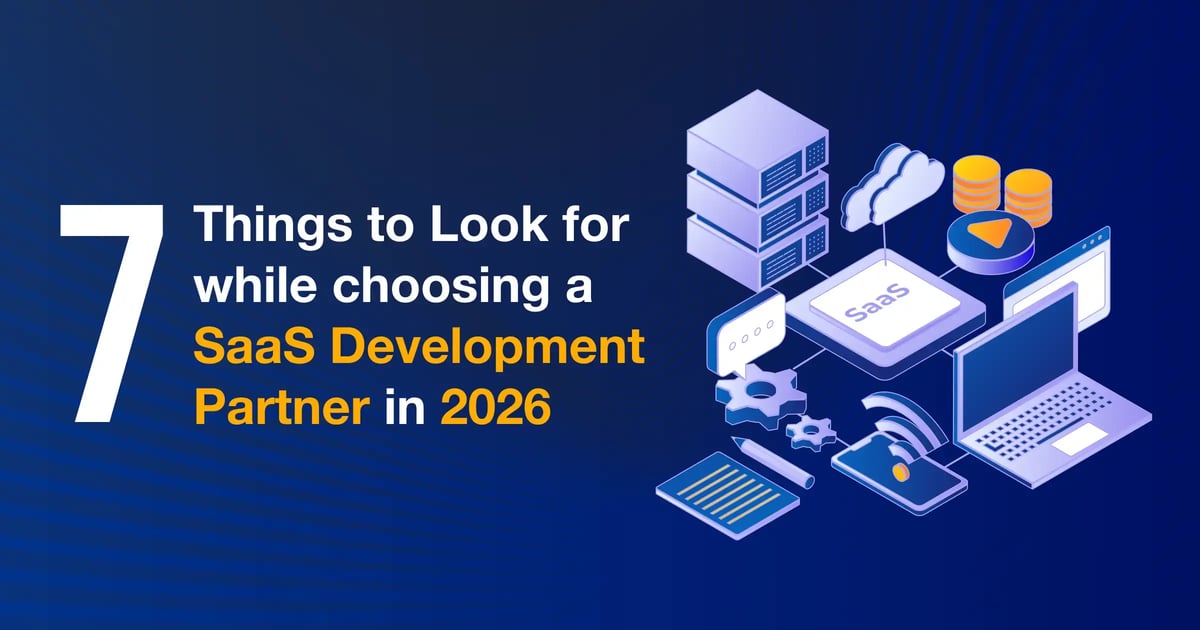
SaaS is growing fast in 2026, and every business is looking to leverage its immense potential. This shift has pushed SaaS development to a new level, where teams can now build cloud-native products that are both seamless and efficient.
According to Precedence Research, the global SaaS market size is estimated to reach around USD $1,251.35 billion by 2034, at an accelerated CAGR of 13.32% from 2025 to 2034.
With this rise of SaaS adoption comes a simple truth, which is the partner you choose for SaaS development has a direct impact on your success. A good partner supports your organization by building seamless SaaS products. Every decision they make shapes how your product performs in the real world.
It works the other way too. What if the partner you choose slows you down by adding unnecessary costs with gaps in quality and deliver unstable builds. These issues do not appear on day one but show up later as performance drops. By that time, it may be too late to do anything about it.
This is why picking the right SaaS development partner in 2026 matters, as the market is competitive with user expectations soaring. The product that you want to deliver has very little room for errors, and a strong partner can help you stay ahead and reduce risks from the start.
Research shows that about 75% of apps that enterprises use now are SaaS, which leaves around 25% on-prem in 2025. At a time when SaaS redefines the enterprise landscape, it’s important to choose the best SaaS development company who best fits your requirements.
Each partner brings a different level of skill and experience, where some teams understand SaaS inside out, while others may struggle when the product starts expanding.
This is why you should know what to look for in a SaaS development company before you begin.
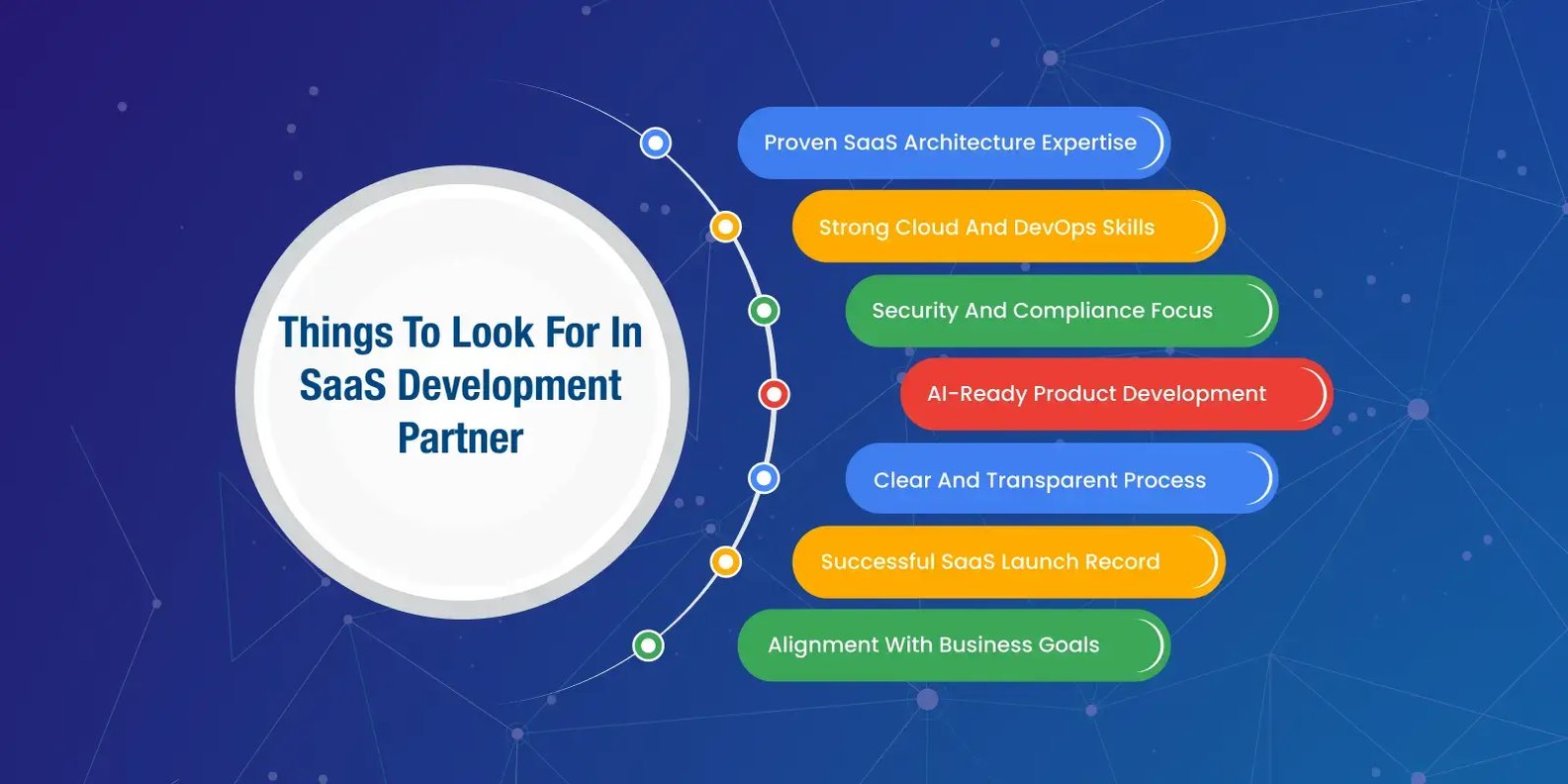
Proven experience in SaaS architecture is one of the strongest signs of a reliable development partner. As SaaS products run on complex systems, businesses today need clean architecture with an approach that supports long-term growth.
When a team understands SaaS deeply, they know how to design products that stay stable even as users grow and prevent issues that may show up later in the product cycle.
A partner with real SaaS experience understands multi-tenant design as well, which plays an important role in cost control and scalability. They know how to structure your product so it supports many customers at once, all without affecting security or performance.
With this, you can avoid expensive redesigns in the future and keep your product ready for expansion.
Some qualities of a good SaaS partner:
This clarity in experience builds confidence, which gives you a stable product foundation and reduces surprises during growth.
Cloud expertise has become a key requirement for every SaaS product today. Many modern applications run completely on cloud environments, which means the team building your product should be able to leverage cloud application development and other tools right away.
A SaaS partner with strong cloud knowledge understands everything from setting up your infrastructure to creating an environment that stays stable even when traffic grows.
They also bring DevOps practices into your software development process, which helps your product move faster with smooth releases and quick issue resolution.
It also reduces manual work and supports better teamwork. With a good cloud and DevOps setup, your SaaS product becomes more reliable and easier to manage.
So, to sum up,
This strong cloud and DevOps foundation improves performance and helps you deliver a better experience to your users.
Cybersecurity services are highly crucial when it comes to SaaS development. As your users trust you with their data, it holds great value for your business.
A dependable development partner understands this and follows strong security measures from day one, which include everything from safe coding practices to secure data storage and regular checks.
They also understand compliance rules that apply to your industry specifically, these rules guide how user data should be handled, stored, and protected. So, it is important for the SaaS development company to be aware of such regulations and compliance.
And, they should implement GDPR or HIPAA compliant cybersecurity measures based on your business.
So, to sum up,
By choosing a partner who takes security seriously, you safeguard your product and build long-term trust with your users.
With the rise of AI development services and AI integrations, SaaS products today experience many cross-over applications. As a result, the expectations have also risen with features like automation, smart suggestions, data-driven insights, and much more.
A good development partner understands how to build a product which is ready for these capabilities, and accordingly, they structure your system so it allows AI features to fit in smoothly without heavy rework.
Your SaaS product should also integrate well with other tools, and clean APIs help you connect with popular platforms and expand your product’s value. A partner who knows how to build strong integrations can help your product work better in different environments and reach more users.
So, to sum up,
This level of readiness gives your product more flexibility and creates space for new features in the future.
Choose a SaaS development company that follows a transparent development process that builds trust and avoids confusion. So, choose a team that openly communicates and makes it easy for you to track progress, which helps you stay aligned with the work that happens behind the scenes. With this, you can get complete clarity at times when priorities shift or new ideas come in.
A software development company that establishes seamless communication effectively reduces delays and facilitates you to check the status of tasks immediately. This lets you stay involved in the journey without you having to stay stressed or disconnected.
This level of transparency keeps your project on track and helps decisions happen at the right time.
A company launching a SaaS product is an important step, but what is equally important is whether it gives your product ongoing care such as updates, fixes, feature improvements, and performance checks.
A strong development partner extends support even after launch and stays with you beyond the launch and supports your growth. Their past success becomes a helpful guide for your product’s future.
More than developing a SaaS product, implementation is a challenging task. So choose a partner who handles the process even in the midst of SaaS implementation challenges.
Ultimately,
This long-term support gives you stability and helps you move forward with confidence.
A great SaaS partner takes time to understand your business, as they learn everything about your business and the goals you want to achieve.
This creates a shared understanding which guides the product from the start. When a partner knows your domain well, they can offer ideas which match your strategy and solve real problems.
This alignment helps every part of the process move smoothly, with which you can make decisions faster because both sides think in the same direction.
Your partner also becomes more proactive with suggestions, which leads to a stronger product and a clear sense of partnership.
This alignment gives your product a clear identity and keeps your development process focused on what truly matters.
Many companies face issues in finalizing the best SaaS development partner suitable for their requirements, mainly because they miss a few important checks, which often lead to unexpected setbacks.
When you know what these mistakes are, it becomes easier to avoid them and make a clear decision that supports your long-term plans.
Some common mistakes are:
The market has changed so dramatically at current times, when new ideas come in fast, and businesses try to keep up with this pace. The pressure to innovate is constant, which makes the choice of a SaaS partner more important than ever.
Many teams feel this shift and try to move quickly, and that is exactly why a strong development partner becomes an advantage.
How? A reliable SaaS partner works in a flexible setup and supports you with the exact skills you need. With this, you do not have to deal with long hiring cycles or hours of training. You get access to a team that already knows how SaaS products work and what it takes to build them the right way.
Want to build a smarter feature that uses AI to improve user decisions, but your team is not ready for it? A good SaaS partner already has the experience to guide you.
Need to upgrade your old systems and connect them with modern tools without downtime? Leave it to experts who have handled these transitions across many projects.
With the right partner, you get the time and space to focus on strategy and growth, which helps you stay free from technical stress, while your product continues to grow stronger with expert support. In the end, the right SaaS development partner becomes a growth asset that sets a strong foundation for your long-term success.
There are certain aspects that a reliable SaaS development partner carries that include the understanding of:
They bring real experience from past projects and know how to support your product as it grows. With this, you get more clarity and fewer risks through the entire journey.
You can sense this from the questions they ask because a good team typically takes time to learn industry and goals. If they truly understand your needs, you’ll get a clarity of how the development and implementation is going to be as they suggest ideas that match your vision and help you shape a product that solves real problems.
Multi-tenancy architecture helps your product support many customers at once without any performance issues, which also reduces operational costs and makes scaling simpler. A partner who knows this well gives your product a strong base.
Cloud skills make your product more stable and flexible, where a team with cloud knowledge sets up clean environments and automates deployments. This makes it easier to maintain and scale the product.
As modern users expect advanced technologies, it is important for SaaS products to be developed with AI readiness in mind. You can stay future-ready when your product supports these from the start. It also becomes easier to add new features or connect with other tools without major changes.

Get Free Tips
NEWSLETTER
Get Free Tips
Submit to our newsletter to receive exclusive stories delivered to vou inbox!
Thanks for submitting the form.
RECENT POSTS
7 Things to Look for while choosing a SaaS Development Partner in 2026
9 Signs Your Business is Ready for Artificial Intelligence Development

How Smart Data Annotation Cuts the Hidden Cost of Bad Data in Enterprise AI

In-House vs Outsourced Software Development: A Strategic Guide for CEOs

What Are the Key Enterprise Software Development Considerations for...