
Reduce Hours of Manual Work
Let agents handle repetitive steps that currently consume employee time across everyday workflows.
Trusted by organizations that depend on technology







Selected Work
Explore how we help organizations solve complex challenges and improve how their business operates.
View All Case Studies
A precast concrete manufacturer partnered with Tech.us to bring AI into the estimating workflow. The system uses OCR, computer vision, and generative AI to identify, extract, and visualize structures, pipes, and components from complex construction drawings.
Read the Case Study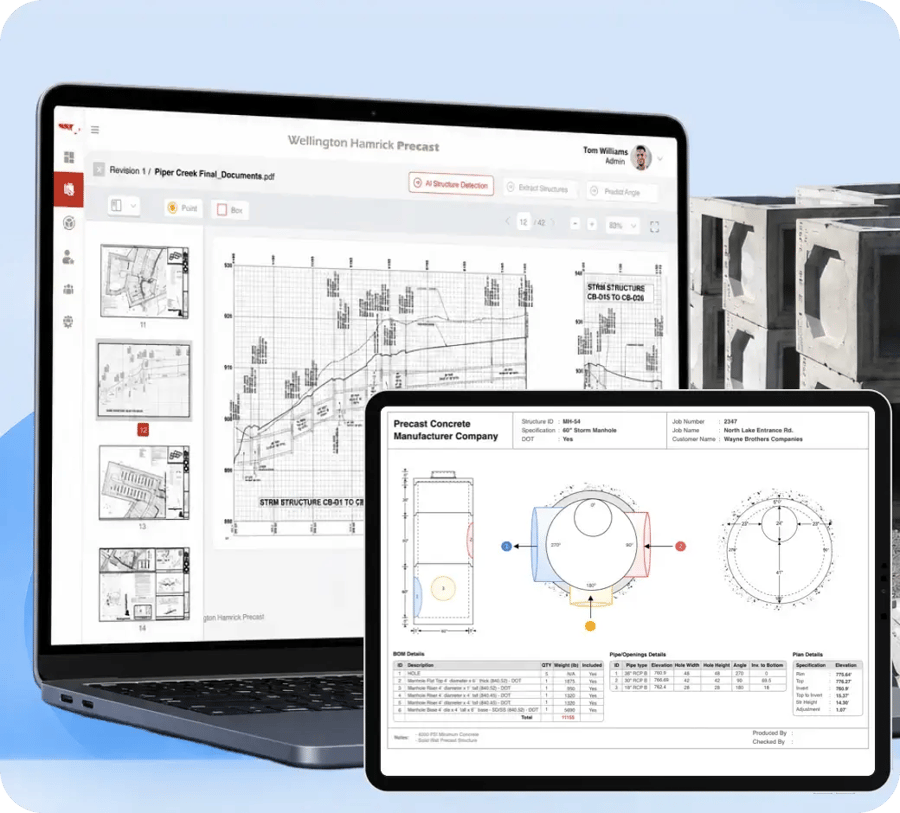

SkyHawk by TELUS needed a streamlined mobile experience for its Connect Anywhere platform. Tech.us built the core experience around real-time asset tracking, fleet activity, secure configuration, and map-based operational visibility.
Read the Case Study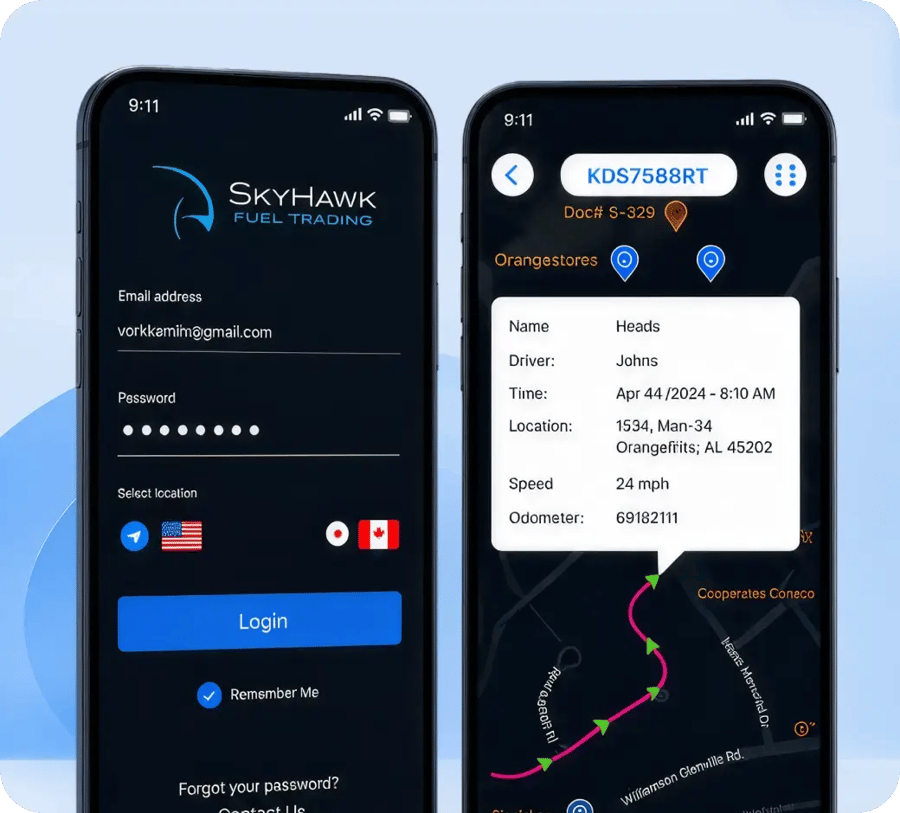

Tech.us helped bring Wealth Mastery to life as a digital platform that puts personalized financial planning tools directly in users' hands while supporting a large and growing audience.
Read the Case Study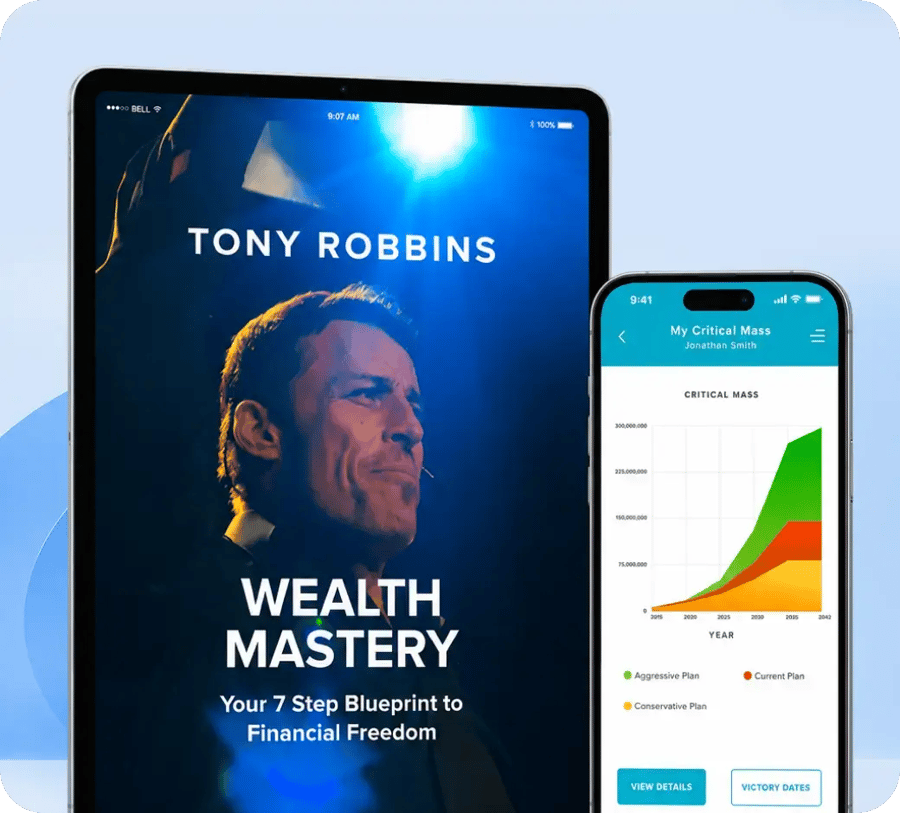
Why Tech.us
We focus on the parts that determine whether an AI agent can act safely, recover from failure, and deliver consistent results inside real business systems.
Deterministic automation is cheaper to run, easier to test, and more predictable. We propose an agent where the judgment between steps is the actual difficulty.
Tool granularity, validation, idempotency, and error semantics receive more attention than prompt wording, because that is where reliability comes from.
Partial completion, compensating actions, and stateful escalation are specified before the successful path is built.
Agents act under the authority of the person who asked, which prevents autonomy from becoming a route around your existing access controls.
Evaluation covers complete runs under induced failure, and we hand over the evaluation set so your team can keep using it.
Code written with AI assistance passes human review before it reaches a client system. Faster authorship does not move accountability.

INDUSTRY EXPERIENCE
We bring practical experience across sectors with different business needs, operating environments, and delivery challenges.
Explore All Industries Healthcare
Administrative coordination across scheduling, coverage, authorization, and records, with clinical decisions and patient contact kept under human authority.
Explore Healthcare
Healthcare
Administrative coordination across scheduling, coverage, authorization, and records, with clinical decisions and patient contact kept under human authority.
Explore Healthcare
 Finance and Insurance
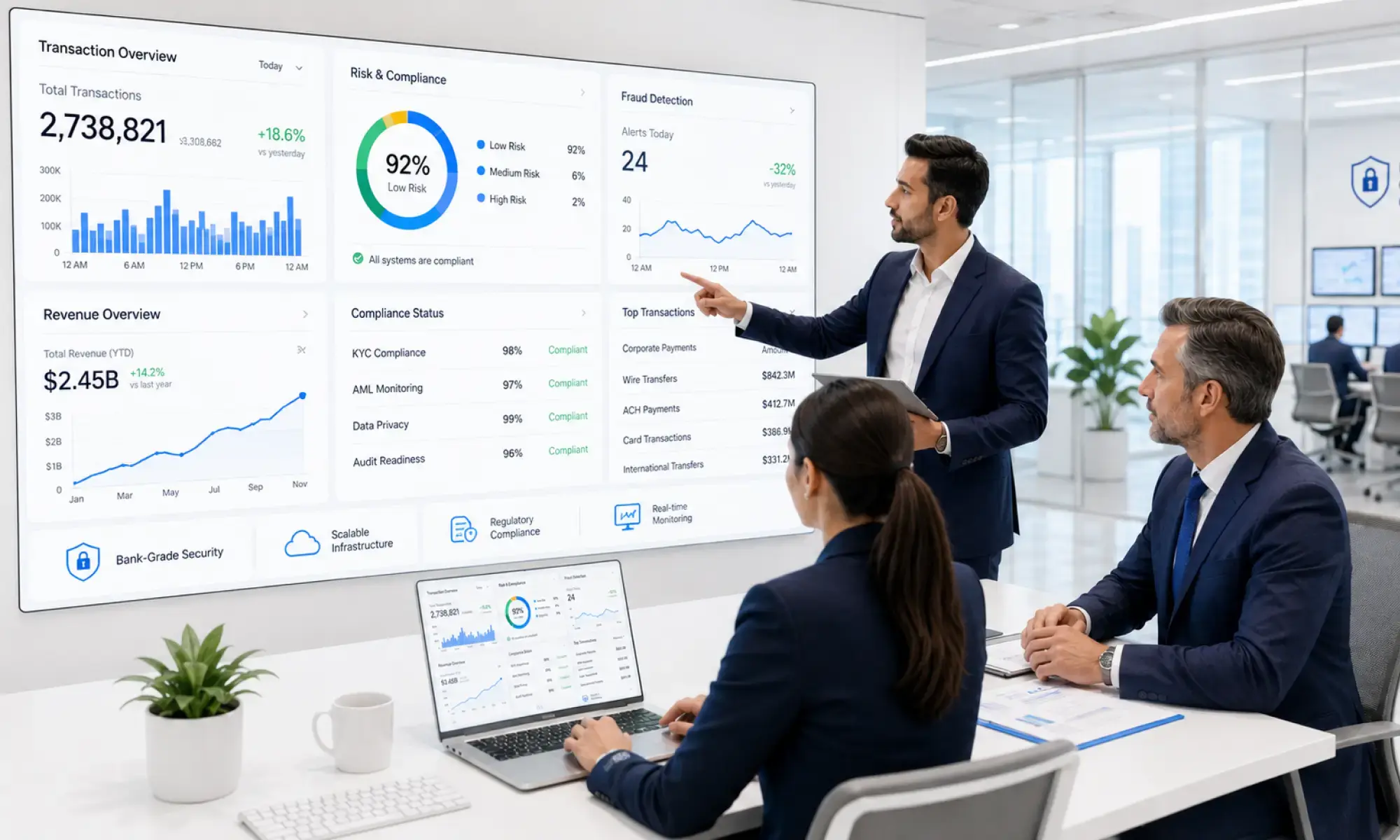
Case investigation, document collection, and claims preparation where the sequence depends on what each check returns, and where irreversible actions require explicit approval.
Explore Financial Services and Insurance
Finance and Insurance
Case investigation, document collection, and claims preparation where the sequence depends on what each check returns, and where irreversible actions require explicit approval.
Explore Financial Services and Insurance
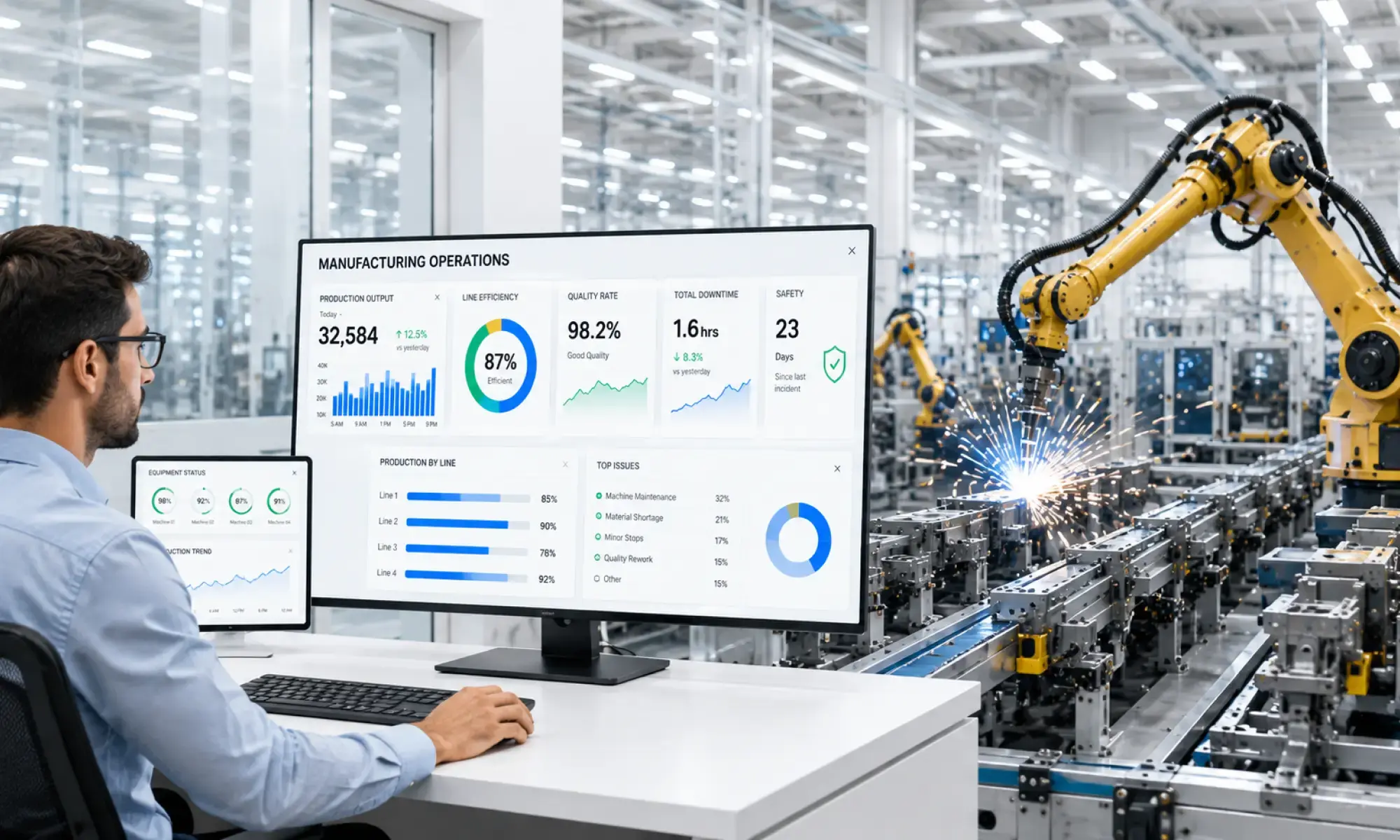 Manufacturing
Response workflows that begin with a detected condition and require checks across maintenance, inventory, and supplier systems before the next step is clear.
Explore Manufacturing
Manufacturing
Response workflows that begin with a detected condition and require checks across maintenance, inventory, and supplier systems before the next step is clear.
Explore Manufacturing
 Retail and Supply Chain
Exception handling where a single supply or order problem has to be traced and resolved across systems that hold different parts of the answer.
Explore Retail and Supply Chain
Retail and Supply Chain
Exception handling where a single supply or order problem has to be traced and resolved across systems that hold different parts of the answer.
Explore Retail and Supply Chain
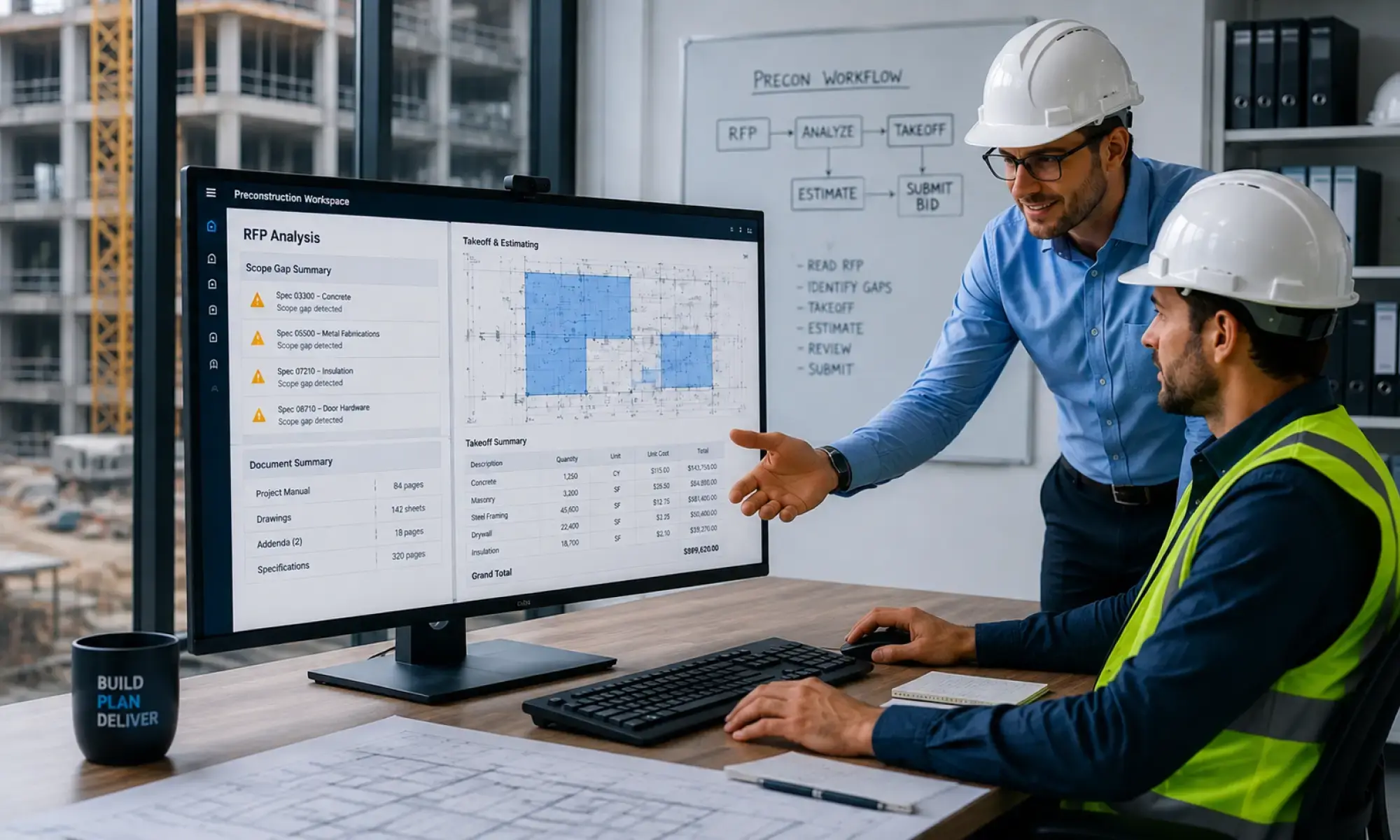 Construction
Project coordination across drawings, submittals, approvals, and correspondence, where the next required action depends on the current state of several documents.
Explore Construction
Construction
Project coordination across drawings, submittals, approvals, and correspondence, where the next required action depends on the current state of several documents.
Explore Construction
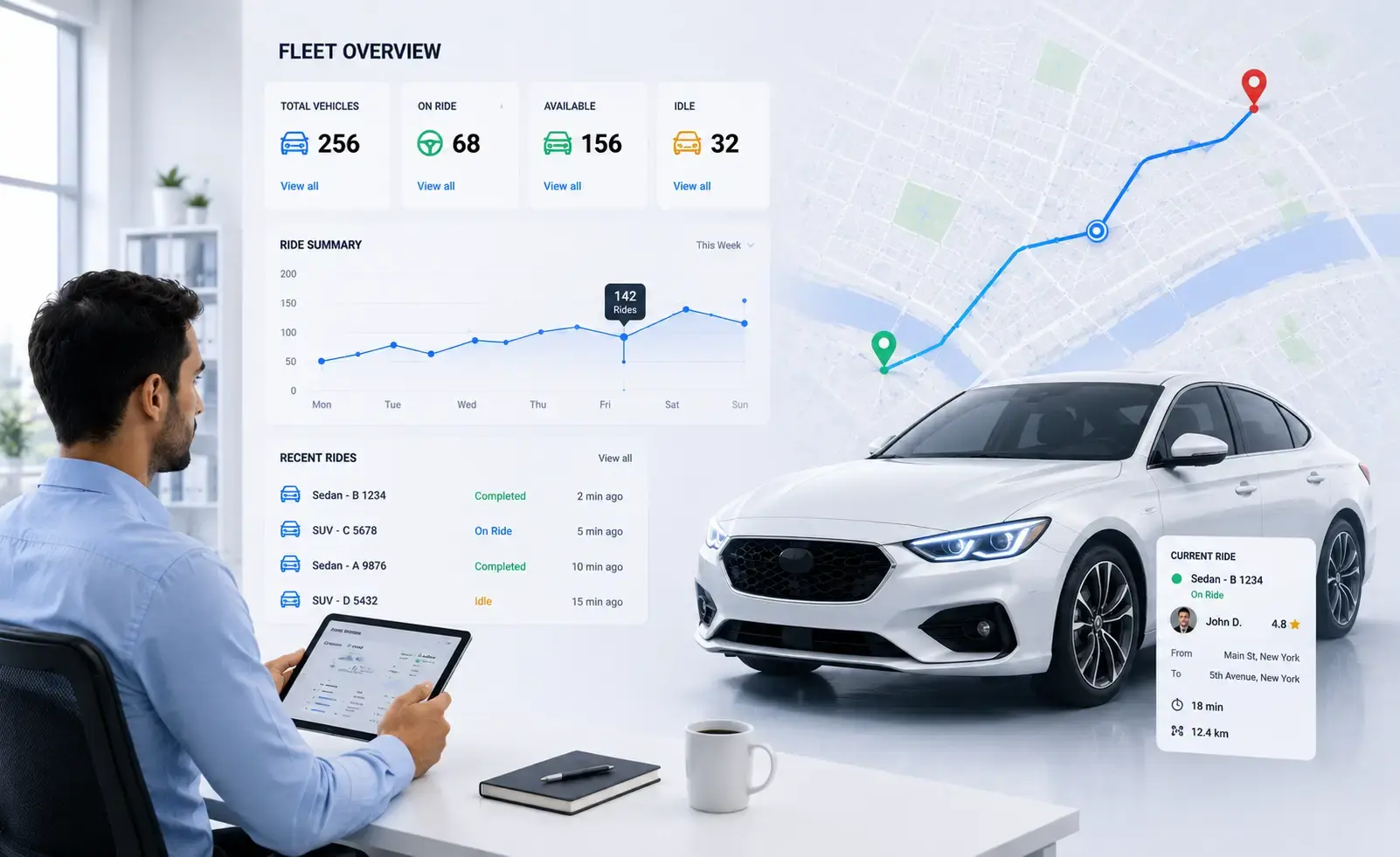 Transportation and Logistics
Shipment exceptions where resolution requires checking several systems, contacting a party, and updating records in a specific order.
Explore Transportation and Logistics
Transportation and Logistics
Shipment exceptions where resolution requires checking several systems, contacting a party, and updating records in a specific order.
Explore Transportation and Logistics
AGENT TECHNOLOGY
We work across agent frameworks, integrations, workflow tools, identity controls, and monitoring technologies.
Technology choices are based on your systems, expected usage, security needs, and long-term maintainability.
Agentic AI & Orchestration
 Agentic AI
 AI Agents
 Multi-Agent Systems
 Agentic Workflow Automation
 Model Context Protocol (MCP)
 Agent-to-Agent Protocol (A2A)
 Agent Memory and Reasoning
Generative AI & Foundation Models
 Large Language Models
 GPT
GPT
 Claude
 Gemini
 Llama
Llama
 Generative AI
 Multimodal Foundation Models
 Diffusion Models
 Small Language Models
 Model Fine-Tuning
 Prompt & Context Engineering
Machine Learning & Deep Learning
 Machine Learning
 Deep Learning
 Predictive Analytics
 Recommendation Systems
 Anomaly Detection
 Time-Series Analysis
Data & AI Platforms
 AI-Ready Data Platforms
 Data Lakes and Lakehouse
 Data Engineering
AI Frameworks & Libraries
 PyTorch
 TensorFlow
 Scikit-learn
 Hugging Face Transformers
 LangChain
 LangGraph
MLOps, LLMOps & AgentOps
 MLOps
MLOps
 LLMOps
 AgentOps
 Model Deployment and Serving
 Agent Deployment
 Model and Agent Observability
 Prompt and Response Tracing
 AI Cost Optimization
AI Evaluation, Safety & Governance
 LLM Evaluations
 Agent Evaluations
 RAG Evaluations
 AI Guardrails
 Prompt-Injection Protection
 Red Teaming
 Responsible AI
 AI Governance
Cloud AI Technologies
Google Cloud
 Vertex AI
 Gemini Models
 Agent Studio
 Vertex AI Agent Builder
 Agent Development Kit
 Vertex AI Vector Search
 Google Cloud Document AI
 Google Cloud Vision AI
Microsoft Azure
 Microsoft Foundry
 Microsoft Copilot Studio
 Microsoft Agent Framework
 Azure AI Document Intelligence
 Azure AI Speech and Vision
 Microsoft Fabric
 Microsoft Purview
Language, Vision, Speech & Document AI
 NLP, NLU and NLG
 STT, TTS and ASR
 Conversational AI
 Document Intelligence
 Computer Vision
RAG, Search & Knowledge Systems
 Enterprise RAG
 Agentic RAG
 Multimodal RAG
Enterprise Search
Multimodal RAG
Enterprise Search
 Semantic & Hybrid Search
 Vector Databases
 Knowledge Graphs
 Reranking and Retrieval Optimization