
Upgrade With Evidence
Test a new model against real work before it reaches users.
Trusted by organizations that depend on technology







Selected Work
See how Tech.us engineers systems around real business workflows, data, users, and operating constraints.
View All Case Studies
A precast concrete manufacturer partnered with Tech.us to bring AI into the estimating workflow. The system uses OCR, computer vision, and generative AI to identify, extract, and visualize structures, pipes, and components from complex construction drawings.
Read the Case Study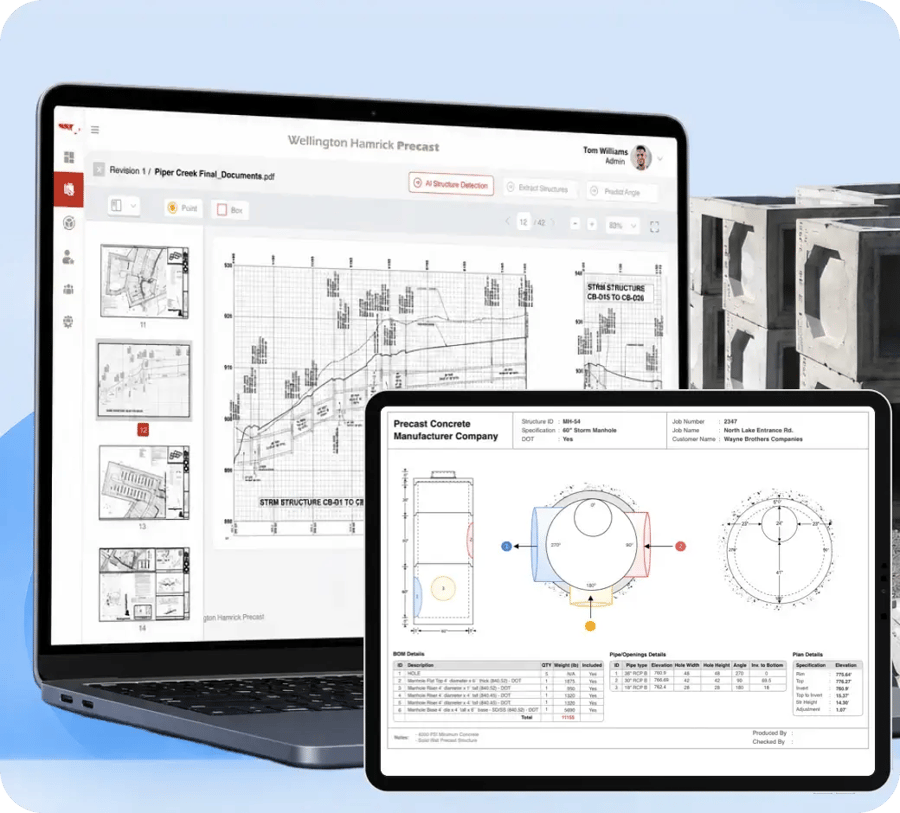

SkyHawk by TELUS needed a streamlined mobile experience for its Connect Anywhere platform. Tech.us built the core experience around real-time asset tracking, fleet activity, secure configuration, and map-based operational visibility.
Read the Case Study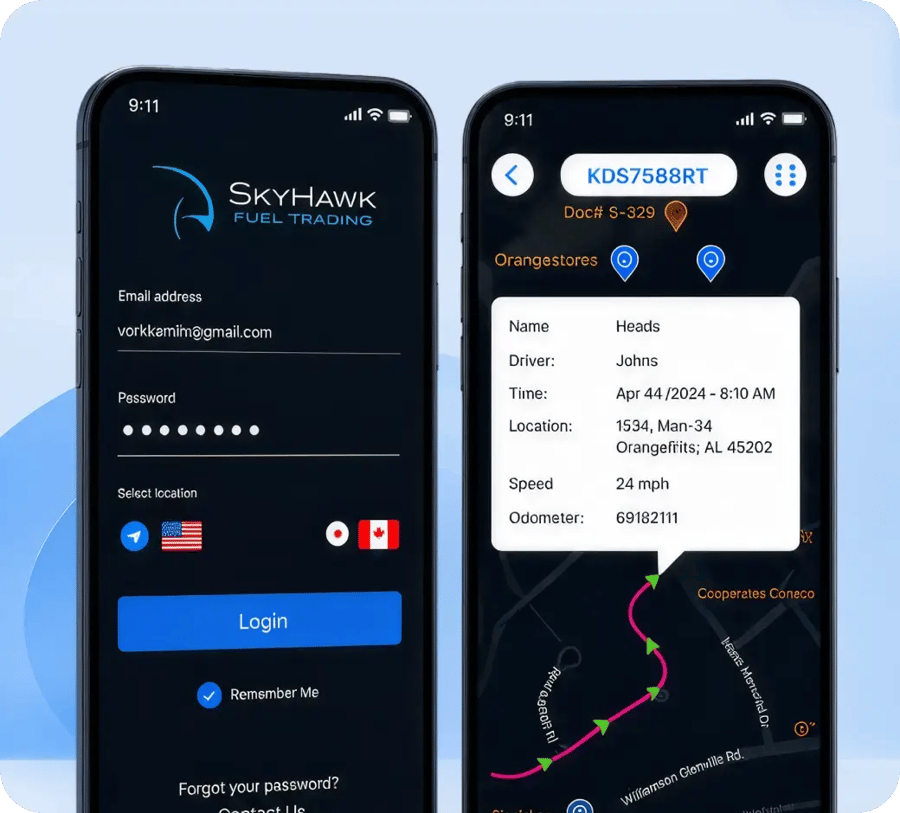

Tech.us helped bring Wealth Mastery to life as a digital platform that puts personalized financial planning tools directly in users' hands while supporting a large and growing audience.
Read the Case Study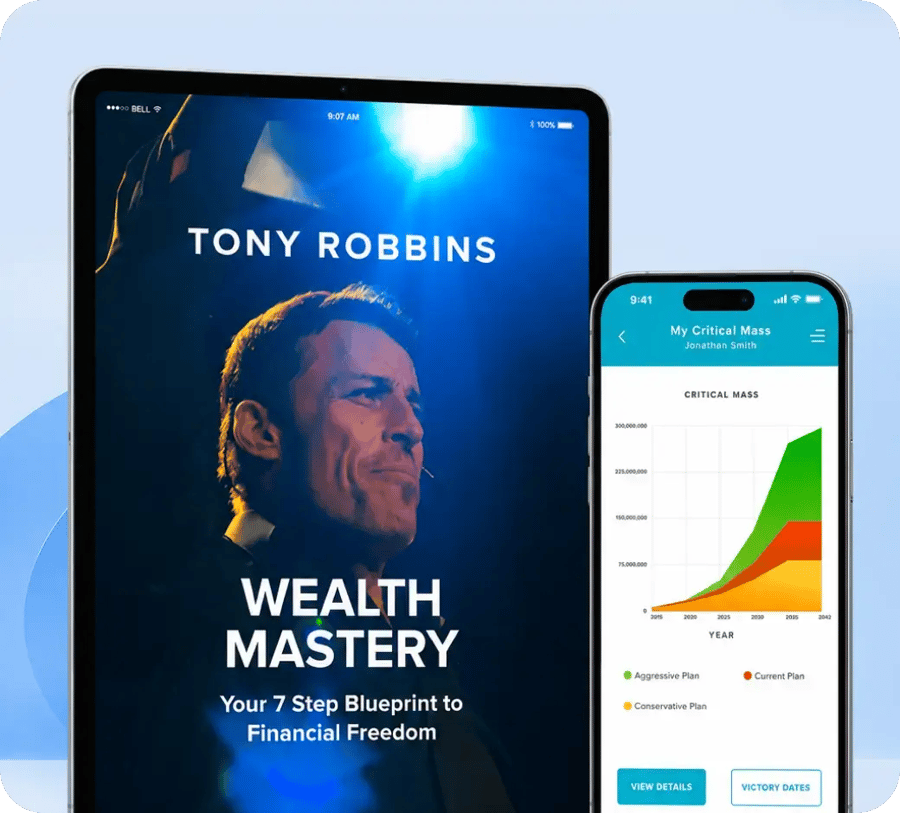
WHY TECH.US FOR LLM DEVELOPMENT
We focus on the parts of an LLM system that continue creating value as models evolve, costs change, and business needs grow.
It is the deliverable that keeps its value when the model changes, and we hand it over rather than keeping it.
Fine-tuning is proposed when prompting and retrieval have been tested and fallen short, not as an opening position.
Routing, caching, and context strategy are design decisions, because cost problems discovered at scale are structural rather than tunable.
Open-weight and compact models running on your infrastructure are part of what we build, not an exception we refer elsewhere.
The abstraction layer, evaluation set, prompts, and documentation are yours, so you are not dependent on us or on a single provider.
Code written with AI assistance passes human review before it reaches a client system. Faster authorship does not move accountability.

INDUSTRY EXPERIENCE
We design around the realities that shape how each industry uses AI.
Explore All Industries Healthcare
Clinical and administrative language work where deployment location, record handling, and the line between decision support and clinical judgment shape the architecture.
Explore Healthcare
Healthcare
Clinical and administrative language work where deployment location, record handling, and the line between decision support and clinical judgment shape the architecture.
Explore Healthcare
 Financial Services and Insurance
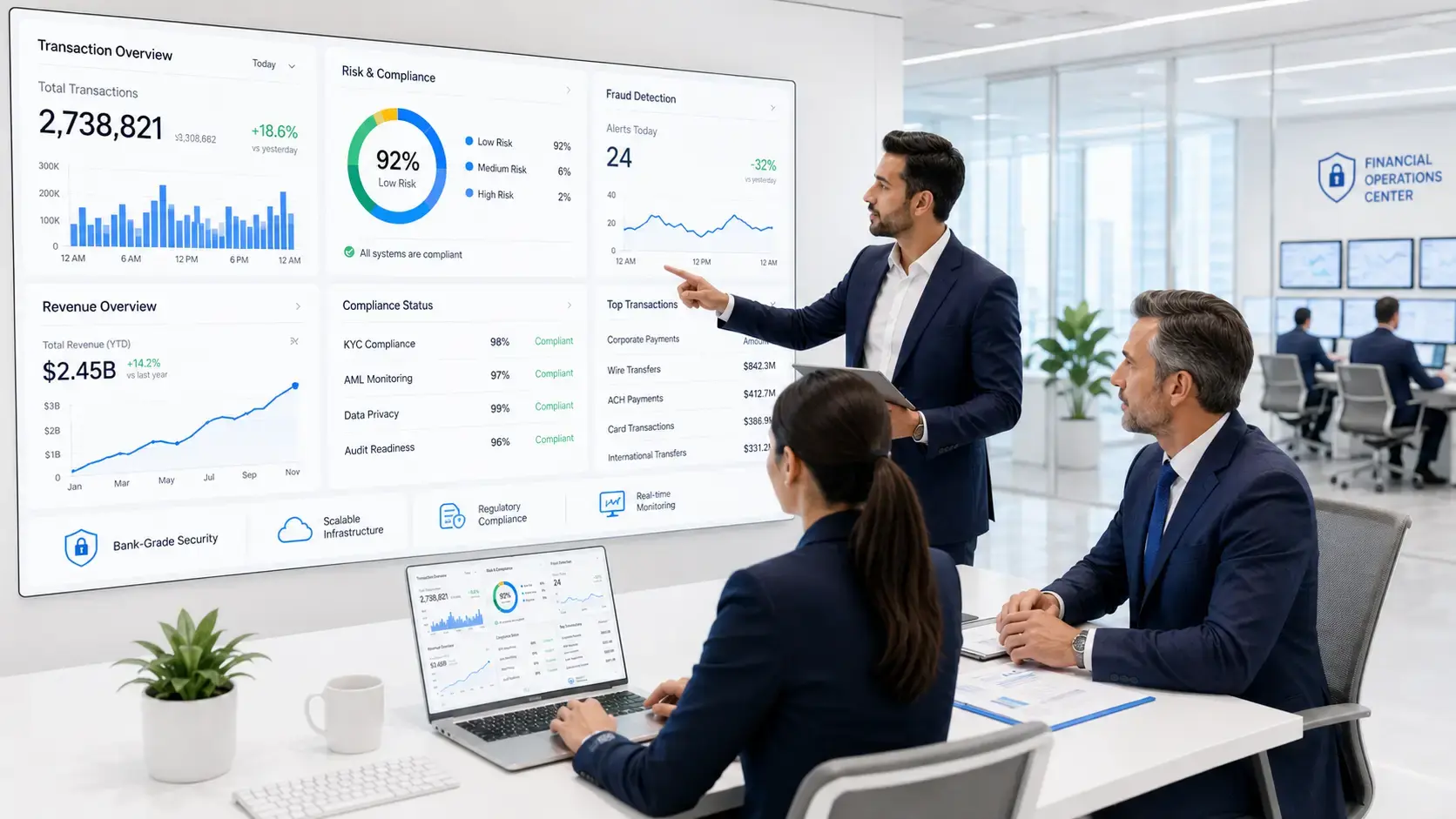
Document-heavy work where output has to be traceable to a source and reviewable afterwards, and where volume makes cost per task a material constraint.
Explore Financial Services and Insurance
Financial Services and Insurance
Document-heavy work where output has to be traceable to a source and reviewable afterwards, and where volume makes cost per task a material constraint.
Explore Financial Services and Insurance
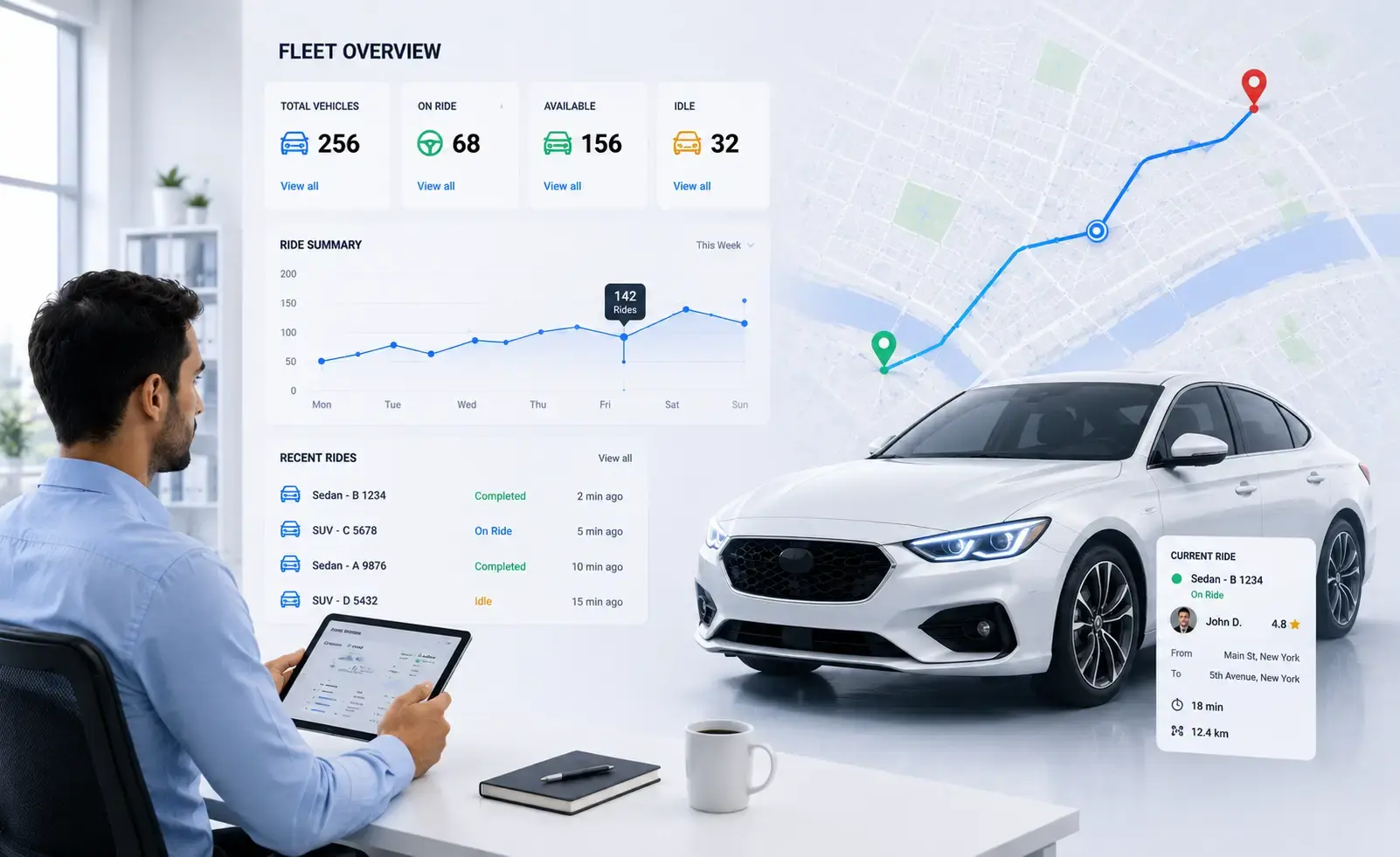 Automotive
Service records and technical documents use specialized language, so LLMs need accurate retrieval and industry context to provide reliable answers.
Explore Automotive
Automotive
Service records and technical documents use specialized language, so LLMs need accurate retrieval and industry context to provide reliable answers.
Explore Automotive
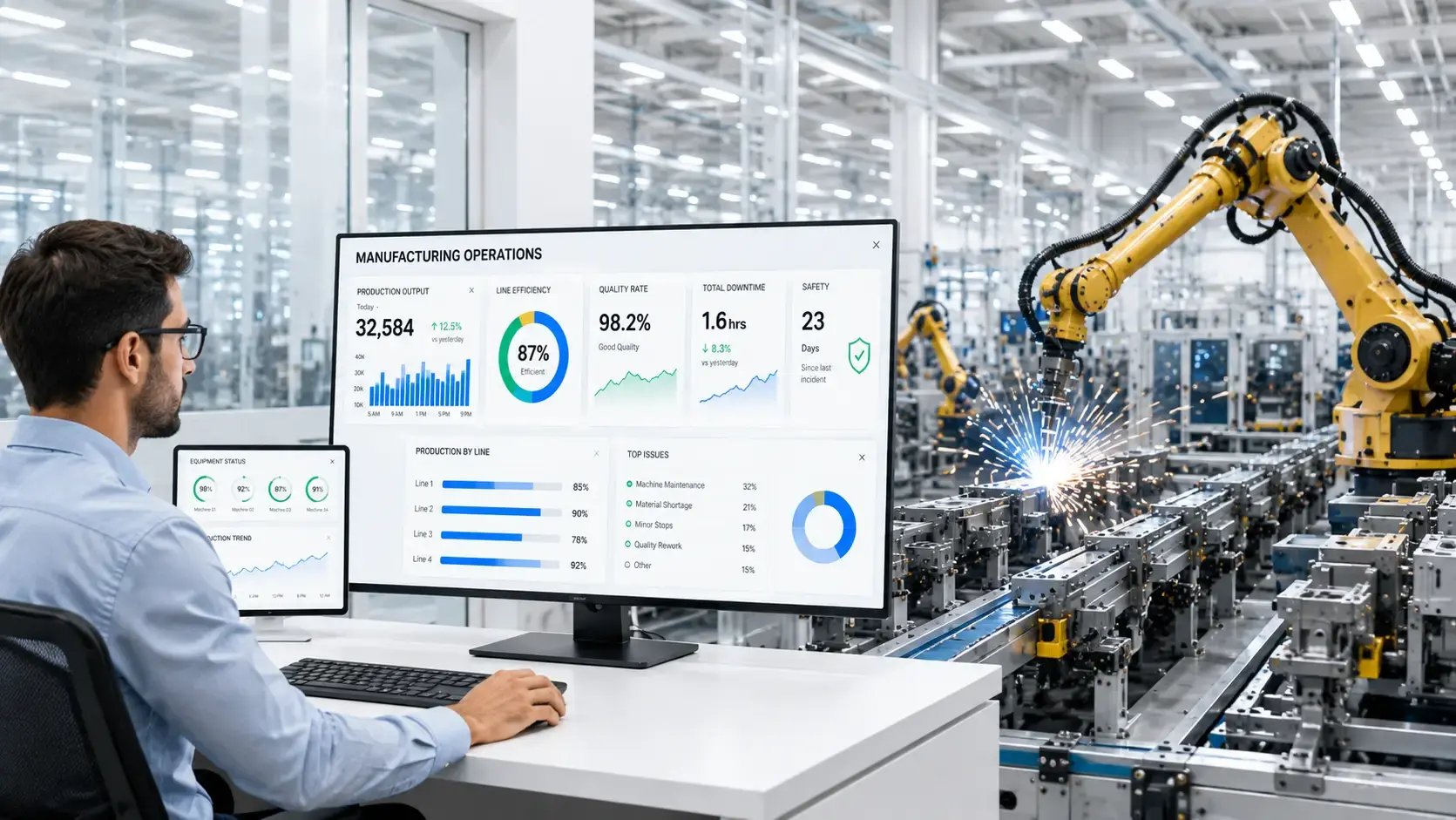 Manufacturing
Technical documentation and internal shorthand that general models have never seen, often accessed from environments with limited connectivity.
Explore Manufacturing
Manufacturing
Technical documentation and internal shorthand that general models have never seen, often accessed from environments with limited connectivity.
Explore Manufacturing
 Retail and E-Commerce
High request volume where a small per-query difference compounds quickly, making model selection and routing an economic decision.
Explore Retail and E-Commerce
Retail and E-Commerce
High request volume where a small per-query difference compounds quickly, making model selection and routing an economic decision.
Explore Retail and E-Commerce
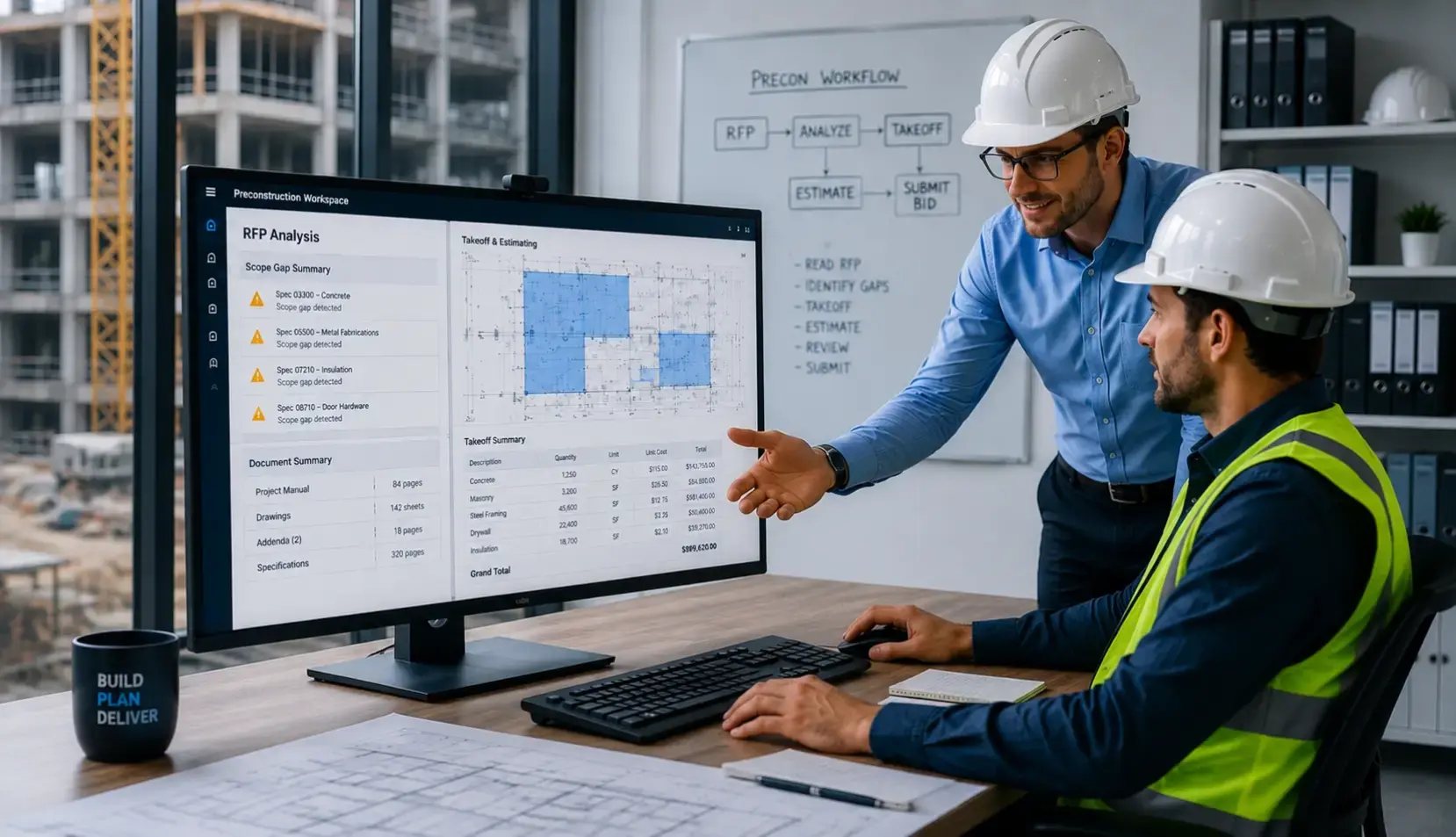 Construction
Specifications, contracts, and submittals where the answer depends on document structure and position as much as on wording.
Explore Construction
Construction
Specifications, contracts, and submittals where the answer depends on document structure and position as much as on wording.
Explore Construction
LLM TECHNOLOGY
We work across commercial and open-weight model families, parameter-efficient fine-tuning, embedding and vector retrieval, reranking, serving and inference optimization, evaluation frameworks, guardrail tooling, and observability, on major clouds and on-premise infrastructure. Selection follows measured quality on your evaluation set, cost per task at your volume, latency, context requirements, where data is permitted to be processed, and what your team can operate without us.
Agentic AI & Orchestration
 Agentic AI
 AI Agents
 Multi-Agent Systems
 Agentic Workflow Automation
 Model Context Protocol (MCP)
 Agent-to-Agent Protocol (A2A)
 Agent Memory and Reasoning
Generative AI & Foundation Models
 Large Language Models
 GPT
GPT
 Claude
 Gemini
 Llama
Llama
 Generative AI
 Multimodal Foundation Models
 Diffusion Models
 Small Language Models
 Model Fine-Tuning
 Prompt & Context Engineering
Machine Learning & Deep Learning
 Machine Learning
 Deep Learning
 Predictive Analytics
 Recommendation Systems
 Anomaly Detection
 Time-Series Analysis
Data & AI Platforms
 AI-Ready Data Platforms
 Data Lakes and Lakehouse
 Data Engineering
AI Frameworks & Libraries
 PyTorch
 TensorFlow
 Scikit-learn
 Hugging Face Transformers
 LangChain
 LangGraph
MLOps, LLMOps & AgentOps
 MLOps
MLOps
 LLMOps
 AgentOps
 Model Deployment and Serving
 Agent Deployment
 Model and Agent Observability
 Prompt and Response Tracing
 AI Cost Optimization
AI Evaluation, Safety & Governance
 LLM Evaluations
 Agent Evaluations
 RAG Evaluations
 AI Guardrails
 Prompt-Injection Protection
 Red Teaming
 Responsible AI
 AI Governance
Cloud AI Technologies
Google Cloud
 Vertex AI
 Gemini Models
 Agent Studio
 Vertex AI Agent Builder
 Agent Development Kit
 Vertex AI Vector Search
 Google Cloud Document AI
 Google Cloud Vision AI
Microsoft Azure
 Microsoft Foundry
 Microsoft Copilot Studio
 Microsoft Agent Framework
 Azure AI Document Intelligence
 Azure AI Speech and Vision
 Microsoft Fabric
 Microsoft Purview
Language, Vision, Speech & Document AI
 NLP, NLU and NLG
 STT, TTS and ASR
 Conversational AI
 Document Intelligence
 Computer Vision
RAG, Search & Knowledge Systems
 Enterprise RAG
 Agentic RAG
 Multimodal RAG
Enterprise Search
Multimodal RAG
Enterprise Search
 Semantic & Hybrid Search
 Vector Databases
 Knowledge Graphs
 Reranking and Retrieval Optimization