Validate Demand Before Scaling Investment
Test the product concept early so major development decisions are supported by evidence rather than internal assumptions.
Tech.us helps businesses develop software products that address real market needs and create opportunities for revenue and customer growth.
We help focus investment on the right first release, then use market feedback to guide what comes next.
Projects Delivered
Years of Engineering
Industries Served
TRUSTED BY ORGANIZATIONS THAT BUILD WITH TECHNOLOGY



WHAT SOFTWARE PRODUCT DEVELOPMENT CHANGES
Strong product development helps businesses learn what users value before committing too much time or budget to the wrong direction.
Test the product concept early so major development decisions are supported by evidence rather than internal assumptions.
Prioritize the functionality required to solve the core problem instead of delaying launch with an oversized feature set.
Shape the experience around what users need to accomplish so the product earns a place in their workflow.
Use feedback after launch to decide what should be improved next and where additional investment can create value.
OUR SERVICES
We support the decisions that shape a software product before launch and the improvements that determine its value afterward.
Turn an early concept into a defined product opportunity.
We help clarify the user problem and determine the value proposition. The result is a stronger basis for deciding whether the idea deserves further investment.
Translate the product concept into an experience users can understand and navigate naturally.
We use product requirements to shape journeys that make important actions easier to complete.
Test the riskiest assumptions before expanding the scope.
A proof of concept can validate feasibility. An MVP puts the core value proposition in front of real users so the team can learn before building more.
Create subscription software designed for ongoing customer use.
We help shape the product foundation so new capabilities can be introduced as the customer base and roadmap evolve.
Improve established products when their current technology starts limiting what the product team can deliver.
We modernize the areas creating friction while protecting capabilities that customers already depend on.
Make product releases easier to deliver and repeat.
We improve development and deployment practices so teams can move product changes into production with greater confidence.
Protect the customer experience as the product evolves.
Testing is aligned with real product behavior so releases are validated before problems reach users.
Continue improving the product after launch.
We support enhancements based on new requirements and market feedback so the product does not stop evolving after version one.
Selected Work
See how Tech.us turns complex business needs into practical solutions designed for real-world use.
View All Case Studies

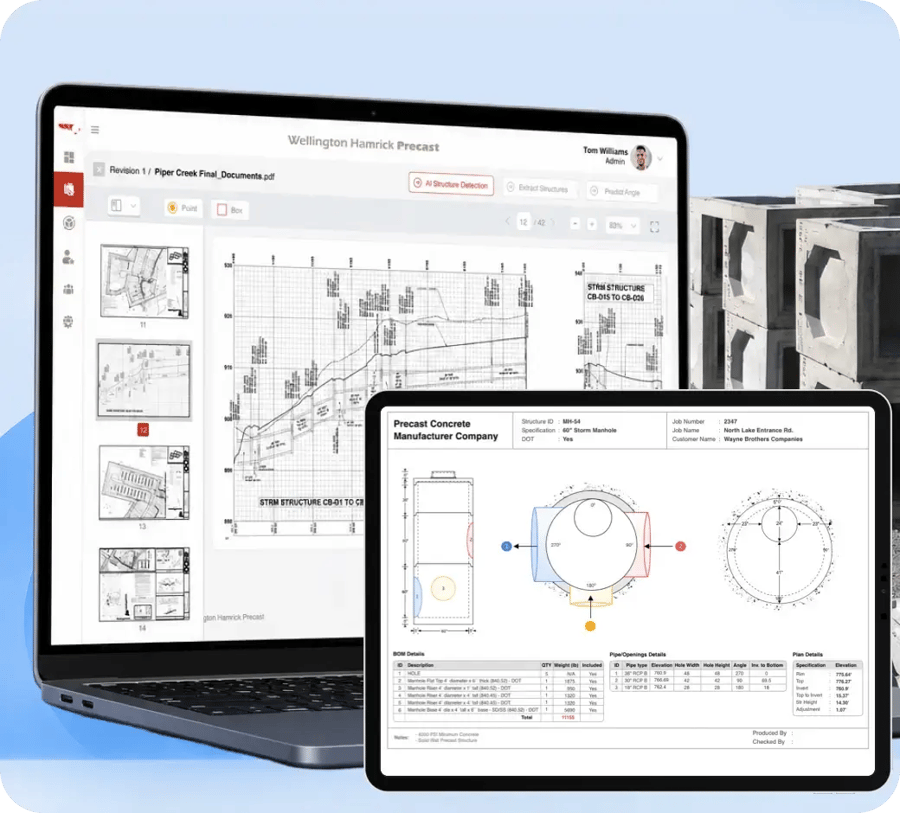
A precast concrete manufacturer partnered with Tech.us to bring AI into the estimating workflow. The system uses OCR, computer vision, and generative AI to identify, extract, and visualize structures, pipes, and components from complex construction drawings.
Read the Case Study

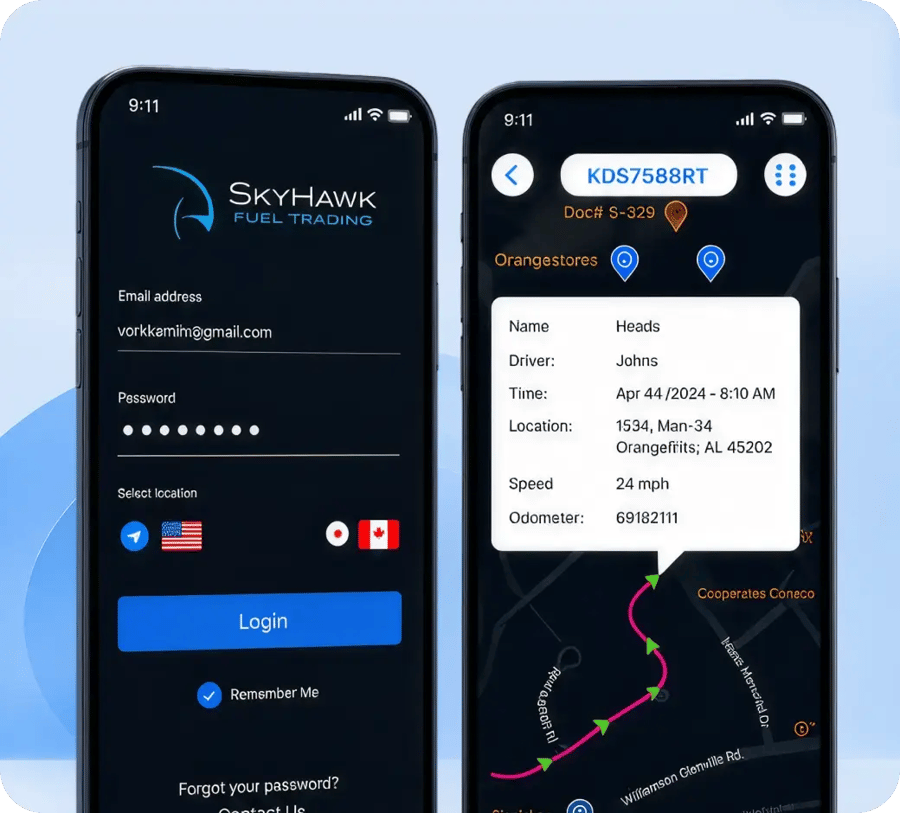
SkyHawk by TELUS needed a streamlined mobile experience for its Connect Anywhere platform. Tech.us built the core experience around real-time asset tracking, fleet activity, secure configuration, and map-based operational visibility.
Read the Case Study

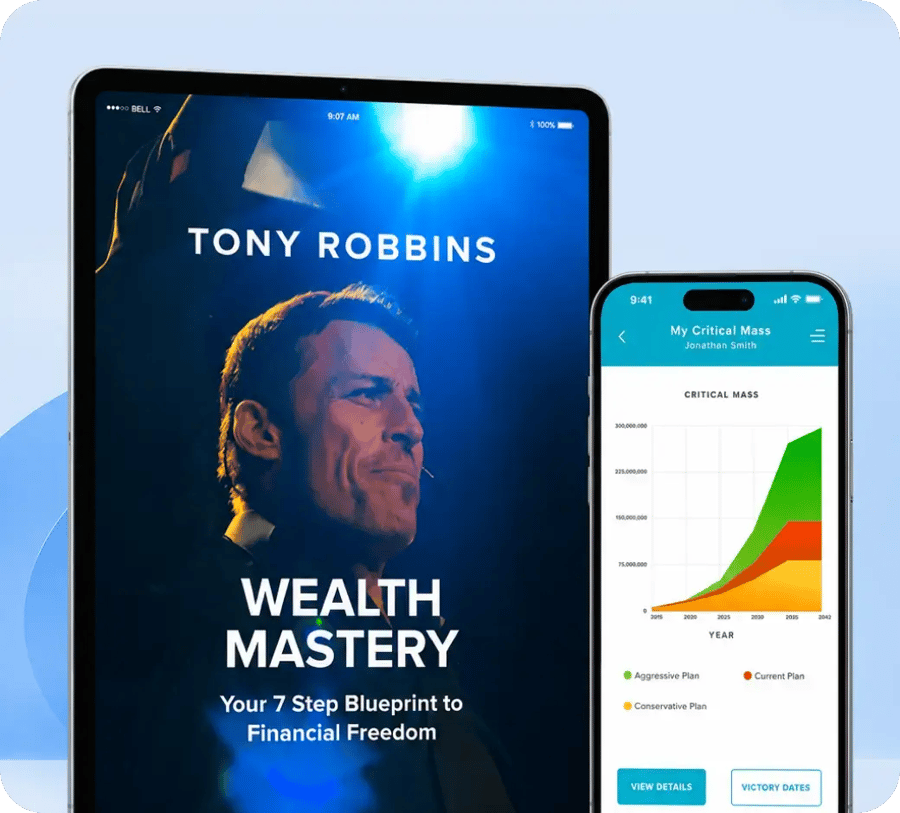
Tech.us helped bring Wealth Mastery to life as a digital platform that puts personalized financial planning tools directly in users' hands while supporting a large and growing audience.
Read the Case Study
WHY TECH.US FOR SOFTWARE PRODUCT DEVELOPMENT
Product development involves a series of choices about what deserves to be built. We help teams make those choices with clearer reasoning and less unnecessary scope.
An exciting concept can still contain untested beliefs about users. We identify those assumptions before they become expensive features.
More functionality does not automatically create a better product. We keep the first release focused on proving the value proposition.
A technically complete product can still fail if users struggle to understand its value. Product experience is considered alongside engineering from the beginning.
Early technical choices should not make every future product decision harder. We build foundations with upcoming releases in mind.
The first release creates real product evidence. We use that evidence to inform the next set of priorities.
Product goals guide engineering choices so technical work remains tied to what the business is trying to prove or improve.

HOW WE DEVELOP SOFTWARE PRODUCTS
Each stage is designed to answer a product question before the next level of investment is made.
We clarify who the product is for and what problem it should solve.
We identify what must be true for the product to succeed and determine how those assumptions can be validated.
We define the smallest useful version that can demonstrate the product's value to real users.
Development stays focused on the user journey that matters most instead of expanding the scope prematurely.
We move the product into real use so decisions can be informed by actual behavior rather than internal expectations.
Feedback from the product informs improvements and helps determine what deserves to enter the roadmap next.
PRODUCT INVESTMENT DISCIPLINE
Product teams can lose significant time by expanding scope before proving that the core idea works. We help keep investment tied to evidence.
Confirm that the product addresses a meaningful user need before investing heavily in the solution.
Identify the experience that demonstrates the product's value most clearly and make it work well.
Product priorities should change when new evidence changes what the team knows.
Agree on what the first release needs to prove so the next investment decision has a clear basis.
We’ll help turn the opportunity into a focused first release with a clear reason behind every major product decision.
Shape Your Product Plan →PRODUCT DELIVERY OPTIONS
The right level of development support depends on whether you are still testing the opportunity or already serving real users.
Clarify the opportunity and identify the assumptions that need validation before a larger development commitment.
Move from product definition to a focused first release designed to test real demand.
Keep a dedicated team focused on improving an established product as customer needs and priorities change.
INDUSTRY EXPERIENCE
Different industries create different user expectations and business constraints. We account for those realities when shaping a product.
Explore All Industries

Healthcare
Develop products that make healthcare interactions easier while supporting the workflows behind care delivery.
Explore Healthcare→
Financial Services and Insurance
Create digital products where customer trust matters from the first interaction and product decisions must account for sensitive financial workflows.
Explore Financial Services and Insurance→
Retail and E-Commerce
Build products that make discovery and purchasing easier while supporting the operational needs behind the customer experience.
Explore Retail and E-Commerce→
Manufacturing
Develop products that turn operational needs into usable digital tools for the people responsible for keeping work moving.
Explore Manufacturing→
Construction
Create products that help project teams act on information faster across environments where work is distributed between many stakeholders.
Explore Construction→
Transportation and Logistics
Build products that give users clearer access to the information needed to coordinate movement and respond to changing conditions.
Explore Transportation and Logistics→
TECH STACK
We choose technologies based on how the product is expected to operate and evolve.
The stack should support the next product decision rather than turn an early engineering choice into a long-term constraint.
Agentic AI & Orchestration
Agentic AI
AI Agents
Multi-Agent Systems
Agentic Workflow Automation
Model Context Protocol (MCP)
Agent-to-Agent Protocol (A2A)
Agent Memory and Reasoning
Generative AI & Foundation Models
Large Language Models
GPT
Claude
Gemini
Llama
Generative AI
Multimodal Foundation Models
Diffusion Models
Small Language Models
Model Fine-Tuning
Prompt & Context Engineering
Machine Learning & Deep Learning
Machine Learning
Deep Learning
Predictive Analytics
Recommendation Systems
Anomaly Detection
Time-Series Analysis
Data & AI Platforms
AI-Ready Data Platforms
Data Lakes and Lakehouse
Data Engineering
AI Frameworks & Libraries
PyTorch
TensorFlow
Scikit-learn
Hugging Face Transformers
LangChain
LangGraph
MLOps, LLMOps & AgentOps
MLOps
LLMOps
AgentOps
Model Deployment and Serving
Agent Deployment
Model and Agent Observability
Prompt and Response Tracing
AI Cost Optimization
AI Evaluation, Safety & Governance
LLM Evaluations
Agent Evaluations
RAG Evaluations
AI Guardrails
Prompt-Injection Protection
Red Teaming
Responsible AI
AI Governance
Cloud AI Technologies
Google Cloud
Vertex AI
Gemini Models
Agent Studio
Vertex AI Agent Builder
Agent Development Kit
Vertex AI Vector Search
Google Cloud Document AI
Google Cloud Vision AI
Microsoft Azure
Microsoft Foundry
Microsoft Copilot Studio
Microsoft Agent Framework
Azure AI Document Intelligence
Azure AI Speech and Vision
Microsoft Fabric
Microsoft Purview
Language, Vision, Speech & Document AI
NLP, NLU and NLG
STT, TTS and ASR
Conversational AI
Document Intelligence
Computer Vision
RAG, Search & Knowledge Systems
Enterprise RAG
Agentic RAG
Multimodal RAG
Enterprise Search
Semantic & Hybrid Search
Vector Databases
Knowledge Graphs
Reranking and Retrieval Optimization
RECOGNITION
Tech.us has been recognized by industry platforms for its technology expertise and delivery capabilities.
FAQ
Software product development is the process of turning a product opportunity into software intended for ongoing use by a defined group of users.
It includes product definition before development and continued improvement after launch.
Software development focuses on creating software that meets defined requirements.
Product development also focuses on whether the right product is being built. It considers user demand and adoption before deciding what should enter the roadmap.
A minimum viable product is the smallest useful version of a product that can test its core value with real users.
Its purpose is to generate evidence before the business invests in a broader feature set.
An MVP should contain the functionality required to test the product's most important assumption.
Features that do not contribute directly to that validation can usually wait for a later release.
Not always.
A proof of concept is useful when technical feasibility needs to be tested first. An MVP is more appropriate when the main question is whether users will value the product.
The timeline depends on the product scope and the amount of validation required before release.
A focused MVP will follow a different timeline from an established product that already has multiple customer workflows.
Cost depends on the product scope and technical complexity. The first release also affects the investment required.
Defining what the product needs to prove before development helps prevent unnecessary scope from increasing the initial cost.
The team evaluates how real users respond to the product.
Those findings can guide changes to the experience and determine which capabilities deserve further investment.
Yes. Tech.us can continue supporting product enhancements after the initial release.
Ongoing development can be aligned with customer feedback and the priorities that emerge as the product matures.
Create a product that solves a clear customer problem and supports stronger decisions around launch, adoption, and growth.
Talk To Our Experts →We value your privacy
By continuing to use this website, you agree to our Privacy Policy.
If you decline, your information won’t be tracked when you visit this website. A single cookie will be used in your browser to remember your preference not to be tracked.
Necessary cookies keep the site running and are always on. Turn the others on or off to control how Tech.us uses them.
Required for the site to function. Cannot be disabled.
Help us measure traffic and see how visitors use the site so we can improve it. All information is aggregated.
Used to deliver and personalize ads, measure campaign performance, and share data with advertising partners (including Retention.com and RB2B).
For residents of California and other states with similar rights. Turning this on opts you out of the sale or sharing of your personal information for targeted advertising (this also disables Advertising cookies).
Learn more in our Cookie Policy and Privacy Policy. You can change these settings at any time.