AI IN FINANCIAL

Improve Financial Performance With AI Built for Better Decisions

Tech.us helps financial organizations use AI to reduce decision friction and make better use of the data already moving through the business.

1,500+ Projects Delivered
26+ Years of Engineering
30+ Industries Served
Underwriting Review Decision time down 45%
Finance-banner

TRUSTED BY INDUSTRY LEADERS

OUR SERVICES

AI Services Built for Financial Decision-Making

Financial AI has to do more than predict. It has to fit the systems that hold sensitive financial data and remain reviewable once it starts influencing real decisions.

Financial AI Strategy and Feasibility

Define where AI has a strong enough business case to justify development. We assess the decision you want to improve and determine whether the available data can support it.

Custom Financial AI and ML Development

Build models around your own financial data for forecasting, risk analysis, classification, anomaly detection, or other defined business problems.

Generative AI and Financial Knowledge Systems

Develop AI that works from approved financial information to support research, summarization, internal knowledge access, and document-heavy workflows.

AI Agents and Process Automation

Automate repeatable financial operations within clearly defined boundaries. Tasks that need judgment or approval can remain with the people accountable for the outcome.

Financial Data and System Integration

Connect AI with the systems where transaction, account, lending, payment, or other financial information already lives rather than creating another isolated layer.

Model Validation, Monitoring, and MLOps

Evaluate model performance before deployment and track it afterward. Monitoring helps identify drift or changing behavior before it quietly affects business decisions.

SELECTED WORK

Technology Behind Complex Financial Workflows

Explore selected projects where Tech.us has built software around sensitive data, demanding business rules, and decisions that require dependable technology.

View All Case Studies

AI-Powered Takeoffs From Complex Construction Drawings

A precast concrete manufacturer partnered with Tech.us to bring AI into the estimating workflow. The system uses OCR, computer vision, and generative AI to identify, extract, and visualize structures, pipes, and components from complex construction drawings.

Read the Case Study
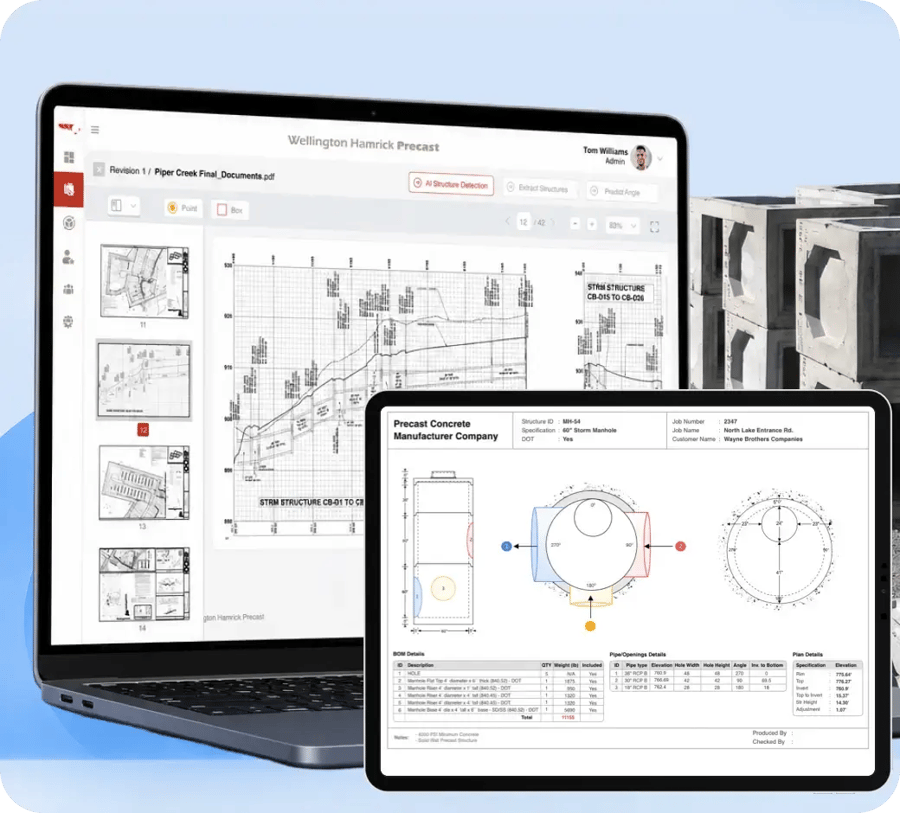

Wellington Hamrick Precast AI takeoff automation tool shown on laptop and tablet

Mobile Fleet Visibility Built for Field Operations

SkyHawk by TELUS needed a streamlined mobile experience for its Connect Anywhere platform. Tech.us built the core experience around real-time asset tracking, fleet activity, secure configuration, and map-based operational visibility.

Read the Case Study
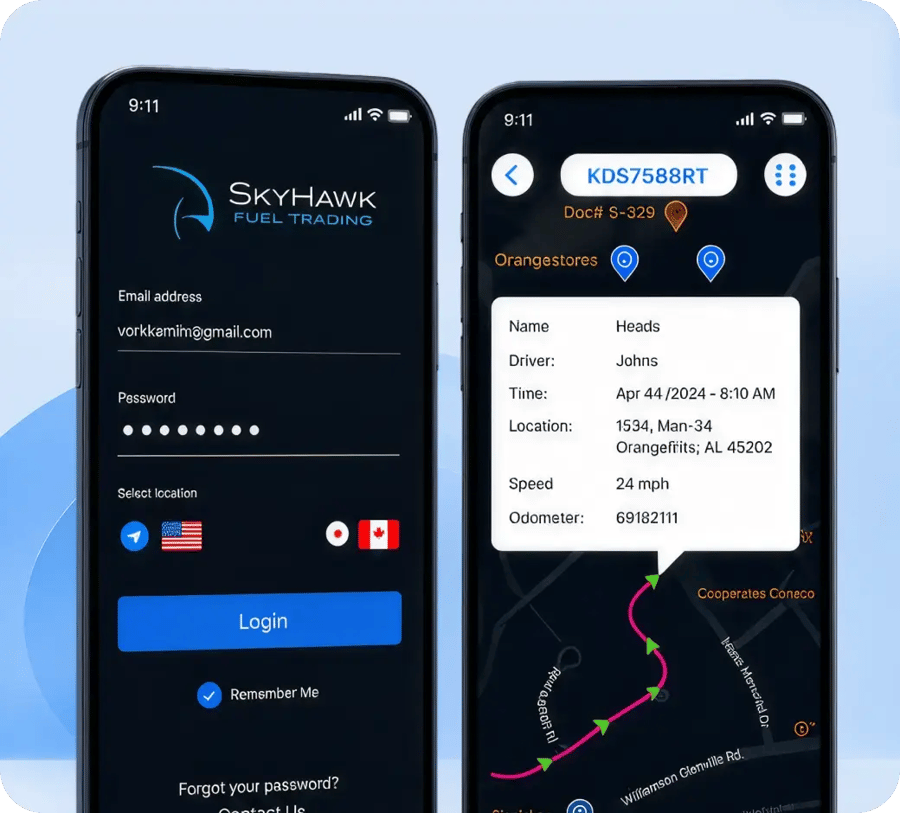

SkyHawk by TELUS mobile app screens showing fleet tracking and login

Personalized Financial Technology Built to Scale

Tech.us helped bring Wealth Mastery to life as a digital platform that puts personalized financial planning tools directly in users' hands while supporting a large and growing audience.

Read the Case Study

Tony Robbins Wealth Mastery app shown on tablet and phone

Why Tech.us

Experience That Supports Financial AI Delivery

A financial model is not valuable simply because it produces an answer. The organization also needs to understand where that answer came from and whether the system continues to behave as expected.

Financial Software Experience Beyond AI

Tech.us has built technology across banking, lending, payments, wealth management, risk management, and other financial workflows. AI can therefore be designed around the wider system it needs to become part of.

Models Built Around Defined Decisions

We start with the financial decision the model is expected to support. That keeps development tied to a real workflow instead of optimizing technical metrics with no clear business use.

Integration With Existing Financial Systems

AI rarely works in isolation. We design around the financial platforms and data sources already involved in the process so the model can become part of day-to-day operations.

Explainability Where Decisions Require It

When people need to understand why a model reached a result, that requirement influences how the solution is designed from the beginning.

Validation Before Wider Use

Models are tested against relevant historical or operational data before they are relied on for higher-impact financial decisions.

Engineering Beyond the Model

Tech.us can address the application, integration, data pipeline, and deployment work around the AI itself rather than handing over a standalone model that still needs to be operationalized.

why-choose-techus

MODEL GOVERNANCE

Keep Financial AI Reviewable After It Goes Live

Models change in value when they move from analysis into real financial workflows. Governance needs to continue after deployment rather than ending when development is complete.

Know What Data Drives the Output

Maintain visibility into the information feeding the model so teams can investigate unexpected results and understand changes in performance.

Validate Before Depending on It

Test the model against cases relevant to the decision it will influence rather than relying only on development accuracy.

Keep Consequential Decisions Reviewable

Where financial or customer impact is significant, AI can inform the decision while defined review or approval remains part of the workflow.

Make Reasons Easier to Trace

For use cases such as lending, the ability to identify why a model reached a result can be as important as the result itself.

Watch for Performance Drift

Monitor models after deployment to identify when changing data or business conditions begin to affect how reliably they perform.

Control Access to Sensitive Data

Financial and customer information should only be available to the systems and people that need it for the defined use case.

Turn a Financial Workflow Into a Stronger AI Use Case

Identify where AI can remove friction without making the decision harder to understand or control.

Talk To Our AI Expert

FINANCIAL AI SOLUTIONS

AI Solutions for the Work Behind Financial Decisions

We build focused solutions where large volumes of financial information need to be reviewed faster without turning important decisions into black boxes.

Fraud and Transaction Anomaly Detection

Fraud and Transaction Anomaly Detection

Analyze transaction patterns to surface unusual activity for investigation so fraud teams can direct attention toward cases that warrant a closer look.

Credit and Underwriting Decision Support

Credit and Underwriting Decision Support

Use relevant financial information to support credit assessment and underwriting while keeping the reasoning behind important outcomes reviewable.

AML and Financial Crime Investigation Support

AML and Financial Crime Investigation Support

Use AI to help prioritize suspicious patterns or organize information around investigations, reducing the amount of routine review analysts need to complete manually.

Financial Forecasting and Risk Analytics

Financial Forecasting and Risk Analytics

Use historical financial information to model possible outcomes and give finance or risk teams another input for planning and exposure analysis.

Customer and Advisor Assistance

Customer and Advisor Assistance

Give customers or financial professionals faster access to approved information while defining clear handoff points for requests that need human support.
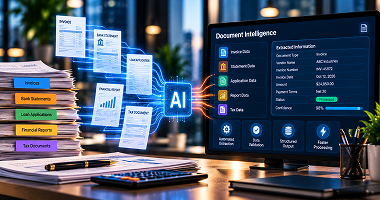
Financial Document Intelligence

Financial Document Intelligence

Extract information from applications, statements, reports, agreements, and other financial documents so it can move into downstream workflows with less manual handling.

HOW WE WORK

Build the Model Around the Decision It Will Influence

The right development approach depends on what happens after the model produces an answer. We define that context before choosing how the AI should work.

Define the Decision

We identify the financial problem and clarify how the model's output will be used. This sets the standard the solution needs to meet.

Assess the Data and Controls

We review the available information and the systems around it. Governance needs are considered before model development begins.

Develop and Challenge the Model

The solution is trained and tested against relevant cases. Weaknesses are investigated before the model moves into operational use.

Integrate and Monitor

We connect the AI with the required systems and establish monitoring so performance can be reviewed as incoming data changes.

FINANCIAL DATA

Build AI Around the Information Finance Already Produces

Financial organizations generate different kinds of data across every customer interaction and business process. The right inputs depend on the decision the AI is expected to support.

Transaction Data

Use payment or account activity to identify patterns that can support fraud analysis and other transaction-level decisions.

Credit and Account Information

Bring relevant financial history into lending or risk workflows where deeper analysis can support human decision-making.

Financial Documents

Extract useful information from statements, applications, agreements, and other documents that would otherwise require manual review.

Customer Interactions

Use conversations or service history to help answer routine questions and give staff faster access to relevant customer context.

Market and Portfolio Information

Apply predictive analysis to historical financial or market information where forecasting and exposure analysis are part of the use case.

Operational Records

Use information from financial processes to identify repetitive work or patterns that can support workflow automation.

RECOGNITION

Independent Recognition for Technology Delivery

Explore the awards and third-party recognition associated with Tech.us across software engineering and technology development.


Mobile App Daily — Top Web Development Company
DesignRush — Top AI Development Company
Mobile App Daily — Top AI Company
TechReviewer — Top Mobile App Developers
TechReviewer Award

TECH STACK

Technology for Financial AI That Needs to Stay Observable

The right architecture depends on the financial workflow and where its data already lives.
We select technologies around integration and model monitoring while accounting for the security requirements of sensitive financial information.

Agentic AI & Orchestration

Agentic AI Agentic AI
AI Agents AI Agents
Multi-Agent Systems Multi-Agent Systems
Agentic Workflow Automation Agentic Workflow Automation
Model Context Protocol (MCP) Model Context Protocol (MCP)
Agent-to-Agent Protocol (A2A) Agent-to-Agent Protocol (A2A)
Agent Memory and Reasoning Agent Memory and Reasoning

FAQ

Financial AI Questions

AI can support areas such as fraud detection, underwriting, financial crime investigations, forecasting, document processing, and customer operations. The right application depends on the decision being improved and whether suitable data exists to support it. 

Yes, AI and machine learning can support credit underwriting. However, institutions still need to understand the model's output and meet the requirements that apply to the decisions they make. For some lending decisions, being able to provide specific reasons for an outcome is particularly important. 

Models can analyze transaction patterns and identify activity that differs from expected behavior. The output can help fraud teams prioritize investigations rather than requiring every transaction to be reviewed manually. 

AI can help identify unusual patterns and organize information around cases that may require investigation. It can support analysts while established compliance processes remain responsible for how cases are reviewed or escalated. 

Explainability starts by defining what people need to understand about the model before it is built. Depending on the use case, that can include showing important input factors or keeping enough traceability to investigate why an output was produced. 

Yes, but the use case needs clear limits. Generative AI can help with routine information requests or staff assistance, while more complex customer problems need a reliable route to human support. 

Model performance should continue to be monitored after launch. Changes in incoming data or business conditions can affect results over time, so organizations need a way to identify drift and determine when a model needs review. 

Yes. AI can be integrated with existing banking, lending, payment, risk, and other financial platforms depending on the systems involved and the interfaces they provide. 

Ready To Build Financial AI Around a Clear Business Outcome?

Start with the decision you want to improve and build toward a solution your teams can actually use.

Talk to Our AI Expert