AI IN MANUFACTURING

Improve Manufacturing Performance With AI That Fits Your Operations

Tech.us helps manufacturers use AI to improve reliability, quality, planning, and day-to-day decision-making across the business.
1,500+ Projects Delivered
26+ Years of Engineering
30+ Industries Served
Equipment Uptime 98.6% · downtime down 32%
Banner-1

TRUSTED BY INDUSTRY LEADERS

OUR SERVICES

Manufacturing AI Services Built Around Your Operations

AI can create value across manufacturing only when it works with the systems, data, and decisions already shaping the business. We build solutions around your operating environment rather than forcing a standard AI approach onto it.

Smart Factory and AI Strategy Consulting

Identify where AI can make a measurable difference across manufacturing before committing to development. We assess your operations and available data to prioritize use cases with a practical business case.

Industrial Data and IIoT Integration

Connect information from equipment and manufacturing systems such as SCADA, PLC historians, and MES so AI can work from a more consistent operational data foundation.

Custom Industrial AI and ML Development

Build models around your equipment, process, and operational data to address problems specific to your manufacturing environment. Performance is validated against the conditions relevant to the intended use.

Machine Vision Systems

Use computer vision to inspect products or processes against defined quality requirements. Your teams remain responsible for how identified defects or deviations are handled.

Edge and On-Premise AI Deployment

Deploy AI closer to the source of the data when response time, security, or operational requirements make cloud processing less suitable.

MLOps and Model Monitoring

Monitor models after deployment so changes in equipment, processes, or incoming data do not quietly reduce performance over time.

SELECTED WORK

Technology Built Around Real Manufacturing Requirements

Explore selected projects where Tech.us has developed practical technology around complex operational, data, and engineering needs.

View All Case Studies

AI-Powered Takeoffs From Complex Construction Drawings

A precast concrete manufacturer partnered with Tech.us to bring AI into the estimating workflow. The system uses OCR, computer vision, and generative AI to identify, extract, and visualize structures, pipes, and components from complex construction drawings.

Read the Case Study
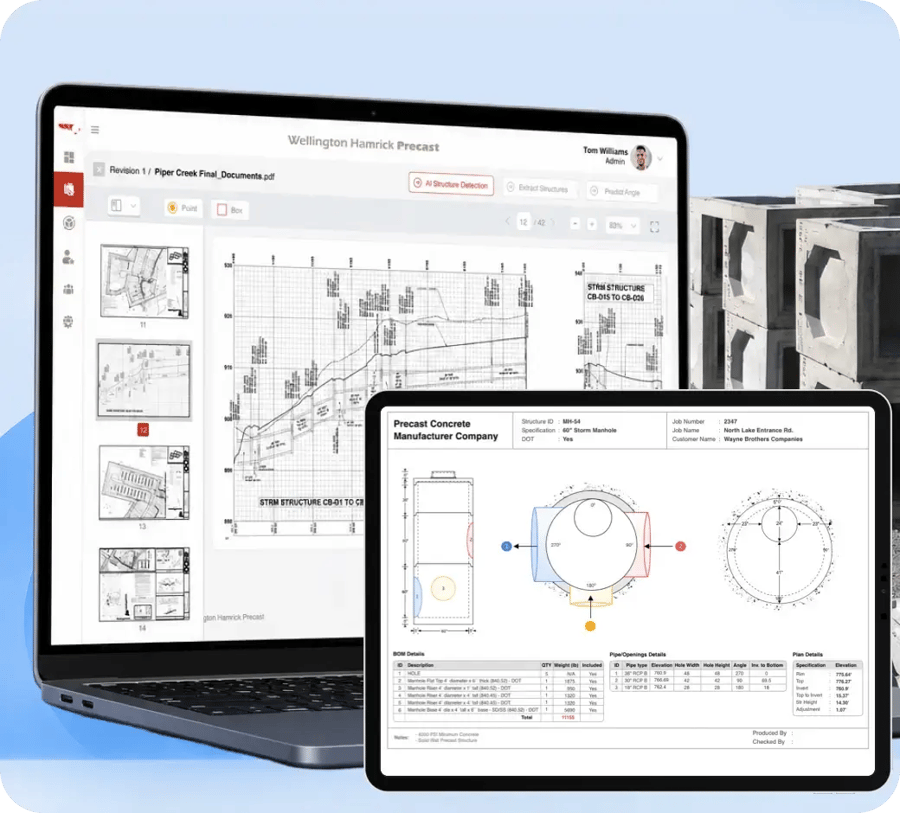

Wellington Hamrick Precast AI takeoff automation tool shown on laptop and tablet

Mobile Fleet Visibility Built for Field Operations

SkyHawk by TELUS needed a streamlined mobile experience for its Connect Anywhere platform. Tech.us built the core experience around real-time asset tracking, fleet activity, secure configuration, and map-based operational visibility.

Read the Case Study
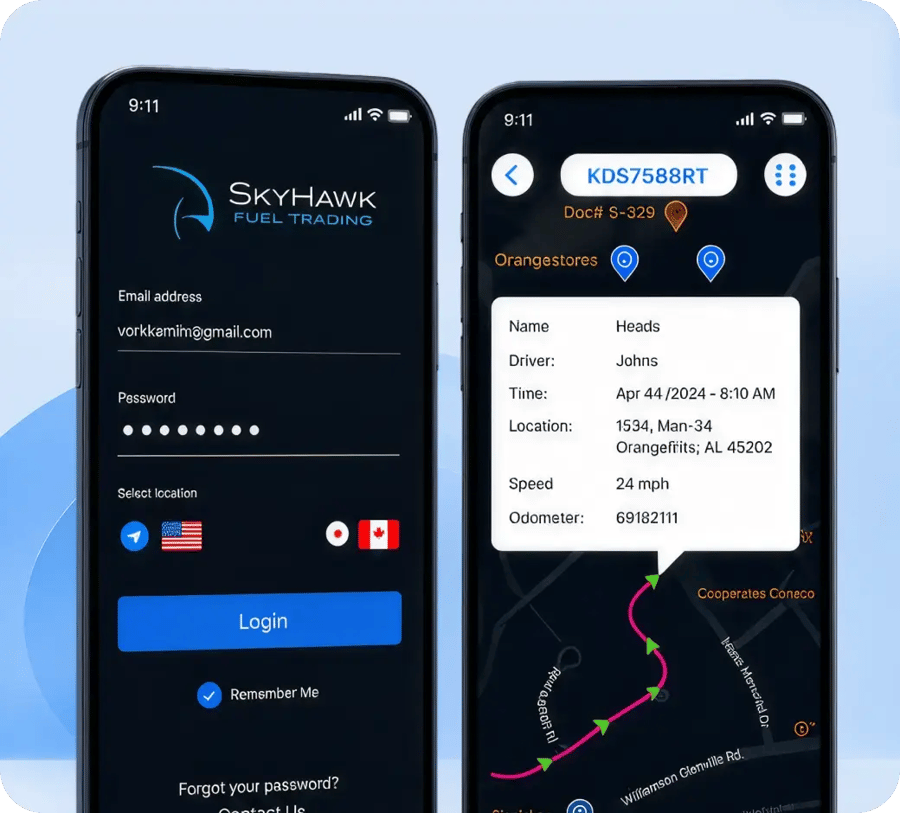

SkyHawk by TELUS mobile app screens showing fleet tracking and login

Personalized Financial Technology Built to Scale

Tech.us helped bring Wealth Mastery to life as a digital platform that puts personalized financial planning tools directly in users' hands while supporting a large and growing audience.

Read the Case Study

Tony Robbins Wealth Mastery app shown on tablet and phone

Why Tech.us

Manufacturing AI Has to Fit the Business Behind the Model

A useful AI system has to connect with existing technology, reflect real operating conditions, and produce results people can act on. We build with those requirements in mind from the beginning.

Experience With Industrial and Operational Systems

Our work includes industrial software, equipment data, operational systems, and supply chain environments. That context helps us understand how AI needs to fit within a wider manufacturing technology landscape.

Built Around Existing Manufacturing Systems

Manufacturers already depend on MES, SCADA, equipment platforms, and other core systems. We design AI to work with that environment rather than introducing another disconnected layer.

Deployment That Fits the Use Case

Some workloads belong in the cloud. Others need edge or on-premise deployment because of speed, security, or data-control requirements. We design around what the operation actually needs.

Validation Against Real Conditions

Models are evaluated using conditions and data relevant to the environment where they will be used, not only development benchmarks.

People Stay Responsible for the Outcome

AI can identify patterns or recommend action. The people responsible for production, engineering, maintenance, quality, or planning remain in control of decisions that matter.

Value Connected to Manufacturing Metrics

Solutions can be evaluated against measures manufacturers already use, such as downtime, scrap, cycle time, yield, or other operational KPIs relevant to the use case.

why-choose-techus

MANUFACTURING CONTROLS

Build AI Without Losing Control of Data or Operations

Manufacturing AI often touches proprietary processes, equipment information, and decisions with real operational consequences. Those realities need to shape the system from the beginning.

Protect Operational Data and IP

Process information, equipment data, and proprietary designs are handled with controlled access and secure data practices throughout the solution lifecycle.

Keep Human Judgment Where It Matters

AI supports decisions rather than silently taking ownership of them. Review points remain in workflows where engineering or operational judgment is required.

Integrate Without Unnecessary Disruption

New AI capabilities should work with the systems already supporting the business. Deployment is planned around existing operations rather than assuming everything needs to change.

Validate Where the System Will Be Used

A solution built for manufacturing needs to perform under the conditions relevant to its actual use, whether that is production, planning, quality, maintenance, or another operating area.

Make Outputs Usable by the People Receiving Them

Recommendations and alerts need enough context for people to understand what requires attention and decide what to do next.

Measure Business Impact, Not Model Activity

Technical accuracy matters, but manufacturing teams ultimately need to know whether the solution is improving a business or operational metric they already care about.

Start With the Manufacturing Challenge That Matters Most

Use AI where it can address a clear operational need and give your teams information they can act on.

Talk To Our AI Expert

MANUFACTURING SOLUTIONS

AI Solutions Across the Manufacturing Lifecycle

We build focused solutions across the areas where manufacturers need better visibility, stronger predictions, or faster analysis.
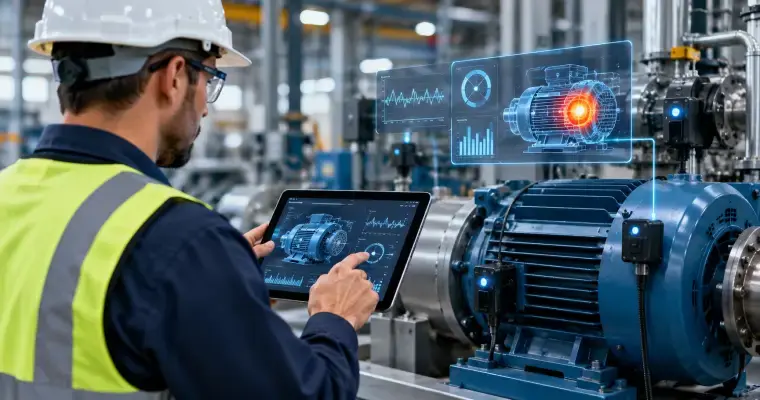
Predictive Maintenance2x

Predictive Maintenance

Use equipment and sensor history to identify signs of developing failure earlier so maintenance can be planned before unexpected downtime creates wider disruption.
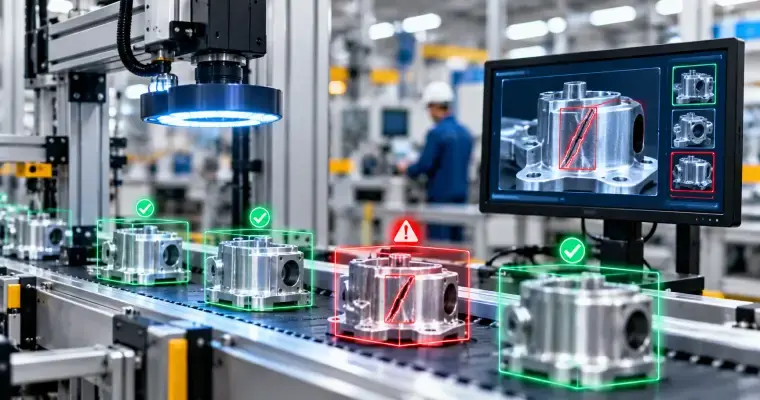
Automated Quality Inspection2x

Automated Quality Inspection

Apply computer vision to identify defects or process deviations more consistently and give quality teams earlier visibility into issues that need attention.
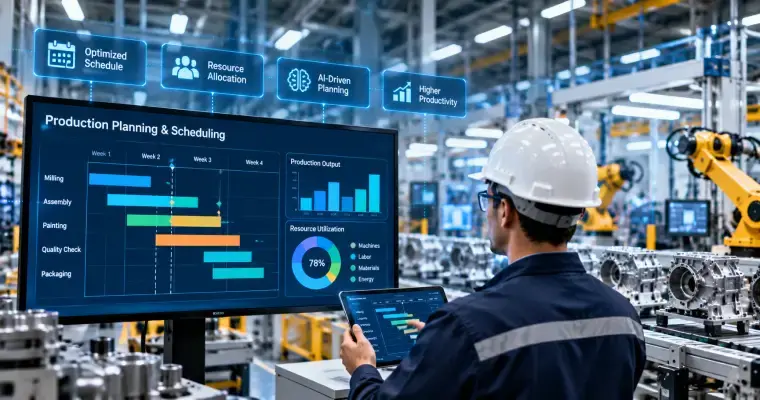
Production Planning and Scheduling2x

Production Planning and Scheduling

Use changing information around orders, capacity, downtime, and materials to support schedules that better reflect current operating conditions.
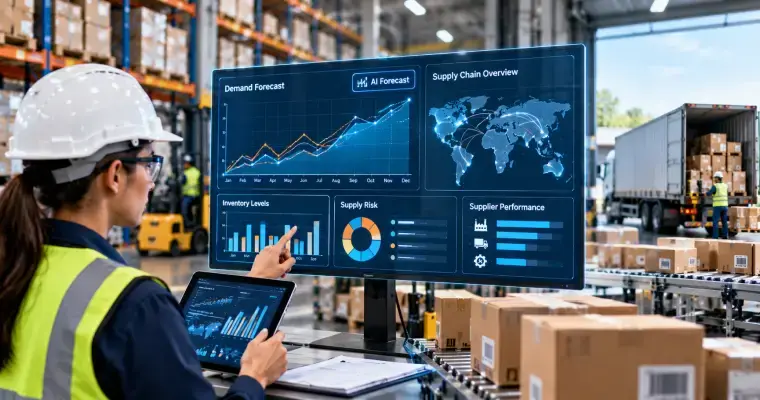
Demand and Supply Chain Forecasting2x

Demand and Supply Chain Forecasting

Use historical information and relevant external signals to improve demand forecasts while giving planning teams earlier visibility into potential supply constraints.
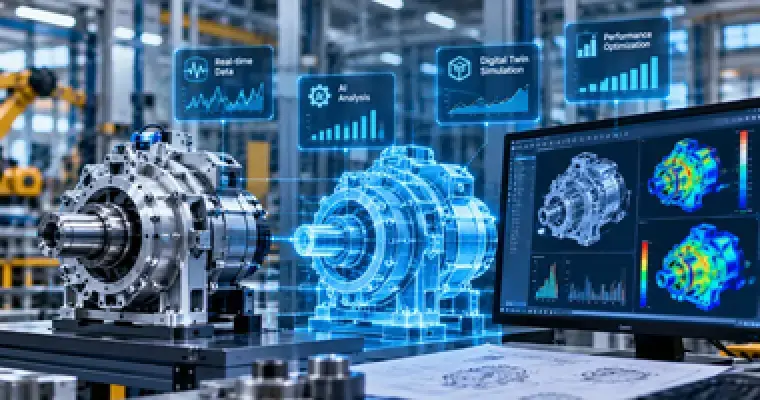
Digital Twins and AI-Assisted Design2x

Digital Twins and AI-Assisted Design

Simulate changes before they are introduced and use generative AI to explore more design options against defined engineering requirements.
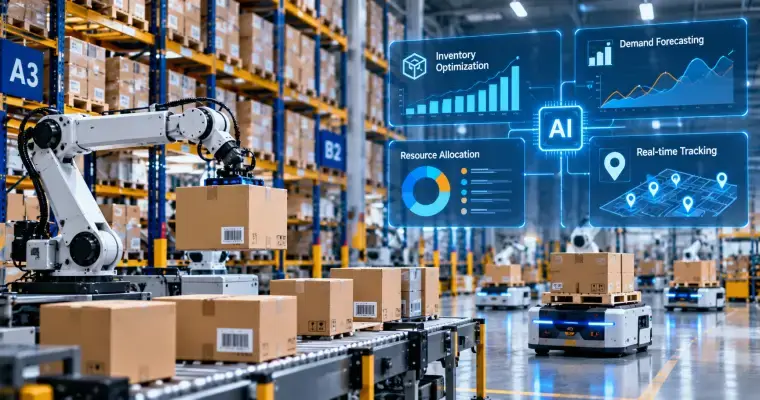
Inventory and Resource Optimization2x

Inventory and Resource Optimization

Use production plans, equipment information, and demand patterns to support better decisions around spare parts, materials, energy, and other resources.

HOW WE WORK

Take Manufacturing AI From Business Case to Operational Use

The work starts with the problem and the result you need to improve. Technology choices follow once the use case and available data are understood.

Define the Opportunity

We clarify the manufacturing problem and determine whether AI is an appropriate way to address it. The expected result is defined before development begins.

Map the Data and Systems

We review the information required for the use case and identify how it connects with the manufacturing systems already in place.

Build and Validate

The solution is developed using relevant data and tested against conditions that reflect how it will be used.

Integrate and Monitor

We deploy the solution into your environment and monitor performance so changes in data or operating conditions can be identified over time.

MANUFACTURING PRIORITIES

Where AI Can Strengthen Manufacturing Performance

AI can support decisions across the manufacturing business, from asset reliability and quality to planning, engineering, and resource management.

Asset Reliability

Identify patterns in equipment data that may signal developing problems and give maintenance teams more time to respond.

Quality Performance

Use image and process information to find defects earlier and give quality teams more consistent visibility into recurring issues.

Production Planning

Bring current operating information into planning so schedules can respond more effectively to changes in demand, capacity, materials, or downtime.

Supply Chain Readiness

Use forecasting to improve visibility into demand and supply conditions that can affect inventory or production plans.

Product and Process Engineering

Use simulation and AI-assisted design to explore alternatives before committing engineering time or changing a real process.

Cost and Resource Efficiency

Analyze how materials, energy, inventory, or process conditions affect performance so teams can identify where resources may be used more effectively.

RECOGNITION

Recognized for Technology and Engineering Delivery

Explore the industry recognition associated with Tech.us and its work across software engineering and technology development.

Mobile App Daily — Top Web Development Company
DesignRush — Top AI Development Company
Mobile App Daily — Top AI Company
TechReviewer — Top Mobile App Developers
TechReviewer Award

TECH STACK

Technology Chosen Around Your Manufacturing Environment

The right architecture depends on where the data lives and how quickly the solution needs to respond.
We choose technologies based on integration, reliability, and deployment requirements, including edge or on-premise environments where appropriate.

Agentic AI & Orchestration

Agentic AI Agentic AI
AI Agents AI Agents
Multi-Agent Systems Multi-Agent Systems
Agentic Workflow Automation Agentic Workflow Automation
Model Context Protocol (MCP) Model Context Protocol (MCP)
Agent-to-Agent Protocol (A2A) Agent-to-Agent Protocol (A2A)
Agent Memory and Reasoning Agent Memory and Reasoning

FAQ

Manufacturing AI Questions

AI can support areas such as demand forecasting, supply chain planning, product design, inventory management, maintenance, energy management, and other operational decisions. It does not have to be limited to equipment or production processes.

Traditional automation follows predefined rules. AI learns patterns from data and can support decisions where the answer changes with the situation, such as predicting failure or adjusting a forecast as new information becomes available.

The required data depends on the problem. Predictive maintenance may use equipment and sensor history, while forecasting may rely on demand or order information. Quality applications can require labeled images, while planning solutions may use production and material data.

Yes. AI solutions can work with systems such as MES, SCADA, PLC historians, and other operational platforms. Integration is often essential if the solution is expected to move beyond a standalone pilot.

No. AI can run in the cloud, at the edge, or on-premise depending on response-time requirements and how tightly the organization needs to control its data.

The source identifies predictive maintenance and automated quality inspection as common starting points because both address problems manufacturers already measure. The best first use case still depends on the data available and the business problem you want to solve.

AI is well suited to repetitive monitoring and data-heavy analysis. Operators, engineers, maintenance teams, planners, and other specialists remain responsible for decisions where experience and judgment matter.

Turn Manufacturing Data Into Better Business Decisions

Build AI around the areas where stronger information can improve reliability, quality, planning, and operational performance.

Talk to Our AI Expert