AI Readiness and Strategy Consulting
Find out where AI can make a practical difference before committing to development. We review your current environment and available data to identify use cases that are realistic enough to move forward.
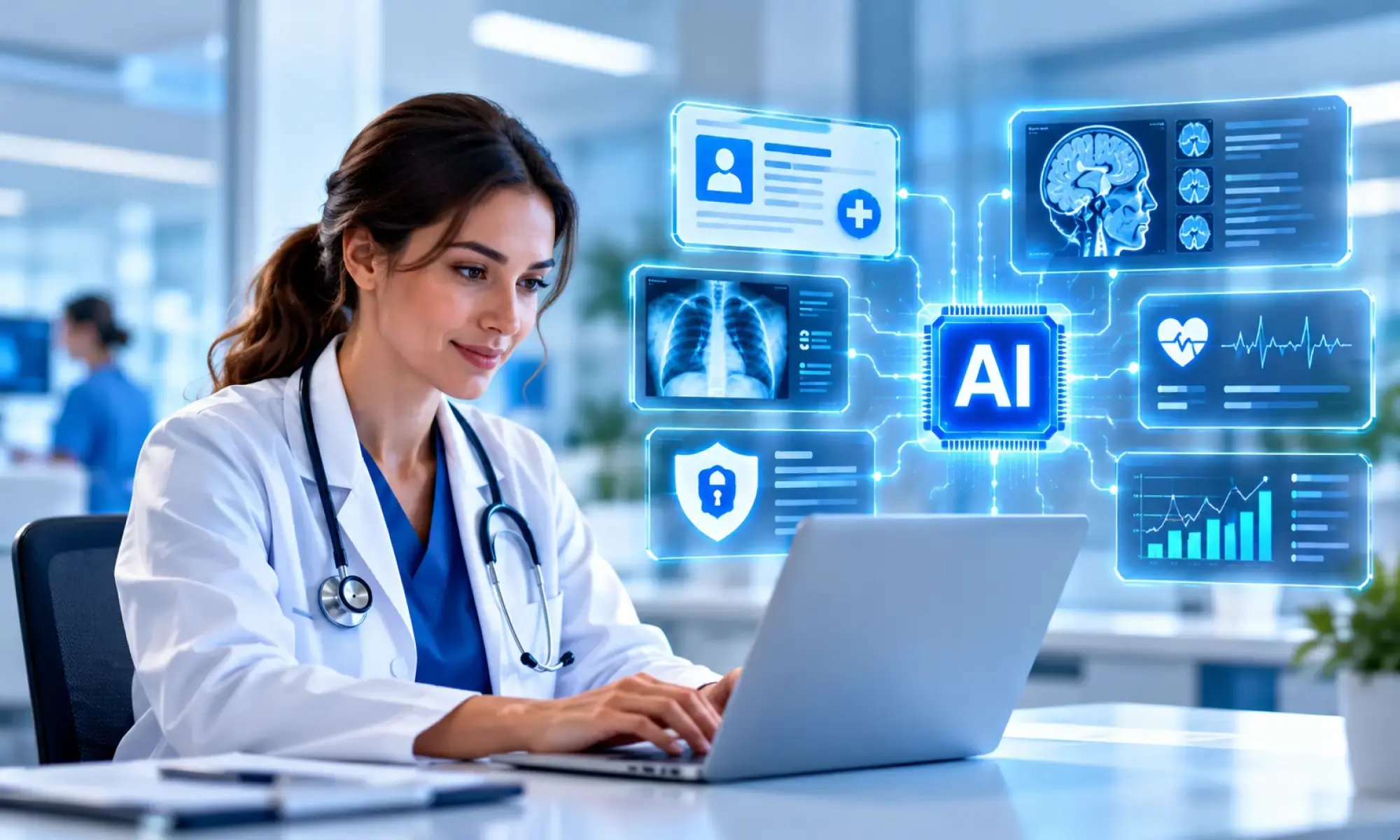
Tech.us helps healthcare organizations use AI in real clinical and operational settings while keeping patient data protected and the people responsible in control.
TRUSTED BY INDUSTRY LEADERS



OUR SERVICES
AI has to fit the way care is delivered, not create another disconnected system for staff to manage. We build around your existing workflows with the controls healthcare demands.
Find out where AI can make a practical difference before committing to development. We review your current environment and available data to identify use cases that are realistic enough to move forward.
Build models around problems specific to your organization using your own data. Each solution is tested against relevant cases before it is introduced into a live healthcare environment.
Use generative AI for areas such as clinical documentation, summarization, and patient communication. Solutions are grounded in trusted information so the output stays closer to the sources your staff already relies on.
Take repetitive administrative work away from clinical and operational staff without automating decisions that need human judgment. Review points are built into workflows where the outcome carries clinical or financial weight.
Bring AI into the systems your staff already uses through integrations based on standards such as HL7 and FHIR. This reduces the need for another standalone tool sitting outside the clinical workflow.
Track how models perform after deployment instead of assuming launch-day accuracy will last. Monitoring helps identify drift so performance can be reviewed as data or operating conditions change.
SELECTED WORK
Explore selected work where Tech.us has turned complex healthcare requirements into technology designed to fit the environments where people actually use it.
View All Case Studies

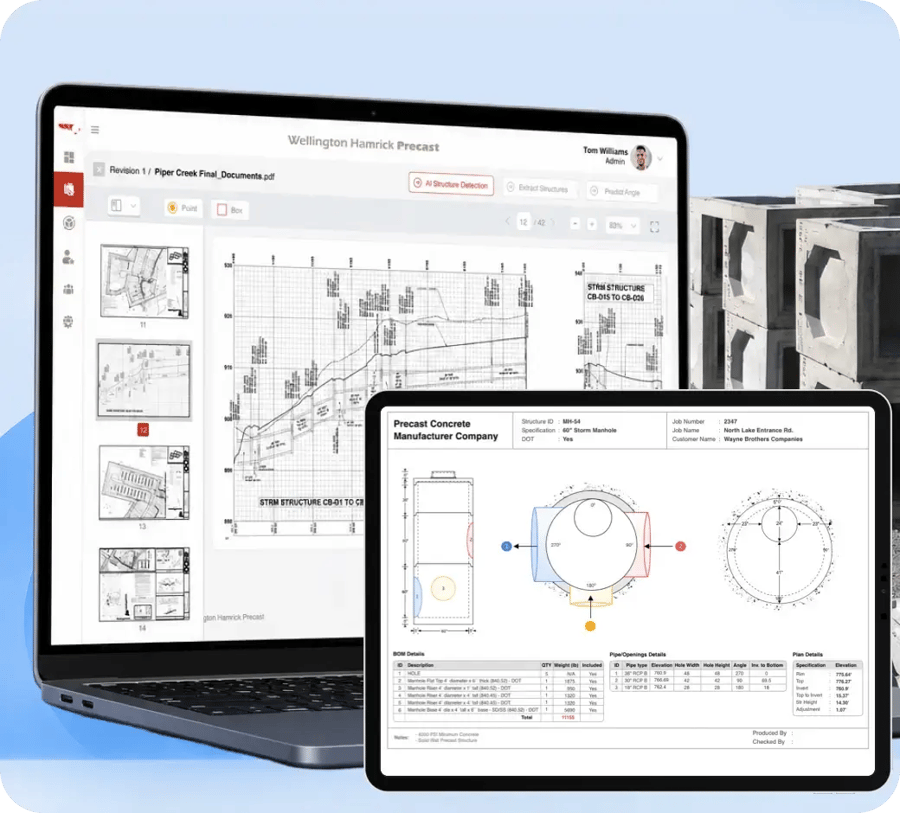
A precast concrete manufacturer partnered with Tech.us to bring AI into the estimating workflow. The system uses OCR, computer vision, and generative AI to identify, extract, and visualize structures, pipes, and components from complex construction drawings.
Read the Case Study

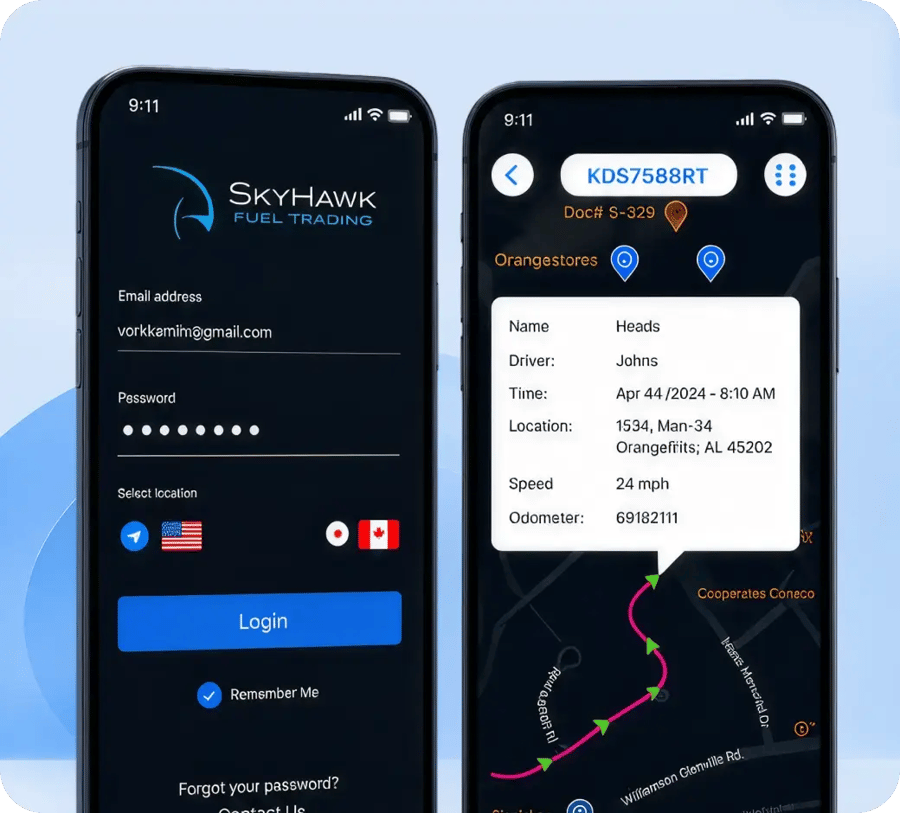
SkyHawk by TELUS needed a streamlined mobile experience for its Connect Anywhere platform. Tech.us built the core experience around real-time asset tracking, fleet activity, secure configuration, and map-based operational visibility.
Read the Case Study

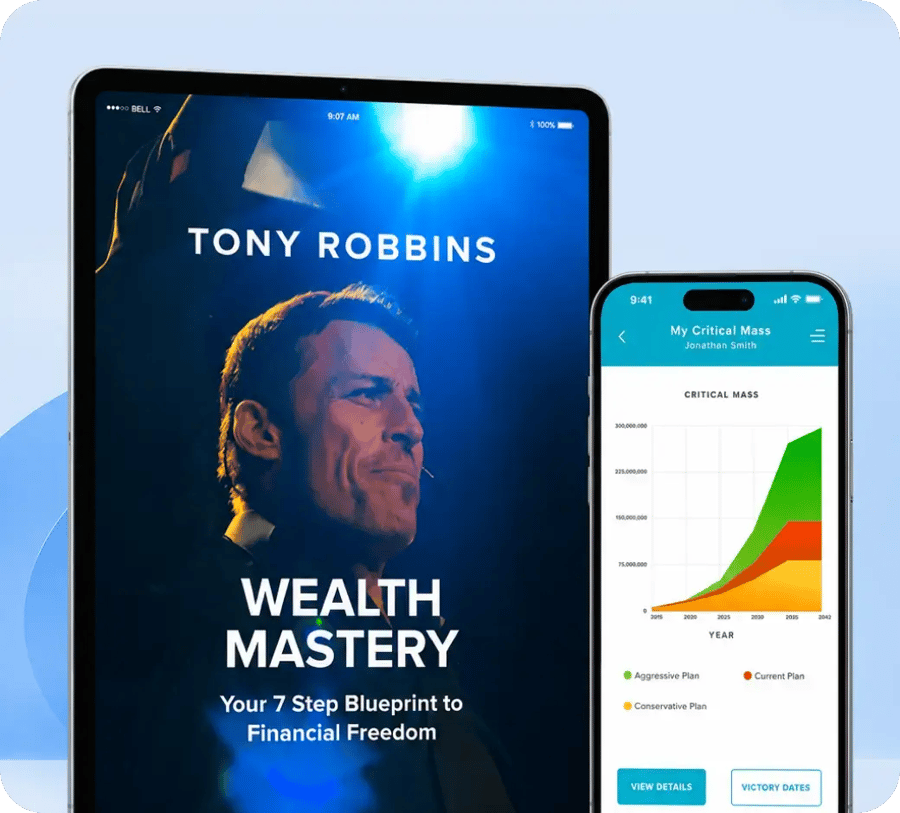
Tech.us helped bring Wealth Mastery to life as a digital platform that puts personalized financial planning tools directly in users' hands while supporting a large and growing audience.
Read the Case Study
WHY TECH.US
A useful healthcare AI system has to fit the workflow and stand up to the scrutiny that comes with sensitive data and consequential decisions.
Our healthcare work spans areas such as EHR systems, medical imaging, remote monitoring, and billing. That experience gives us context for how AI has to fit within a broader healthcare environment.
AI should reduce friction rather than give clinicians another place to work. We design around the systems and workflows already in use so adoption does not depend on rebuilding the way people do their jobs.
Models are tested against relevant real-world cases before they are put in front of staff or patients. If the results are not ready for the intended use, the solution does not move forward.
Protected health information is treated as sensitive from the beginning of development. Security and privacy requirements influence how the solution is designed rather than being added after the build.
We work with standards such as HL7 and FHIR when AI needs to exchange information with EHRs or other clinical systems. The goal is useful information flow without creating more fragmentation.
Tech.us brings more than two decades of engineering experience and 1,500+ completed projects to engagements that need disciplined implementation, not just AI experimentation.

Clinical Safeguards
Healthcare AI should make information easier to use without making responsibility harder to see.
Protected health information is handled in line with HIPAA and HITECH requirements, with encryption and controlled access built into the development approach.
AI can surface information or complete routine work. Clinical and financial decisions that require accountability remain with the people responsible for them.
Model performance is evaluated across patient groups so uneven results can be identified before the system is put into regular use.
When a solution may fall under FDA oversight as Software as a Medical Device, that pathway is considered while the system is being designed rather than after development is complete.
Where the use case allows it, we favor approaches that help clinicians and administrators understand why a model produced a particular result.
Access controls and audit trails provide visibility into how sensitive systems are used so activity can be reviewed when needed.
Find the opportunity that can work with your data and hold up in the environment where your people will use it.
Talk To Our AI Expert→HEALTHCARE SOLUTIONS
We build focused healthcare AI solutions where better use of information can remove workload or help people act sooner.
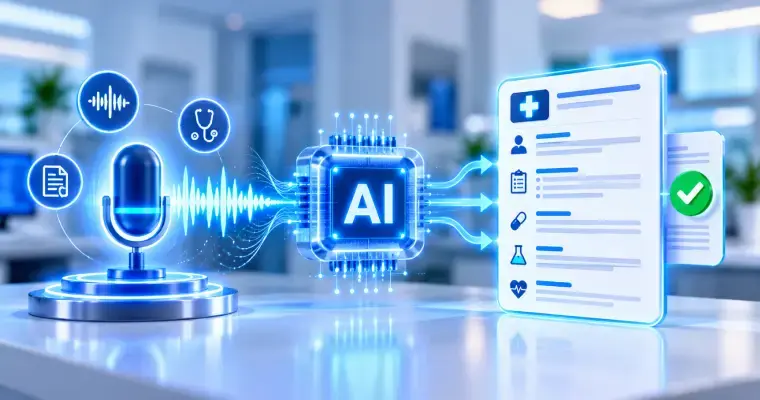
Turn clinical conversations into structured draft notes that clinicians can review rather than spending the same time creating documentation manually.
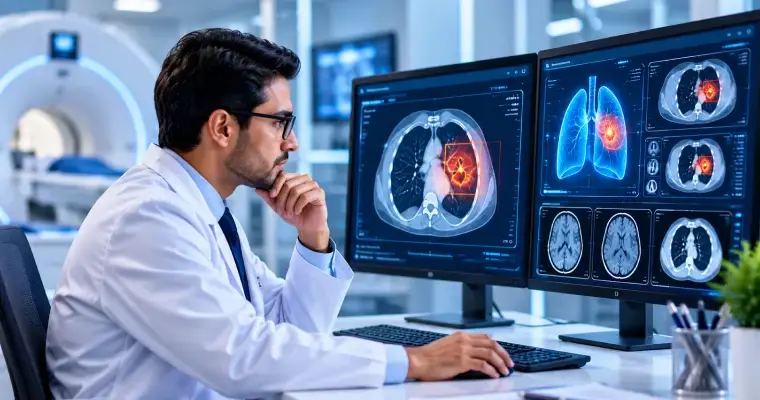
Analyze medical images to highlight areas that may warrant closer attention, giving specialists another source of support while final interpretation stays with them.
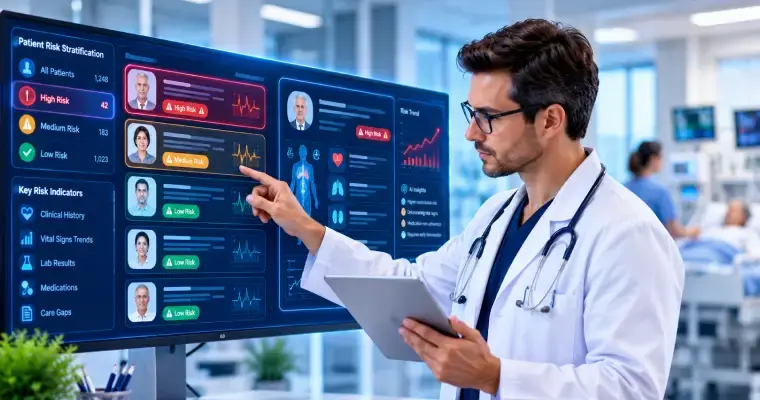
Bring relevant patient information forward and identify higher-risk cases so care teams can focus attention where it may be needed sooner.
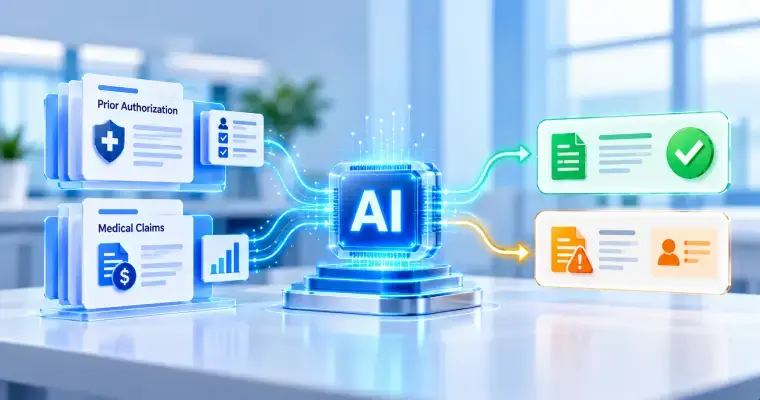
Reduce repetitive work across administrative processes such as prior authorization and revenue cycle tasks while keeping exceptions or approvals with staff.
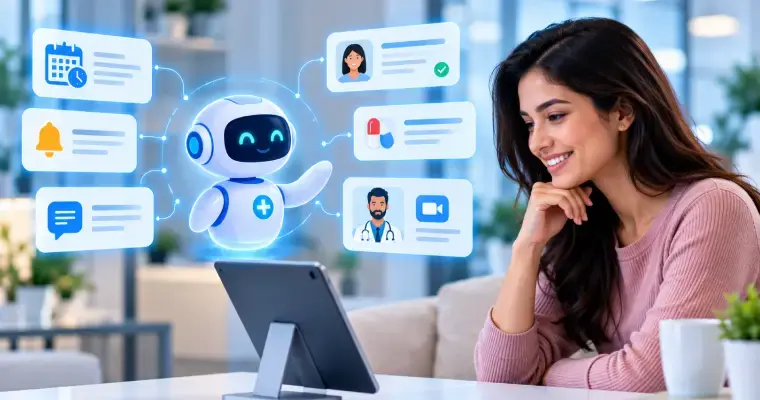
Handle routine scheduling, reminders, and common patient questions through AI assistants that can hand the conversation back to a person when needed.

Connect clinical systems and prepare data for AI use through standardization or de-identification where required, creating a more dependable foundation for downstream solutions.
HOW WE WORK
Healthcare AI moves forward only when the data can support it and the solution can be validated for the environment where it will operate.
We start with the problem and determine whether AI is an appropriate way to solve it. Scope is made clear before development begins.
We assess whether the available data can support the use case and how it needs to be handled. Privacy requirements are addressed before the model is built.
The solution is developed and tested against relevant cases. Performance has to meet the needs of the intended use before deployment.
We introduce the solution into your environment with monitoring in place so changes in model performance can be identified after launch.
WHO WE BUILD FOR
Our healthcare AI work can support organizations across care delivery, diagnostics, research, insurance, and life sciences.
TECH STACK
The technology behind a healthcare AI system depends on where the data lives and how the solution needs to fit into existing clinical systems.
We choose the stack around reliability and security while accounting for the environment in which the AI will operate.
Agentic AI & Orchestration
Agentic AI
AI Agents
Multi-Agent Systems
Agentic Workflow Automation
Model Context Protocol (MCP)
Agent-to-Agent Protocol (A2A)
Agent Memory and Reasoning
Generative AI & Foundation Models
Large Language Models
GPT
Claude
Gemini
Llama
Generative AI
Multimodal Foundation Models
Diffusion Models
Small Language Models
Model Fine-Tuning
Prompt & Context Engineering
Machine Learning & Deep Learning
Machine Learning
Deep Learning
Predictive Analytics
Recommendation Systems
Anomaly Detection
Time-Series Analysis
Data & AI Platforms
AI-Ready Data Platforms
Data Lakes and Lakehouse
Data Engineering
AI Frameworks & Libraries
PyTorch
TensorFlow
Scikit-learn
Hugging Face Transformers
LangChain
LangGraph
MLOps, LLMOps & AgentOps
MLOps
LLMOps
AgentOps
Model Deployment and Serving
Agent Deployment
Model and Agent Observability
Prompt and Response Tracing
AI Cost Optimization
AI Evaluation, Safety & Governance
LLM Evaluations
Agent Evaluations
RAG Evaluations
AI Guardrails
Prompt-Injection Protection
Red Teaming
Responsible AI
AI Governance
Cloud AI Technologies
Google Cloud
Vertex AI
Gemini Models
Agent Studio
Vertex AI Agent Builder
Agent Development Kit
Vertex AI Vector Search
Google Cloud Document AI
Google Cloud Vision AI
Microsoft Azure
Microsoft Foundry
Microsoft Copilot Studio
Microsoft Agent Framework
Azure AI Document Intelligence
Azure AI Speech and Vision
Microsoft Fabric
Microsoft Purview
Language, Vision, Speech & Document AI
NLP, NLU and NLG
STT, TTS and ASR
Conversational AI
Document Intelligence
Computer Vision
RAG, Search & Knowledge Systems
Enterprise RAG
Agentic RAG
Multimodal RAG
Enterprise Search
Semantic & Hybrid Search
Vector Databases
Knowledge Graphs
Reranking and Retrieval Optimization
RECOGNITION
See the industry recognition Tech.us has received for its work across software engineering and technology development.
FAQ
Tech.us handles protected health information in line with HIPAA and HITECH requirements. Security measures such as encryption and controlled access are considered throughout development rather than being added only at deployment.
No. Healthcare AI is built to support the people responsible for care rather than make consequential decisions on their behalf. Human review stays in the workflow where clinical or financial judgment is required.
Yes. AI can be integrated with EHR and clinical systems using healthcare interoperability standards such as HL7 and FHIR. This allows the solution to work with existing information flows instead of o as a disconnected tool.
Models can be tested across different patient groups before deployment to identify differences in performance. Issues that could affect how reliably the model serves those populations need to be addressed before the solution moves forward.
It depends on what the system does. When a solution qualifies as Software as a Medical Device, FDA oversight may apply. That regulatory pathway should be considered from the beginning of the project.
Models are tested against real cases relevant to the intended use before deployment. Validation is used to determine whether performance is strong enough for the environment where the system will operate.
Performance continues to be monitored after launch because models can change in effectiveness as incoming data changes. Monitoring and retraining processes can be used to identify and respond to model drift.
The timeline depends on the use case and the readiness of the underlying data. Integration requirements can also affect the scope. A realistic timeline is defined during discovery rather than assumed before those factors are understood.
Fit AI into the systems your people already rely on without creating another layer of work to manage.
Talk to Our AI Expert→We value your privacy
By continuing to use this website, you agree to our Privacy Policy.
If you decline, your information won’t be tracked when you visit this website. A single cookie will be used in your browser to remember your preference not to be tracked.
Necessary cookies keep the site running and are always on. Turn the others on or off to control how Tech.us uses them.
Required for the site to function. Cannot be disabled.
Help us measure traffic and see how visitors use the site so we can improve it. All information is aggregated.
Used to deliver and personalize ads, measure campaign performance, and share data with advertising partners (including Retention.com and RB2B).
For residents of California and other states with similar rights. Turning this on opts you out of the sale or sharing of your personal information for targeted advertising (this also disables Advertising cookies).
Learn more in our Cookie Policy and Privacy Policy. You can change these settings at any time.