
Make Ownership Clear
Give every important AI use case a business owner who remains accountable after the system goes live.
Tech.us helps organizations define who owns AI decisions, what needs review, and where stronger controls are required.
Our AI governance consulting turns policy into a working process that teams can actually follow.
Projects Delivered
Years of Engineering
Industries Served
TRUSTED BY ORGANIZATIONS THAT DEPEND ON TECHNOLOGY



WHAT AI GOVERNANCE CHANGES
A useful governance model gives teams a consistent way to decide what can move forward and what needs stronger control.
Give every important AI use case a business owner who remains accountable after the system goes live.
Use stronger approval requirements when an AI decision can create a larger business impact.
Record why an AI system was approved and what conditions were attached to that approval.
Define when a model change or new data source should trigger another review instead of assuming the original approval still applies.
AI GOVERNANCE SERVICES
Our AI governance services connect policy to the decisions teams make during development and after launch.
Review how AI is currently approved and operated across the organization. An AI governance assessment shows where ownership is unclear and where existing controls do not match the level of risk.
Create an AI governance strategy that defines how use cases are classified and reviewed. The resulting AI governance framework gives teams one consistent path from idea through production use.
Create an AI governance policy that explains what is expected without leaving teams to interpret broad principles on their own. We connect policy requirements to practical decision points.
Turn responsible AI governance principles into rules that can be applied during design and review. The focus is on accountability and evidence rather than statements that are difficult to operate.
Define how models are approved and changed over time. AI model governance keeps important model decisions connected to the use case they support.
Apply governance to systems where prompts or retrieved context can change how the application behaves. Generative AI governance also defines where human review remains necessary.
Govern what an agent is allowed to do, not only what it is allowed to say. Agentic AI governance covers tool access and action boundaries so autonomy stays tied to a defined business role.
Define which data an AI system may use and who owns that information. AI data governance connects existing data controls to the way models and agents consume business context.
Continue governance after approval. AI governance monitoring gives teams a way to identify meaningful changes and determine when a system needs another review.
Selected Work
See how Tech.us turns complex business needs into software used across different industries and operating environments.
View All Case Studies

A precast concrete manufacturer partnered with Tech.us to bring AI into the estimating workflow. The system uses OCR, computer vision, and generative AI to identify, extract, and visualize structures, pipes, and components from complex construction drawings.
Read the Case Study


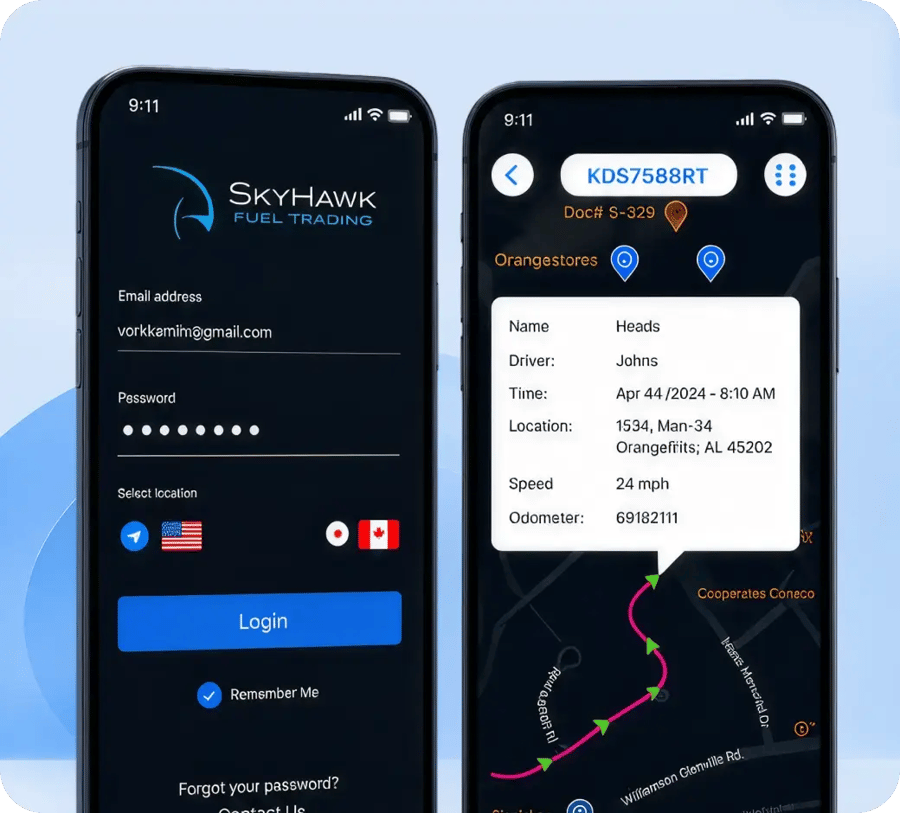
SkyHawk by TELUS needed a streamlined mobile experience for its Connect Anywhere platform. Tech.us built the core experience around real-time asset tracking, fleet activity, secure configuration, and map-based operational visibility.
Read the Case Study

Tech.us helped bring Wealth Mastery to life as a digital platform that puts personalized financial planning tools directly in users' hands while supporting a large and growing audience.
Read the Case Study

WHY TECH.US FOR AI GOVERNANCE
A policy alone cannot tell a team whether a specific use case should launch. We build the decision process that sits behind it.
We look at the real use case before deciding which governance controls belong around it.
A low-impact internal assistant should not automatically follow the same review path as an AI system influencing a high-impact business decision.
AI governance responsibilities become clearer when each approval has a named owner instead of a general governance committee owning everything.
Governance decisions often depend on how the system is built. Technical constraints need to be visible when policy decisions are made.
Teams should know what they need to document before review begins instead of reconstructing the decision months later.
Models and workflows evolve. Governance needs a clear trigger for deciding when a change is important enough to require another review.

AI GOVERNANCE FRAMEWORK
A practical AI governance framework gives teams a repeatable way to classify use cases and decide what happens next.
These AI governance best practices turn governance principles into a process teams can repeat across different use cases.
Identify the AI systems already in use and group them by how they affect business work.
Use the consequence of the use case to determine how much review it requires.
Define who can approve a use case and who can stop it when required controls are missing.
Place governance decisions at meaningful points in the lifecycle instead of creating one large approval at the end.
Define what a team must provide so reviewers can make a decision without guessing how the system works.
Establish which changes require another governance review after the system has already been approved.
Use one governance model to separate low-risk AI from use cases that need deeper review.
Talk To Our AI Expert →HOW WE WORK
Our AI governance implementation work starts with the decisions the organization needs to make, then builds the framework around them.
Identify AI systems already operating across teams and business functions.
Determine what happens if each system produces an incorrect result or takes an inappropriate action.
Assign responsibility for approval and ongoing operation.
Set the evidence and approval requirements for each level of risk.
Place review points inside the development lifecycle instead of treating governance as a separate activity.
Define what changes or production events should bring an AI system back into review.
RESPONSIBLE AI GOVERNANCE
A responsible AI governance framework is useful only when teams can apply it to real systems.
Keep a named person responsible for important outcomes even when AI contributes to the decision.
Give users and reviewers enough information to understand the role AI played in the workflow.
Apply deeper review where errors can create greater harm or business impact.
Record why important design choices were made so they can be reviewed later.
Responsible AI governance framework design patterns should make these principles easier to apply consistently rather than creating another layer of abstract policy.
ENTERPRISE AI GOVERNANCE
Enterprise AI governance becomes harder when every department creates its own approval process.
A strong AI enterprise governance model balances common standards with the reality that different business functions face different consequences.
Use the same basic risk logic across business units so similar use cases receive similar treatment.
Keep ownership close to the team that understands how the AI affects the process.
Define organization-wide requirements where consistency is necessary.
Use common documentation so reviewers do not need to interpret a different format for every project.
AI MODEL GOVERNANCE
AI model governance keeps the model choice connected to the requirements of the use case.
Document why a model was selected and what requirements influenced the decision.
Know which model version supports the production workflow.
Define what needs to be tested before a different model replaces the approved one.
Decide when a model update is significant enough to require another governance decision.
AI Governance & Compliance
AI governance and compliance work is useful when external requirements become clear operating expectations.
Requirements vary by jurisdiction and use case, so the governance process should make those differences explicit rather than assuming one policy fits every system.
Connect relevant AI governance regulations and internal risk requirements to the use cases they affect.
Turn requirements into approval steps or system boundaries that teams can actually apply.
Define what records need to exist when an AI governance compliance review takes place.
Make it clear who decides whether the required controls are present before the system moves forward.
AI Governance Technology
An AI governance platform can make the operating model easier to manage, but software cannot decide what your organization considers acceptable.
The right AI governance solution should support the governance model you already defined instead of forcing the organization to adopt the software's assumptions.
Use AI governance tools to maintain visibility into the systems currently under governance.
Move assessments and approvals through a defined process rather than managing governance through scattered documents.
Keep important governance records connected to the system they describe.
Use AI governance software to surface changes or events that may require another review.
AI DATA GOVERNANCE
Existing data governance can lose context when AI systems retrieve or combine information in new ways.
Define which sources are appropriate for each AI use case.
Keep the original business owner involved when AI begins using important information in a new way.
Ensure the AI system receives only the information required for its approved role.
Identify when a meaningful change to source data should trigger another evaluation of the AI system.
INDUSTRY EXPERIENCE
Different industries require different levels of review because the impact of an AI error is not the same everywhere.
Explore All Industries

Healthcare
AI governance in healthcare should reflect how the system affects clinical or administrative work and where human responsibility must remain explicit.
Explore Healthcare→
Construction
Govern AI used in estimating and project workflows based on how its output influences cost or project decisions.
Explore Construction→
Finance
AI governance in finance needs clear ownership around models or agents that influence financial analysis and operational decisions.
Explore Finance→
Manufacturing
Apply governance to AI connected with operational processes according to the consequence of incorrect recommendations or automated actions.
Explore Manufacturing→
Real Estate
Define review and accountability for AI used across property analysis or document-heavy transaction workflows.
Explore Real Estate→
Retail & Ecommerce
Govern AI used in customer or commerce workflows based on how directly it can influence customer experience or business actions.
Explore Retail & Ecommerce →
TECH STACK
The governance stack should make ownership and monitoring easier without turning the process into another disconnected system.
Agentic AI & Orchestration
Agentic AI
AI Agents
Multi-Agent Systems
Agentic Workflow Automation
Model Context Protocol (MCP)
Agent-to-Agent Protocol (A2A)
Agent Memory and Reasoning
Generative AI & Foundation Models
Large Language Models
GPT
Claude
Gemini
Llama
Generative AI
Multimodal Foundation Models
Diffusion Models
Small Language Models
Model Fine-Tuning
Prompt & Context Engineering
Machine Learning & Deep Learning
Machine Learning
Deep Learning
Predictive Analytics
Recommendation Systems
Anomaly Detection
Time-Series Analysis
Data & AI Platforms
AI-Ready Data Platforms
Data Lakes and Lakehouse
Data Engineering
AI Frameworks & Libraries
PyTorch
TensorFlow
Scikit-learn
Hugging Face Transformers
LangChain
LangGraph
MLOps, LLMOps & AgentOps
MLOps
LLMOps
AgentOps
Model Deployment and Serving
Agent Deployment
Model and Agent Observability
Prompt and Response Tracing
AI Cost Optimization
AI Evaluation, Safety & Governance
LLM Evaluations
Agent Evaluations
RAG Evaluations
AI Guardrails
Prompt-Injection Protection
Red Teaming
Responsible AI
AI Governance
Cloud AI Technologies
Google Cloud
Vertex AI
Gemini Models
Agent Studio
Vertex AI Agent Builder
Agent Development Kit
Vertex AI Vector Search
Google Cloud Document AI
Google Cloud Vision AI
Microsoft Azure
Microsoft Foundry
Microsoft Copilot Studio
Microsoft Agent Framework
Azure AI Document Intelligence
Azure AI Speech and Vision
Microsoft Fabric
Microsoft Purview
Language, Vision, Speech & Document AI
NLP, NLU and NLG
STT, TTS and ASR
Conversational AI
Document Intelligence
Computer Vision
RAG, Search & Knowledge Systems
Enterprise RAG
Agentic RAG
Multimodal RAG
Enterprise Search
Semantic & Hybrid Search
Vector Databases
Knowledge Graphs
Reranking and Retrieval Optimization
FAQ
AI governance is the system of rules and responsibilities used to decide how AI can be developed and operated inside an organization. It defines who owns important decisions and what controls apply based on the impact of the use case.
AI governance is important because AI can enter business processes faster than ownership and review practices develop around it. Clear governance helps the organization make consistent decisions and gives teams a defined way to handle higher-risk use cases.
The main AI governance benefits are clearer accountability and more consistent approval decisions. Governance also makes important AI decisions easier to review later because the organization has a record of what was approved and why.
Start by identifying the AI systems already in use. Classify them by business impact, assign owners, define review requirements, and connect those requirements to the way AI projects are actually delivered. AI governance implementation should begin with a usable process before adding more software.
Responsible AI governance turns principles about appropriate AI use into decisions that teams can apply to real systems. It defines who remains accountable and what evidence is required when an AI use case has meaningful impact.
AI agents should be governed according to what they can access and what actions they can take. Auditing should preserve enough information to understand which tools were used and whether required approvals were followed.
Not always. An AI governance platform becomes useful when the volume of systems or reviews becomes difficult to manage manually. The governance process should still be defined before selecting the software that supports it.
Look for AI governance companies that can connect policy with the technical reality of AI systems. Strong AI governance consulting should leave teams with an operating framework and clear ownership rather than only a high-level policy document.
Create a governance model that gives teams clear rules today and remains usable as new models and agents enter the business.
Build Your AI Governance Framework →Ownership · Risk classification · Review controls · Ongoing monitoring