LLM FINE-TUNING SERVICES

Make Powerful AI Models Excel at Your Business Tasks

Tech.us fine-tunes large language models to handle the specialized tasks, complex instructions and response requirements of your business.
We adapt existing model capabilities through targeted training, helping you build AI applications that respond more consistently, understand domain-specific requirements and perform reliably within defined business workflows.

1,500 +
26 +
30 +

TRUSTED BY ORGANIZATIONS THAT DEPEND ON TECHNOLOGY

THE BUSINESS VALUE OF LLM FINE-TUNING

Turn General-Purpose Intelligence Into Business-Specific Capability

Pretrained language models possess broad capabilities. Fine-tuning adapts those capabilities to the behaviors and performance requirements that distinguish one business application from another.

Improve Performance on Specialized Tasks

Train models to handle complex domain terminology and business instructions with greater consistency.

Establish Consistent Response Standards

Adapt model behavior to follow organizational communication guidelines, output formats and application-specific requirements.

Reduce Dependence on Extensive Prompts

Teach recurring instructions through targeted training, potentially reducing the need to repeat detailed guidance with every request.

Extend the Value of Existing Models

Develop specialized capabilities from pretrained models without taking on the cost and complexity of training a foundation model from scratch.

OUR SERVICES

LLM Fine-Tuning Services From Model Selection to Production

We provide the engineering expertise required to adapt large language models for enterprise applications. Each engagement begins with understanding the gap between a model's existing capabilities and the performance your business needs.

LLM Fine-Tuning Consulting & Model Selection

Evaluate whether fine-tuning is the appropriate approach for your application. We compare candidate models against business tasks, licensing conditions and deployment requirements before recommending a training strategy.

LLM Training Dataset Development

Convert approved business information and expert examples into training-ready datasets. We address data representation, response quality and task coverage to establish a reliable foundation for model adaptation.

Supervised Fine-Tuning & Instruction Tuning

Train large language models using examples of desired responses and instructions. We adapt model behavior to meet application-specific requirements for task execution and output consistency.

Parameter-Efficient Fine-Tuning

Adapt large language models using techniques such as LoRA and QLoRA. We evaluate training configurations that reduce computational requirements while preserving the capabilities your application depends on.

Domain-Specific LLM Fine-Tuning

Adapt models to specialized terminology and complex information structures within your industry. Where appropriate, we combine domain-adaptive pretraining with task-specific fine-tuning to address deeper capability gaps.

LLM Preference Optimization & Alignment

Refine model responses according to defined business preferences using suitable alignment techniques. We incorporate reviewed examples of preferred and unsuitable responses to improve behavior within intended application boundaries.

LLM Fine-Tuning for AI Agents

Adapt models to interpret task instructions, select appropriate tools and produce structured function calls. We evaluate their behavior within agentic workflows while maintaining separate application-level execution controls.

LLM Evaluation & Performance Optimization

Identify where fine-tuning has improved model performance and where limitations remain. We assess task quality, retained capabilities and inference performance using application-specific evaluation criteria.

Fine-Tuned LLM Deployment & Management

Integrate adapted models into enterprise applications and establish the infrastructure required to serve them. We support model versioning, production monitoring and controlled updates as business requirements evolve.

Selected Work

Complex Technology Built Around Practical Business Requirements

Explore how Tech.us translates demanding business requirements into working software and AI solutions.

View All Case Studies

AI-Powered Takeoffs From Complex Construction Drawings

A precast concrete manufacturer partnered with Tech.us to bring AI into the estimating workflow. The system uses OCR, computer vision, and generative AI to identify, extract, and visualize structures, pipes, and components from complex construction drawings.

Read the Case Study
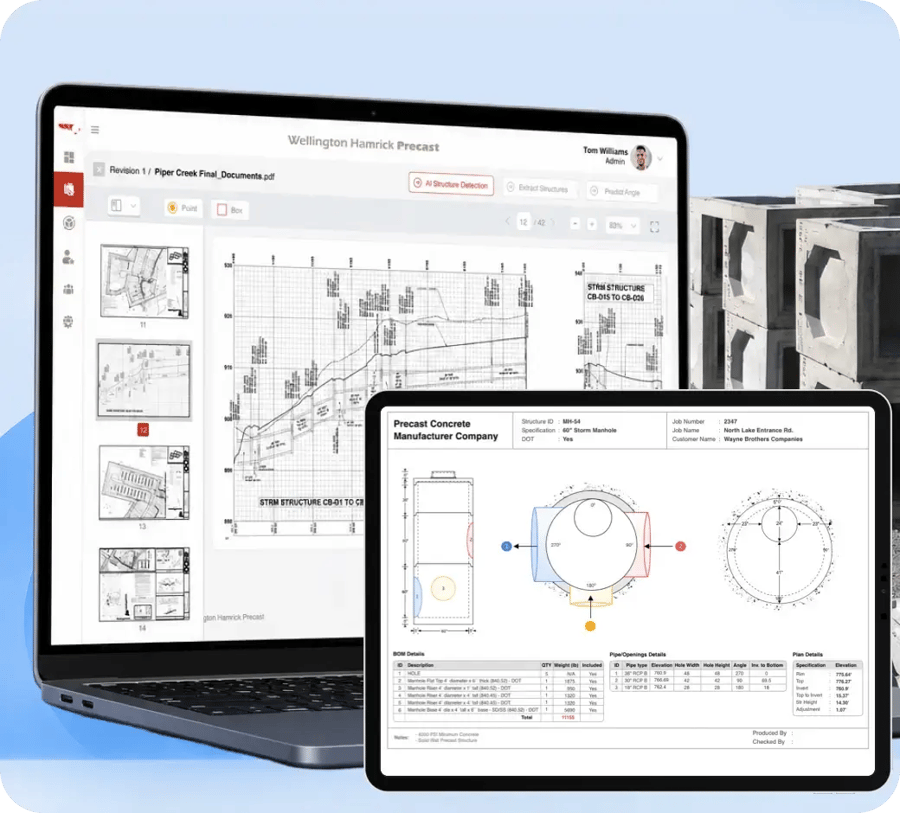

Wellington Hamrick Precast AI takeoff automation tool shown on laptop and tablet

Mobile Fleet Visibility Built for Field Operations

SkyHawk by TELUS needed a streamlined mobile experience for its Connect Anywhere platform. Tech.us built the core experience around real-time asset tracking, fleet activity, secure configuration, and map-based operational visibility.

Read the Case Study
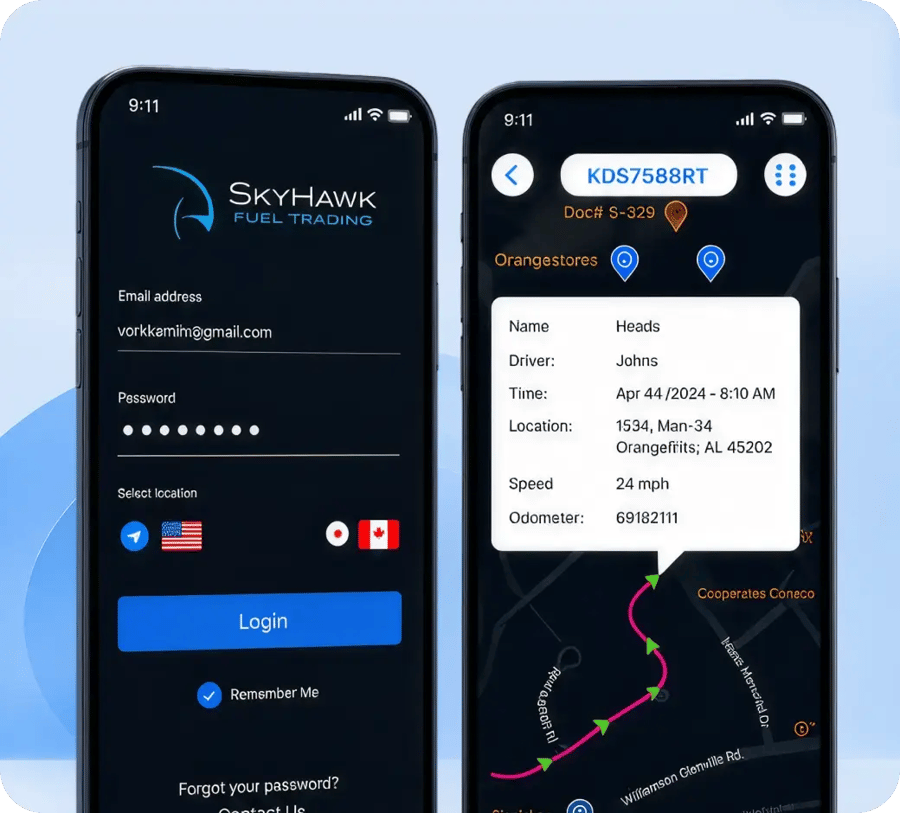

SkyHawk by TELUS mobile app screens showing fleet tracking and login

Personalized Financial Technology Built to Scale

Tech.us helped bring Wealth Mastery to life as a digital platform that puts personalized financial planning tools directly in users' hands while supporting a large and growing audience.

Read the Case Study
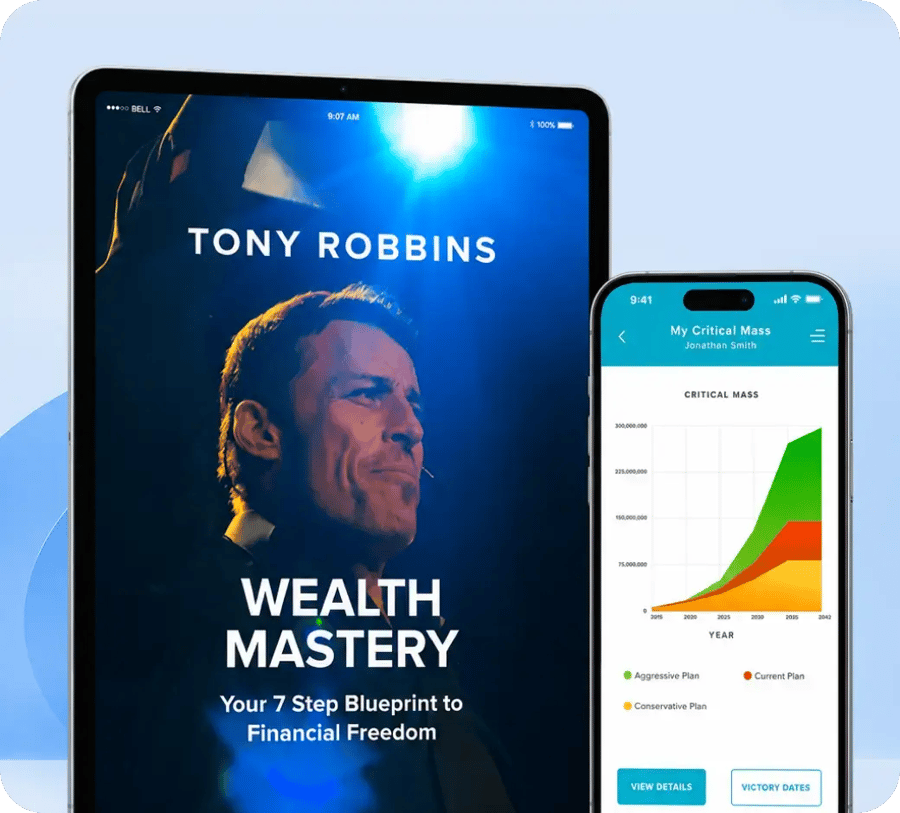
Tony Robbins Wealth Mastery app shown on tablet and phone

WHY TECH.US

Model Engineering That Accounts for the Entire Application

As an LLM fine-tuning company with extensive software engineering experience, we evaluate model behavior in the context of the application it needs to support.

We Identify What the Model Needs to Learn

We distinguish gaps in model behavior from missing knowledge or inadequate instructions before recommending additional training.

We Treat Dataset Quality as an Engineering Requirement

Training examples are developed around actual application needs, with attention to ambiguous inputs and undesirable behaviors.

We Select Training Methods Based on Performance

Our choice of fine-tuning technique reflects the required adaptation, available computing resources and model evaluation results.

We Protect Capabilities the Application Still Needs

We evaluate whether targeted training has weakened important language, reasoning or instruction-following capabilities.

We Consider the Cost Beyond Training

Model hosting, inference consumption and maintenance requirements influence how we approach fine-tuning and deployment.

We Connect Model Performance With Software Performance

Our engineering teams account for output validation, application dependencies and business rules when integrating fine-tuned models.

why-choose-techus

HOW WE WORK

A Defined LLM Fine-Tuning Process Built Around Measurable Improvement

Our process establishes a performance baseline before training and evaluates the resulting model against the requirements it was adapted to meet.

1

Define the Target Behavior

Establish what the model needs to accomplish, how it should respond and which capabilities require improvement. 

2

Evaluate the Base Model

Test candidate models against representative business tasks and determine whether existing capabilities can support the intended adaptation. 

3

Prepare Training & Evaluation Data

Develop approved training examples and independent evaluation datasets that represent realistic application conditions. 

4

Fine-Tune the LLM

Apply the selected training method and adjust hyperparameters according to observed learning and validation performance. 

5

Validate the Adapted Model

Compare results against the baseline, assess unintended behavioral changes and test performance within representative workflows. 

6

Deploy & Monitor

Integrate the selected model version into the application and establish monitoring for quality, operating costs and emerging performance issues. 

Your Business Needs More Than a General-Purpose Answer

Adapt the capabilities of large language models to the specialized requirements and performance standards that matter to your business.

Talk To Our LLM Experts

LLM Fine-Tuning Techniques

Different Performance Requirements Call for Different Training Methods

Fine-tuning methods differ in how they update model parameters, what training information they use and how they influence model behavior.

Supervised Fine-Tuning (SFT)

Train a model using examples of desired responses to specific inputs. SFT is suited to tasks requiring consistent instructions, structured outputs or specialized response patterns.

Full Fine-Tuning

Update all trainable model parameters. This approach offers broader adaptation potential but generally requires greater computing resources and careful regression testing.

Low-Rank Adaptation (LoRA)

Train lightweight adapter parameters while keeping the original model weights frozen. LoRA enables targeted adaptation with lower training memory requirements than full fine-tuning.

Quantized Low-Rank Adaptation (QLoRA)

Fine-tune adapters on a quantized base model to reduce training memory requirements. This makes adapting larger models feasible in more constrained computing environments.

Direct Preference Optimization (DPO)

Use examples of preferred and rejected responses to influence model behavior. DPO can support alignment with defined quality and communication preferences.

Reinforcement Fine-Tuning

Optimize model behavior using rewards that evaluate generated responses. This approach is particularly relevant when task outcomes can be assessed using dependable scoring or verification mechanisms.

LLM FINE-TUNING DATASETS

Teach the Model Through Examples That Represent Your Business

Effective model fine-tuning depends on the quality and coverage of the training dataset. We prepare datasets according to the behavior the model needs to develop.

Instruction & Response Datasets

Pair representative business instructions with reviewed examples of the expected response.

Multi-Turn Conversation Datasets

Capture interactions that require the model to retain context, interpret follow-up questions and respond consistently across several exchanges.

Preference Datasets

Identify preferred and less suitable responses to support training around defined quality standards.

Domain-Specific Training Data

Prepare approved technical documents and specialized terminology for suitable domain-adaptation objectives.

Tool-Calling Datasets

Provide examples of appropriate tool selection and structured arguments for models supporting AI agents and connected applications.

Dataset Quality & Governance

Review examples for duplication, inconsistent labels, sensitive information and usage rights. Separate training and evaluation records to reduce the risk of data leakage.

Fine-Tuning vs. Other Model Adaptation

Choose the Approach That Addresses the Actual Performance Gap

Additional training is not always necessary. We evaluate whether the application needs changes to model behavior, access to external knowledge or better instructions.

Fine-Tuning

Changes model behavior through targeted training.

Suitable for: Specialized task performance, consistent output formats and application-specific response preferences.

Prompt Engineering

Changes how instructions and context are presented to the model without modifying its weights.

Suitable for: Instruction refinement, rapid experimentation and tasks already within the model's capabilities.

Retrieval-Augmented Generation (RAG)

Supplies relevant external information when the model receives a request.

Suitable for: Current business information, enterprise knowledge retrieval and evidence-supported answers.

Training From Scratch

Builds a model's capabilities from initial training rather than adapting an existing pretrained model.

Suitable for: Fundamental model requirements that cannot reasonably be met through existing architectures or pretrained models.

LLM Fine-Tuning Use Cases

Adapt Language Models for Demanding Business Applications

Fine-tuned LLMs can support applications where general model behavior does not consistently meet specialized business requirements.

Intelligent Document Analysis

Adapt models to interpret specialized documents and return information according to business-defined extraction and reporting requirements.

Technical Knowledge Assistants

Improve how models interpret domain-specific questions and communicate technical concepts, supported by retrieval where current information is required.

AI Copilots & Agents

Fine-tune models to interpret user intent and produce structured outputs appropriate for connected tools and business applications.

Complex Business Content Generation

Train models to produce reports, proposals and other specialized content according to organizational formats and communication requirements.

LLM Fine-Tuning Best Practices

Establish a Training Practice That Can Evolve With Your AI Applications

Enterprise model customization requires a repeatable approach to training, evaluation and release management as models and business requirements change.

Benchmark Before Training

Establish whether fine-tuning provides meaningful improvements over a well-configured base model.

Prioritize Representative Data

Focus on useful examples that cover actual task variations instead of increasing dataset size without a defined purpose.

Choose the Least Resource-Intensive Effective Method

Evaluate parameter-efficient approaches before committing to full model fine-tuning where appropriate.

Control Overfitting & Behavioral Regression

Monitor validation performance during training and test whether specialization has compromised other required capabilities.

Maintain Training Traceability

Record model versions, dataset origins, hyperparameters and evaluation results for each training release.

Evaluate Safety After Every Adaptation

Reassess inappropriate responses, information disclosure and other application-specific risks before deploying a fine-tuned model.

LLM EVALUATION

Determine Whether Fine-Tuning Has Improved the Model Where It Matters

We evaluate fine-tuned language models against the requirements of their intended applications rather than relying on training loss or general benchmarks alone.

Task Performance

Assess accuracy and completion quality across representative business tasks.

Instruction Adherence

Measure how consistently the model follows defined requirements and produces acceptable output structures.

Response Quality & Preferences

Use reviewed examples and suitable evaluation criteria to assess relevance, clarity and alignment with business expectations.

Generalization & Robustness

Evaluate unfamiliar inputs, ambiguous instructions and situations outside the training dataset.

Retained Capabilities

Compare the adapted model with its original version to identify degradation in capabilities the application still requires.

Production Performance

Measure inference latency, throughput and resource consumption under expected usage conditions.

Fine-Tuned LLM Deployment

Bring the Adapted Model Into Your Business Environment

Deployment decisions influence how a fine-tuned model performs, how it is accessed and what it costs to operate.

Managed Model Deployment

Use supported model-provider infrastructure where its customization capabilities and information-handling policies meet application requirements.

Self-Hosted LLM Deployment

Serve fine-tuned open-weight models within controlled infrastructure where licensing and operational requirements permit.

Multi-Adapter Deployment

Support multiple specialized adaptations of a shared base model where the serving architecture allows efficient adapter management.

Controlled Model Releases

Introduce updated model versions through staged deployment, regression testing and rollback mechanisms.

LLM Fine-Tuning Cost & ROI

Plan the Full Cost of Your LLM Fine-Tuning Project for 2027

Fine-tuning costs depend on the selected model, training method and application requirements. We evaluate the entire model lifecycle rather than estimating the investment from training expenses alone.

Dataset Preparation

Account for information collection, expert annotation, quality review and evaluation dataset development.

Training & Computing Costs

Estimate the training resources required based on model size, dataset volume, sequence length and the number of training runs.

Evaluation & Refinement

Consider the engineering effort involved in comparing training configurations and validating model improvements.

Deployment & Inference

Evaluate recurring hosting and processing costs alongside expected application usage.

Business Return

Compare improvements in task performance, human review effort and processing efficiency against the total cost of model adaptation and operation.

WAYS TO WORK WITH TECH.US

Choose the Fine-Tuning Engagement That Fits Your Model Requirements

We support businesses evaluating model customization for the first time and those improving existing fine-tuned LLMs.

LLM Fine-Tuning Assessment

Evaluate candidate models and determine whether targeted training can address your application's performance requirements.

End-to-End LLM Fine-Tuning

Engage Tech.us for dataset development, model adaptation, evaluation and integration into your production environment.

Existing Fine-Tuned Model Optimization

Investigate performance limitations and refine an existing model through targeted retraining or inference optimization.

TECH STACK

Technology for Efficient Training and Reliable Model Adaptation

We select training, evaluation and deployment technologies according to model architecture, performance requirements and available infrastructure.

Agentic AI & Orchestration

Agentic AI Agentic AI
AI Agents AI Agents
Multi-Agent Systems Multi-Agent Systems
Agentic Workflow Automation Agentic Workflow Automation
Model Context Protocol (MCP) Model Context Protocol (MCP)
Agent-to-Agent Protocol (A2A) Agent-to-Agent Protocol (A2A)
Agent Memory and Reasoning Agent Memory and Reasoning

FAQ

Commonly Asked Questions About LLM Fine-Tuning

LLM fine-tuning adapts a pretrained large language model through additional training to improve its performance on specific tasks or desired behaviors. 

Fine-tuning uses targeted training data and optimization methods to update model weights or adapter parameters, followed by evaluation against defined performance requirements. 

Training from scratch develops a model's foundational capabilities. Fine-tuning adapts an existing pretrained model for more specialized requirements. 

Select a suitable base model, prepare representative datasets, choose a training method, fine-tune the model and validate its performance before deployment. 

Data requirements depend on task complexity, base model capabilities and the degree of adaptation needed. Dataset quality and coverage are critical. 

Methods such as LoRA and QLoRA train a limited set of additional parameters while keeping the original model weights frozen, reducing training memory requirements. 

No. Fine-tuning can improve specific behaviors, but retrieval, response validation and appropriate safeguards remain important for factual reliability. 

Costs vary with model size, training data, computing resources and deployment requirements. A reliable estimate requires a defined technical scope and applicable infrastructure pricing. 

Build Your Competitive Advantage on Specialized Intelligence

Extend the capabilities of pretrained language models through fine-tuning that reflects the unique demands of your business.

Talk to Our LLM Experts