RAG DEVELOPMENT SERVICES

Bring Your Entire Knowledge Ecosystem Within AI's Reach

Make information distributed across enterprise systems accessible through custom RAG applications.
Tech.us builds intelligent retrieval architectures that help AI discover relevant knowledge while respecting organizational access boundaries.

1,500 +
26 +
30 +

TRUSTED BY ORGANIZATIONS THAT DEPEND ON TECHNOLOGY

THE VALUE OF RAG

Make AI Work With Information Specific to Your Business

RAG connects language models to external knowledge at the time of a request. This allows AI applications to work with company-specific information that may not be part of a model's original training.

Get Business-Specific Answers

Give AI access to internal policies, product information and operational knowledge so responses reflect your actual business environment.

Keep AI Connected to Current Information

Update the knowledge available to AI as business information changes without retraining the underlying language model for every update.

Make Answers Easier to Verify

Provide references to supporting documents and business records so users can examine the information behind an AI-generated response.

Extend the Value of Enterprise Knowledge

Make information from approved repositories available across AI assistants and business applications without requiring users to search every source independently.

OUR SERVICES

Custom RAG Development Services & Solutions

We engineer RAG solutions around the information your applications need to retrieve and the quality of answers your business expects. Our services cover the complete architecture from knowledge ingestion to production deployment.

RAG Consulting & Architecture Design

Work with our custom RAG development consultants to determine how your information should be organized and retrieved. We assess knowledge sources and application requirements before recommending a retrieval architecture.

Custom RAG Application Development

Build AI applications that retrieve business-specific information to support contextual responses. Our RAG application development services cover internal knowledge assistants, customer support solutions and intelligent document applications.

Enterprise RAG Implementation

Connect RAG capabilities with enterprise information systems while accounting for data volume, access permissions and application dependencies. We design the implementation to fit the organization's existing infrastructure and operating requirements.

RAG Data Pipeline Development

Prepare enterprise knowledge for reliable retrieval through document processing, intelligent chunking and metadata enrichment. We establish ingestion and synchronization pipelines that keep indexed information aligned with its underlying sources.

Advanced RAG Development

Improve retrieval performance through approaches such as hybrid search, query decomposition and reranking. Our advanced RAG implementation services address complex information requests that require more than a basic similarity search.

Agentic RAG Development & Implementation

Build retrieval systems that can determine what information is missing and perform additional searches when required. Agentic RAG implementation enables AI agents to investigate multi-step questions across approved knowledge sources.

Graph RAG Development

Connect information through meaningful relationships between business entities. We use knowledge graph-based retrieval where understanding connections between records is important to answering complex organizational questions.

RAG Evaluation & Optimization

Evaluate retrieval relevance and the extent to which generated answers are supported by retrieved information. We identify performance gaps and refine the retrieval pipeline to improve accuracy, response time and operating efficiency.

Secure RAG Deployment & Management

Deploy RAG applications within the appropriate infrastructure and establish controls for information access. We support production monitoring and ongoing optimization as knowledge sources and usage requirements evolve.

SELECTED WORK

Technology Built Around Real Business Needs

Explore how Tech.us engineers software and AI solutions around the complex requirements of different businesses.

View All Case Studies

AI-Powered Takeoffs From Complex Construction Drawings

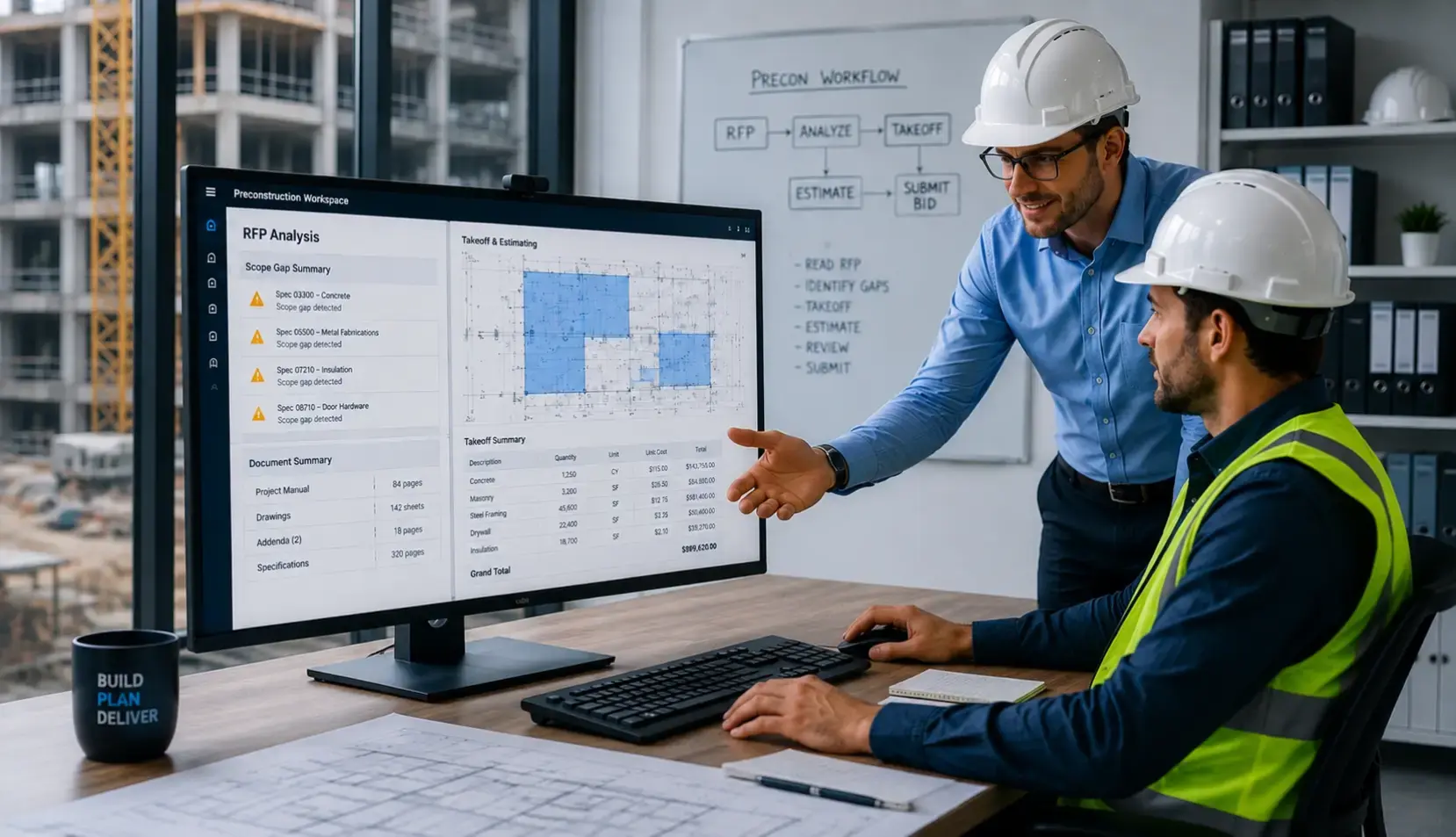
A precast concrete manufacturer partnered with Tech.us to bring AI into the estimating workflow. The system uses OCR, computer vision, and generative AI to identify, extract, and visualize structures, pipes, and components from complex construction drawings.

Read the Case Study
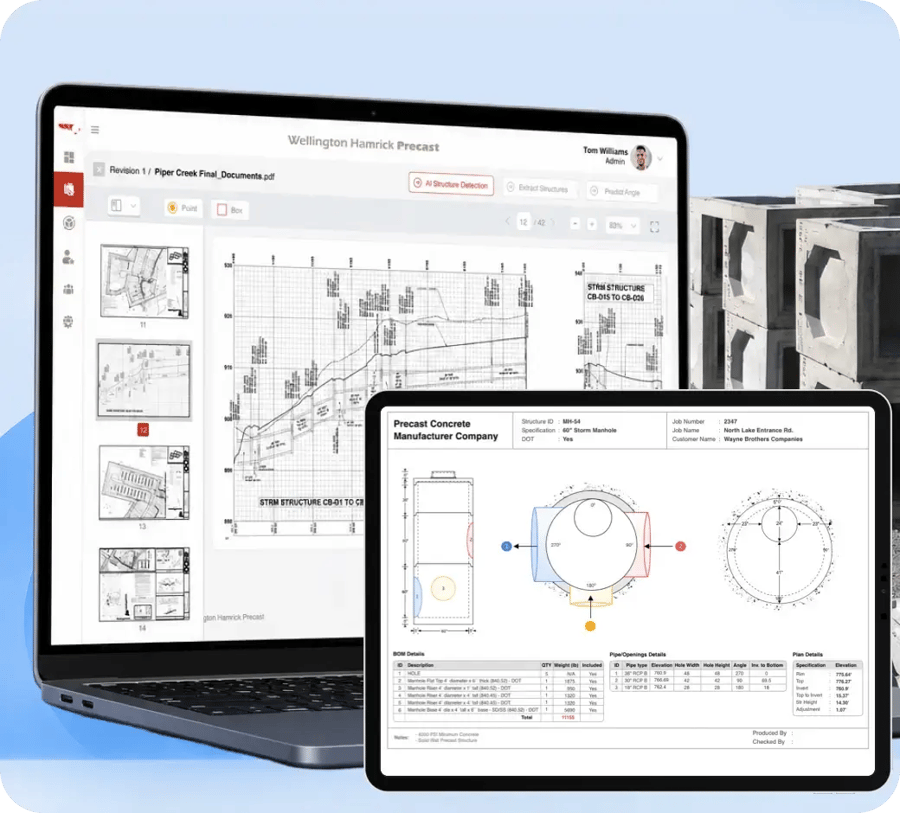

Wellington Hamrick Precast AI takeoff automation tool shown on laptop and tablet

Mobile Fleet Visibility Built for Field Operations

SkyHawk by TELUS needed a streamlined mobile experience for its Connect Anywhere platform. Tech.us built the core experience around real-time asset tracking, fleet activity, secure configuration, and map-based operational visibility.

Read the Case Study
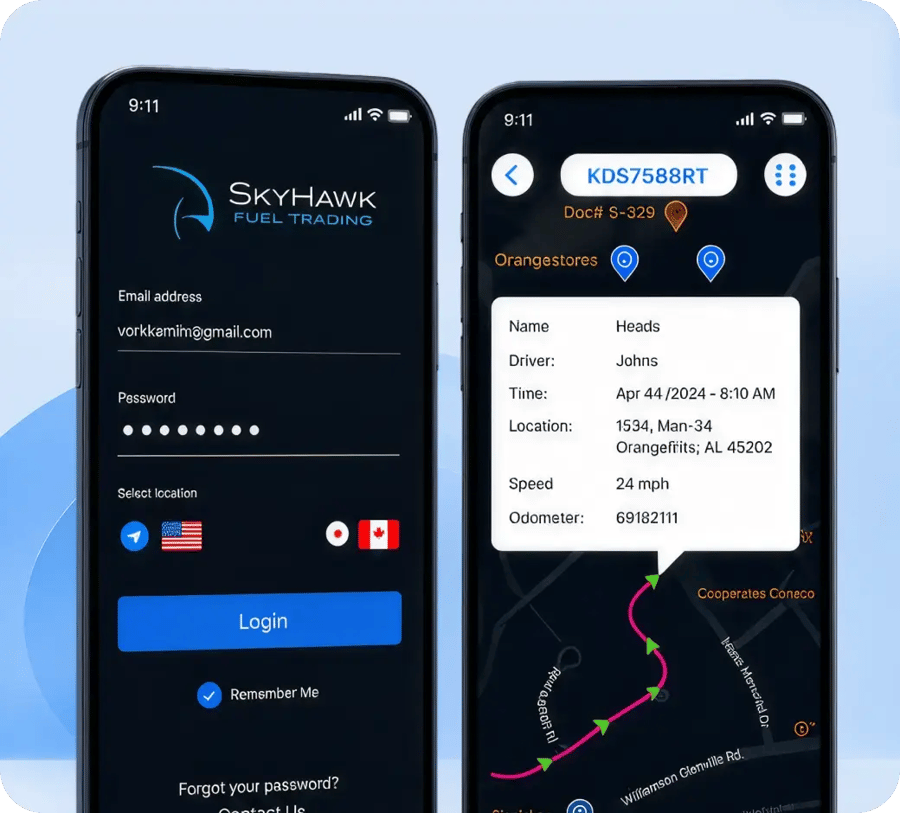

SkyHawk by TELUS mobile app screens showing fleet tracking and login

Personalized Financial Technology Built to Scale

Tech.us helped bring Wealth Mastery to life as a digital platform that puts personalized financial planning tools directly in users' hands while supporting a large and growing audience.

Read the Case Study
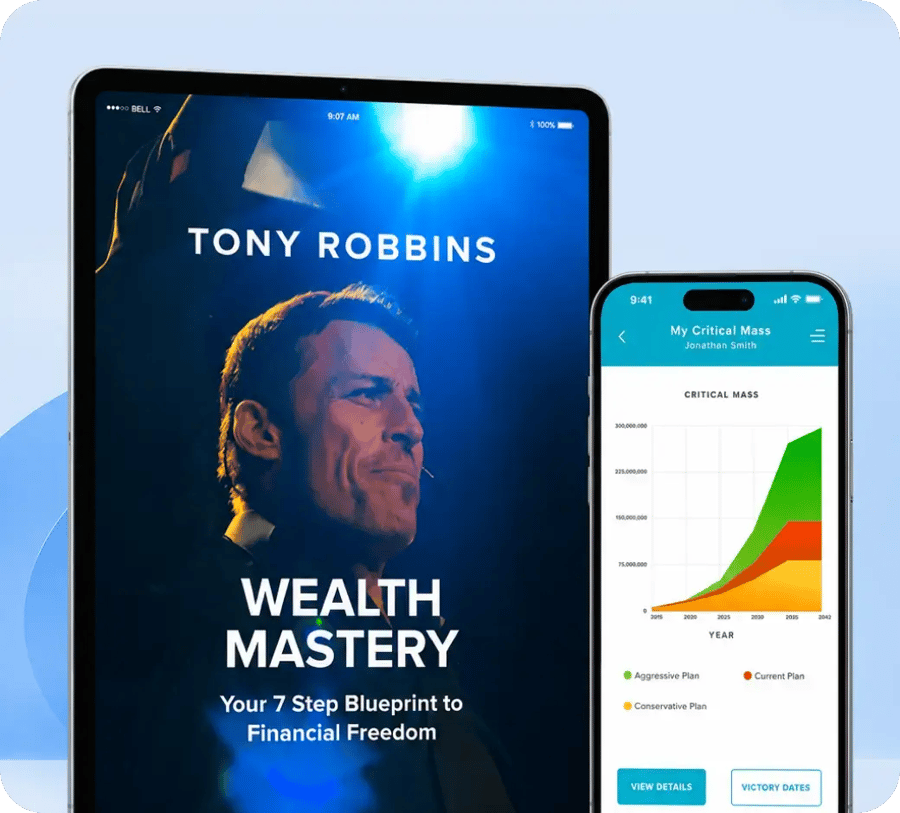
Tony Robbins Wealth Mastery app shown on tablet and phone

WHY TECH.US

Reliable RAG Begins With the Quality of Information Retrieved

As a RAG development company, we focus on the engineering decisions that determine whether an AI application finds the right information and uses it appropriately.

We Design Retrieval Around Your Questions

We examine the types of questions your application needs to answer before determining how information should be indexed and retrieved.

We Account for How Your Information Is Structured

Different knowledge sources require different processing approaches. We adapt ingestion and retrieval to the structure of documents, databases and business records.

We Evaluate the Evidence Behind Answers

Relevant search results do not necessarily provide sufficient information to answer a question. We evaluate both retrieval quality and the supporting evidence behind generated responses.

We Build Within Your Information Boundaries

We design RAG applications around enterprise access requirements so users retrieve information they are authorized to see.

We Avoid Unnecessary Architectural Complexity

We select retrieval methods according to the use case. Advanced techniques are introduced where they provide measurable improvements over simpler approaches.

We Optimize the Complete RAG Pipeline

We evaluate the interaction between ingestion, retrieval and generation rather than treating individual components as independent performance problems.

why-choose-techus

HOW WE WORK

From Enterprise Information to a Working RAG Application

Our RAG development process establishes how knowledge enters the system and how it is retrieved, evaluated and used to support an answer.

1

Define the Knowledge Use Case

Identify the questions the application needs to answer and establish what a useful, well-supported response should contain.

2

Assess Information Sources

Review available documents and business records to understand their structure, reliability and access requirements.

3

Prepare & Index Knowledge

Process information into retrievable units while preserving relevant context and relationships with the original sources.

4

Engineer the Retrieval Pipeline

Implement search and ranking mechanisms that identify the information most relevant to each request.

5

Connect & Evaluate Generation

Provide retrieved context to the language model and assess generated answers against representative questions and supporting evidence.

6

Deploy & Refine

Release the application into its intended environment and monitor retrieval quality, knowledge freshness and response performance.

Improve AI Performance at the Source

Build a retrieval architecture that gives your AI applications the information they need to deliver relevant, well-supported answers.

Talk To Our RAG Expert

ENTERPRISE RAG IMPLEMENTATION

Make Retrieval Work Across the Systems Your Business Already Uses

Enterprise RAG development requires more than indexing a collection of documents. Information may exist across departments with different access requirements and update frequencies.

Distributed Knowledge Integration

Connect approved information sources across enterprise applications and document repositories through an appropriate combination of indexing and on-demand retrieval.

Permission-Aware Retrieval

Apply user-level and role-based access requirements when retrieving information so protected knowledge remains within its authorized boundaries.

Knowledge Synchronization

Establish update mechanisms that reflect changes to source information, including document revisions and deletions.

Department-Specific Retrieval

Configure retrieval around the terminology and information requirements of different business functions while maintaining shared enterprise controls.

Private RAG Deployment

Design deployment options around organizational infrastructure and data-handling policies, including private environments where required.

Application-Level Integration

Embed retrieval capabilities into existing software through interfaces that allow users and connected applications to access relevant enterprise knowledge.

AGENTIC RAG

Enable AI to Investigate Questions That Need More Than One Search

Some enterprise questions cannot be answered adequately through a single retrieval step. Agentic RAG implementation in enterprise environments allows the system to determine what additional information it needs within defined search boundaries.

Question Decomposition

Break complex requests into smaller information requirements that can be investigated independently.

Source Selection

Determine which available knowledge sources are appropriate for the information being requested.

Iterative Retrieval

Perform additional searches when the initially retrieved context leaves important information missing.

Evidence Assessment

Evaluate whether available information provides sufficient support for the requested answer.

Controlled Search Execution

Establish search limits and termination conditions to manage retrieval costs and prevent unnecessary processing.

Insufficient Evidence Handling

Allow the application to report when the available information cannot support a reliable answer rather than filling gaps with unsupported assumptions.

EVIDENCE-BASED RETRIEVAL

Retrieve Information That Actually Supports the Answer

A document can be relevant to a question without containing the information required to answer it. Effective RAG AI development accounts for this difference throughout the retrieval and generation process.

Retrieval Relevance

Identify whether retrieved information addresses the subject and intent of the user's question.

Evidence Sufficiency

Determine whether the retrieved context contains enough information to support the requested answer.

Source Authority

Prioritize approved and authoritative knowledge sources when several records contain conflicting or overlapping information.

Citation Accuracy

Associate answer claims with the specific sources that support them.

Response Groundedness

Evaluate whether generated responses remain supported by the retrieved information.

Appropriate Abstention

Establish conditions under which the system should acknowledge missing knowledge or uncertainty.

Enterprise RAG Implementation Challenges

Solve the Retrieval Problems That Affect Answer Quality

RAG implementations can produce different results depending on document structure, retrieval configuration and the quality of available information. We address these challenges at the stage where they originate.

Loss of Document Context

Poorly structured document chunks can separate information from the conditions that explain its meaning.

Our Approach

We design chunking around document structure and knowledge relationships.

Relevant Information Gets Missed

Similarity-based retrieval may overlook exact identifiers or indirectly related information.

Our Approach

We evaluate alternative search methods and ranking strategies against representative business questions.

Conflicting Knowledge Sources

Different versions of a policy or business record may contain contradictory information.

Our Approach

We establish source authority and version-handling rules to help retrieval prioritize appropriate records.

Excessive Retrieved Context

Providing too much information can increase processing costs and introduce irrelevant details.

Our Approach

We refine retrieval and context selection around the information the model actually needs.

Unsupported AI Responses

A language model may generate claims that are not supported by retrieved records.

Our Approach

We introduce evaluation and response controls to identify unsupported information.

Outdated or Deleted Information

Indexed knowledge may become inconsistent with its original source.

Our Approach

We establish synchronization and removal mechanisms appropriate to the information lifecycle.

BEST PRACTICES

Build Reliability Into Every Stage of the RAG Pipeline

Our RAG implementation services incorporate engineering practices that help maintain retrieval quality as enterprise knowledge and application usage grow.

Preserve Source Information

Maintain document references and relevant metadata throughout ingestion so retrieved information remains traceable to its origin.

Evaluate With Real Business Questions

Use representative questions with known supporting evidence to assess retrieval and generation performance.

Apply Access Controls Before Generation

Restrict the information supplied to the model according to the requesting user's permissions.

Defend Against Untrusted Retrieved Content

Treat retrieved documents as information rather than instructions. Apply appropriate safeguards against malicious content that attempts to influence application behavior.

Manage Knowledge Versions

Track important changes to indexed information and evaluate how updates affect established retrieval behavior.

Monitor Retrieval Separately From Generation

Measure the performance of retrieval and answer generation independently to identify which stage requires improvement.

RAG PERFORMANCE & EVALUATION

Know Whether Your RAG Application Is Finding and Using the Right Information

We establish evaluation criteria that reflect how people use the application and what dependable answers mean within the business.

Retrieval Recall

Measure how consistently the retrieval system finds the information required to answer representative questions.

Retrieval Precision

Evaluate how much of the retrieved context is actually relevant to the request.

Answer Groundedness

Assess whether the claims made in generated responses are supported by available evidence.

Citation Correctness

Verify whether referenced sources substantiate the information attributed to them.

Response Time

Measure end-to-end response latency, including retrieval, ranking and generation.

Cost per Answered Query

Evaluate the processing and infrastructure costs associated with delivering a useful response.

RAG APPLICATIONS

Where Connected Knowledge Creates Practical Business Value

Our RAG application development approach extends across internal operations and customer-facing software that depends on access to reliable information.

Enterprise Knowledge Assistants

Help employees retrieve organizational knowledge from approved sources through natural language questions.

Customer Support Intelligence

Provide support teams with relevant product information and service policies in the context of customer inquiries.

Intelligent Document Applications

Enable users to investigate complex documents and retrieve specific information with references to supporting passages.

Research & Decision Support

Bring relevant records and historical information together to support research and business decision preparation.

Product Knowledge Applications

Connect AI to product catalogs and technical specifications to support context-specific product recommendations and inquiries.

RAG in Software Development

Give engineering teams access to technical documentation, architectural decisions and project knowledge within their existing development workflows.

WAYS TO WORK WITH TECH.US

Find the RAG Development Partnership That Fits Your Requirements

Whether you need a RAG implementation consulting firm to evaluate your architecture or a development team to build the application, we align the engagement with your current requirements.

RAG Consulting & Implementation Assessment

Evaluate your proposed RAG architecture or an existing implementation. Identify opportunities to improve retrieval quality and resolve technical dependencies before further investment.

End-to-End RAG Development

Partner with Tech.us for complete RAG application development, including knowledge preparation, retrieval engineering, application integration and production deployment.

RAG Optimization & Modernization

Improve an existing RAG implementation that struggles with retrieval accuracy, answer reliability or operating costs.

Dedicated RAG Engineering Teams

Hire RAG developers to extend your internal AI engineering capacity. Our specialists can contribute to retrieval architecture and application development within your existing delivery environment.

TECH STACK

Technology Selected Around Your Retrieval Requirements

We choose the technology behind each RAG application according to knowledge volume, retrieval complexity, response requirements and deployment constraints.

Agentic AI & Orchestration

Agentic AI Agentic AI
AI Agents AI Agents
Multi-Agent Systems Multi-Agent Systems
Agentic Workflow Automation Agentic Workflow Automation
Model Context Protocol (MCP) Model Context Protocol (MCP)
Agent-to-Agent Protocol (A2A) Agent-to-Agent Protocol (A2A)
Agent Memory and Reasoning Agent Memory and Reasoning

FAQ

What Businesses Need to Know About RAG Development

Explore the practical considerations behind building, implementing and operating retrieval-augmented generation applications.

RAG development involves building AI applications that retrieve relevant external information and use it to generate context-specific, evidence-supported responses.

Enterprise RAG implementation involves connecting knowledge sources, preparing information for retrieval, engineering the search pipeline, integrating language models and evaluating response quality.

No. RAG is an architecture that supplies external information to a language model at query time. Existing models can often be used without retraining.

Standard RAG typically retrieves information through a defined pipeline. Agentic RAG can assess missing information and perform additional searches when required.

RAG can reduce unsupported responses by supplying relevant evidence. However, retrieval quality, answer validation and appropriate abstention remain essential.

Development costs depend on knowledge volume, retrieval complexity, enterprise integrations, evaluation requirements and deployment infrastructure.

When comparing RAG development companies for enterprises, assess retrieval engineering expertise, information security practices, evaluation methods and relevant enterprise RAG implementation case studies.

A specialized RAG application development company can address retrieval architecture and knowledge processing alongside application integration, evaluation and production performance.

Build the Kind of AI Your Business Can Rely On

Strengthen every stage of retrieval and generation to deliver answers grounded in authoritative business information.

Talk To Our RAG Expert