Improve Task-Specific Performance
Adapt a model to recognize industry terminology, interpret business instructions and produce outputs suited to a particular application.
Tech.us fine-tunes small language models to perform specific business tasks with greater consistency and efficiency.
We adapt models to your industry terminology, business requirements and expected outputs, helping you introduce AI into everyday operations with a model sized for the work it needs to perform.
Projects Delivered
Years of Engineering
Industries Served
TRUSTED BY ORGANIZATIONS THAT DEPEND ON TECHNOLOGY



THE BUSINESS VALUE OF SMALL LANGUAGE MODELS
Small language models offer an alternative to larger, general-purpose models for defined business activities. Fine-tuning helps these models develop the task-specific capabilities required to operate effectively within your business.
Adapt a model to recognize industry terminology, interpret business instructions and produce outputs suited to a particular application.
Use smaller models for suitable high-volume tasks where larger models may introduce unnecessary inference costs.
Select and optimize models that can deliver the required performance within the response time constraints of business applications.
Explore private cloud, on-premises and edge deployment options where smaller model sizes make these environments technically feasible.
OUR SERVICES
We provide the engineering capabilities required to adapt small language models for business use, from selecting a suitable base model to validating its performance within a production application.
Determine whether a small language model can meet your application's performance requirements. We evaluate candidate models against representative business tasks, deployment constraints and anticipated operating costs before recommending a tuning approach.
Prepare representative training datasets from approved business information and examples. We address data quality, formatting, labeling and coverage so the model learns the behaviors expected within its intended application.
Adapt small language models for defined activities such as classification, information extraction, summarization and structured response generation. We tune model behavior using supervised training and parameter-efficient techniques where appropriate.
Improve how models interpret specialized terminology and domain-specific language. We evaluate whether instruction tuning or continued pretraining with suitable domain data is needed to address gaps in the base model's capabilities.
Develop specialized small models around defined business and application requirements. Our custom SLM development approach can incorporate knowledge distillation from suitable larger models where permitted, with independent evaluation of the resulting model's performance.
Assess fine-tuned models against realistic business inputs and expected outputs. We evaluate task accuracy, response consistency and behavior outside the intended scope to identify limitations before deployment.
Optimize model size and inference performance through appropriate techniques such as quantization. We evaluate the trade-offs between resource consumption and task quality to determine a suitable production configuration.
Integrate fine-tuned small language models into enterprise applications and business workflows. We engineer the serving environment, application interfaces and fallback mechanisms required for dependable production use.
Monitor how deployed models perform as business requirements and input patterns evolve. We use validated feedback and updated training examples to guide subsequent tuning cycles while checking for performance regression.
Tech.us AI Research
We design, train and evaluate our own small language models. The knowledge gained through this research informs our approach to model selection, fine-tuning and performance optimization for businesses.
A compact language model developed to explore how guided training and knowledge distillation can improve performance within a limited parameter count.
Ranked #1 on the Open SLM Leaderboard as of October 1, 2026.
A small language model developed to investigate how architectural choices and structured training influence reasoning and arithmetic performance.
Ranked #1 on the Open SLM Leaderboard as of October 27, 2026.
SELECTED WORK
Explore how Tech.us addresses complex business requirements through purpose-built software and AI solutions.
View All Case Studies

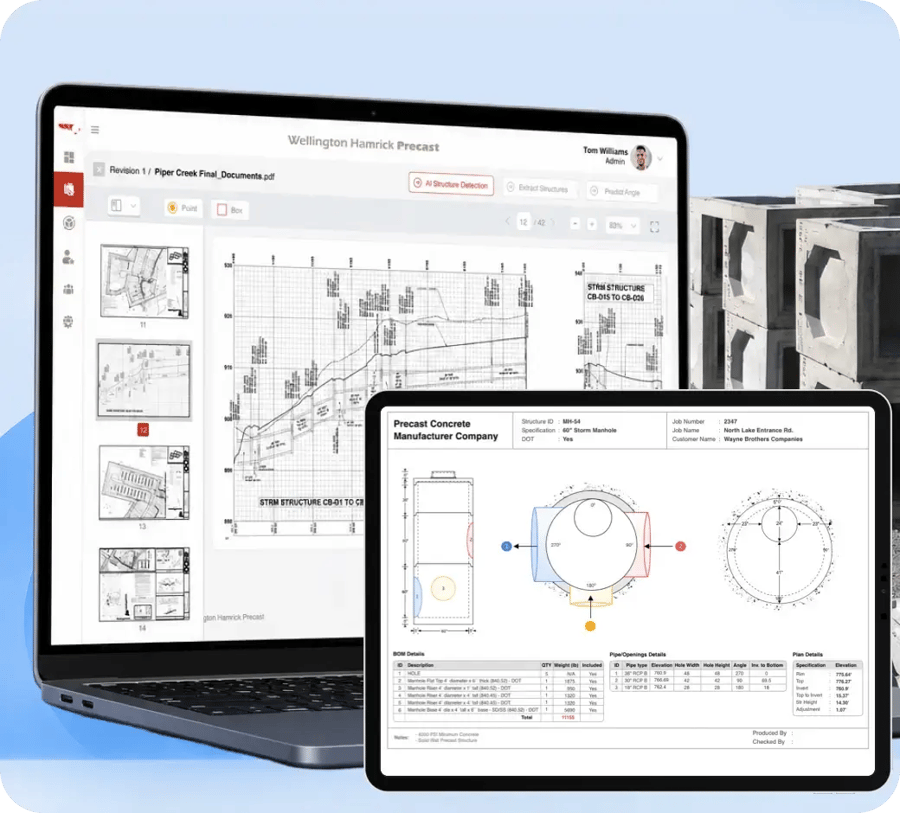
A precast concrete manufacturer partnered with Tech.us to bring AI into the estimating workflow. The system uses OCR, computer vision, and generative AI to identify, extract, and visualize structures, pipes, and components from complex construction drawings.
Read the Case Study

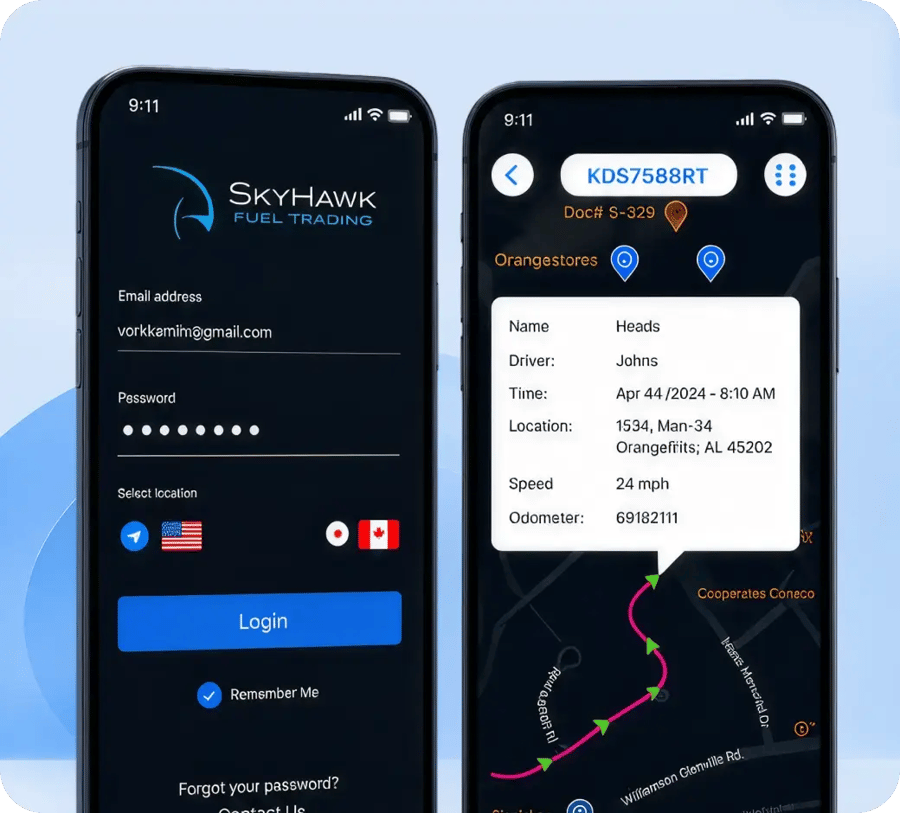
SkyHawk by TELUS needed a streamlined mobile experience for its Connect Anywhere platform. Tech.us built the core experience around real-time asset tracking, fleet activity, secure configuration, and map-based operational visibility.
Read the Case Study

Tech.us helped bring Wealth Mastery to life as a digital platform that puts personalized financial planning tools directly in users' hands while supporting a large and growing audience.
Read the Case Study

WHY TECH.US
A model's training performance is only one part of its suitability for business use. Our engineering approach considers how the model will perform within the application and the resources required to operate it.
We evaluate the capabilities of the original model to identify what genuinely needs improvement. This provides a meaningful reference for measuring the value of fine-tuning.
Training examples reflect the inputs, instructions and responses relevant to your application rather than relying on general-purpose datasets alone.
We evaluate how much model capability the task requires before recommending a particular model size or training configuration.
We test fine-tuned models against independent examples and realistic application scenarios to assess how well they perform on unfamiliar inputs.
Training costs, inference requirements and infrastructure capacity influence the technical choices we make throughout SLM development.
Our software engineering expertise enables us to connect fine-tuned SLMs with existing business applications, validation mechanisms and operational workflows.

HOW WE WORK
Our SLM fine-tuning process connects the intended business outcome with the data, training and engineering requirements needed to achieve it.
Identify the tasks the model needs to perform, the expected output and the accuracy required for business use.
Test suitable small language models against representative inputs to understand their existing capabilities and performance limitations.
Develop approved training examples and separate validation and test datasets that reflect the intended operating conditions.
Apply the selected tuning approach and adjust training configurations according to observed model performance.
Assess the fine-tuned model against independent test cases. Optimize resource consumption while checking for changes in output quality and reliability.
Integrate the validated model into its production environment and establish monitoring for performance, resource usage and emerging limitations.
Discover how targeted fine-tuning can equip smaller models with the capabilities your applications actually require.
Talk to Our SLM Experts →MODEL SELECTION
The suitability of a small language model depends on the complexity of the task and the conditions under which it will operate. We assess these requirements before recommending fine-tuning.
Activities with predictable inputs and expected outputs are often suitable for specialization through fine-tuning.
Repeated business tasks can benefit from smaller models when they deliver acceptable accuracy at a lower processing cost.
Applications that regularly encounter industry-specific expressions or internal classifications may benefit from targeted model adaptation.
Fine-tuning can help models follow consistent response formats for information extraction, classification and downstream application processing.
Smaller models may be appropriate when memory, computing capacity or deployment infrastructure limits the use of larger models.
Tasks that require focused language understanding rather than extensive general knowledge or complex reasoning can be suitable candidates for small models.
SLM FINE-TUNING APPROACHES
Fine-tuning an SLM can involve different training methods depending on the capabilities that need improvement. We select an approach based on the performance gap identified during model evaluation.
Train the model using examples of expected inputs and outputs. This approach is useful for improving task-specific behavior, response formats and classification accuracy.
Adapt the model to follow specific instructions through representative task examples. This is particularly relevant for applications requiring consistent adherence to business-defined response requirements.
Update a limited set of model parameters or train additional adapters rather than modifying every parameter in the original model. This can reduce training resource requirements and support multiple task-specific adaptations.
Update the model's complete trainable parameter set when the required adaptation justifies the additional training effort and computational resources.
Expose a model to suitable domain-specific text to improve familiarity with specialized language and concepts before further task-oriented fine-tuning, where needed.
Transfer selected capabilities from a larger teacher model into a smaller model through an appropriate training process. The resulting model is evaluated against the specific tasks it needs to perform.
BUSINESS APPLICATIONS OF FINE-TUNED SLMS
Fine-tuned small language models are particularly relevant to business activities that require consistent handling of recurring language-based tasks.
Fine-tune an SLM to recognize customer intent, classify service inquiries and prepare responses in an approved communication style. Connect it with current support knowledge where answers depend on changing product information or policies.
Adapt small models to identify specific fields within invoices, contracts and business documents, returning structured information for validation and downstream processing.
Train a model to recognize request categories and priority indicators using historical examples. Integrate its classifications with established ticket routing and escalation rules.
Fine-tune models to produce summaries that follow a defined format, retaining the information most relevant to a particular department or business activity.
Adapt models to extract product attributes and classify catalog entries according to established merchandising categories and product data requirements.
Support preliminary document review by training a model to identify relevant clauses or policy-related indicators. Route uncertain findings and consequential decisions to qualified reviewers.
SLM PERFORMANCE & EVALUATION
We select evaluation metrics according to the application rather than relying on general language model benchmarks alone.
Measure how consistently the model produces correct classifications, extracted information or other expected task outputs.
Evaluate whether the model follows specified instructions and respects the response requirements of the application.
Measure the proportion of responses that conform to the structures required by connected business systems.
Assess how effectively the fine-tuned model handles unfamiliar examples that were not included in its training dataset.
Evaluate whether the model recognizes unsupported or uncertain inputs and responds according to the application's fallback requirements.
Measure response time, throughput and memory consumption under representative production workloads.
DEPLOYING FINE-TUNED SLMS IN BUSINESS
Deploying a fine-tuned SLM involves connecting its capabilities with application requirements and establishing the infrastructure needed to support everyday usage.
Host fine-tuned models within an organization's controlled cloud environment according to its infrastructure and information-handling requirements.
Evaluate local model serving where business information or infrastructure policies require greater control over the processing environment.
Assess whether a suitably optimized model can operate within the computing and memory limitations of local devices or edge infrastructure.
Connect models with existing applications through defined interfaces, incorporating output validation and business rules where required.
Direct suitable tasks to specialized small models while routing requests that require greater capability to an appropriate alternative model.
Establish model versioning, performance monitoring and controlled release procedures to manage updates throughout the application's lifecycle.
WAYS TO WORK WITH TECH.US
Whether you are evaluating small language models or improving an existing implementation, our engagements accommodate different stages of model development.
Determine whether a smaller model can meet your application's requirements through model comparison, task evaluation and an assessment of potential operating costs.
Partner with Tech.us for dataset preparation, model adaptation, evaluation and deployment of a fine-tuned model within your business environment.
Improve a model that struggles with task accuracy, output consistency or inference performance through targeted evaluation and additional optimization.
INDUSTRY EXPERIENCE
We adapt models to the terminology, information structures and task requirements of different industries.
Explore All Industries

Healthcare
Adapt small language models for medical document classification, administrative information extraction and structured documentation support, with appropriate data protection and professional review.
Explore Healthcare→
Construction
Fine-tune models to recognize construction terminology and classify specifications, scope descriptions and project-related information within estimating and preconstruction workflows.
Explore Construction→
Finance
Develop specialized models for financial document categorization, transaction description analysis and information extraction within established financial review processes.
Explore Finance→
Manufacturing
Adapt small models to interpret equipment terminology, classify maintenance reports and extract relevant details from production-related documentation.
Explore Manufacturing→
Real Estate
Fine-tune models to identify property attributes and extract structured lease information according to the requirements of property management and transaction applications.
Explore Real Estate→
Retail & Ecommerce
Develop task-specific models for product categorization, catalog attribute extraction and customer inquiry classification across high-volume commerce operations.
Explore Retail & Ecommerce →
TECH STACK
We select the underlying technologies according to model architecture, training requirements, available computing resources and the intended production environment.
Agentic AI & Orchestration
Agentic AI
AI Agents
Multi-Agent Systems
Agentic Workflow Automation
Model Context Protocol (MCP)
Agent-to-Agent Protocol (A2A)
Agent Memory and Reasoning
Generative AI & Foundation Models
Large Language Models
GPT
Claude
Gemini
Llama
Generative AI
Multimodal Foundation Models
Diffusion Models
Small Language Models
Model Fine-Tuning
Prompt & Context Engineering
Machine Learning & Deep Learning
Machine Learning
Deep Learning
Predictive Analytics
Recommendation Systems
Anomaly Detection
Time-Series Analysis
Data & AI Platforms
AI-Ready Data Platforms
Data Lakes and Lakehouse
Data Engineering
AI Frameworks & Libraries
PyTorch
TensorFlow
Scikit-learn
Hugging Face Transformers
LangChain
LangGraph
MLOps, LLMOps & AgentOps
MLOps
LLMOps
AgentOps
Model Deployment and Serving
Agent Deployment
Model and Agent Observability
Prompt and Response Tracing
AI Cost Optimization
AI Evaluation, Safety & Governance
LLM Evaluations
Agent Evaluations
RAG Evaluations
AI Guardrails
Prompt-Injection Protection
Red Teaming
Responsible AI
AI Governance
Cloud AI Technologies
Google Cloud
Vertex AI
Gemini Models
Agent Studio
Vertex AI Agent Builder
Agent Development Kit
Vertex AI Vector Search
Google Cloud Document AI
Google Cloud Vision AI
Microsoft Azure
Microsoft Foundry
Microsoft Copilot Studio
Microsoft Agent Framework
Azure AI Document Intelligence
Azure AI Speech and Vision
Microsoft Fabric
Microsoft Purview
Language, Vision, Speech & Document AI
NLP, NLU and NLG
STT, TTS and ASR
Conversational AI
Document Intelligence
Computer Vision
RAG, Search & Knowledge Systems
Enterprise RAG
Agentic RAG
Multimodal RAG
Enterprise Search
Semantic & Hybrid Search
Vector Databases
Knowledge Graphs
Reranking and Retrieval Optimization
FAQ
SLM fine-tuning adapts a pretrained small language model using targeted training examples to improve its performance on specific tasks or domain-related requirements.
Small language models generally have fewer parameters and lower computational requirements. Larger models typically offer broader capabilities across more complex and varied tasks.
Define the intended task, select a suitable base model, prepare representative training data, fine-tune the model and evaluate its performance before deployment.
Yes, on specific tasks where targeted training improves the smaller model's performance. However, this does not imply superiority across general-purpose tasks.
Yes. Fine-tuning can improve intent classification, response consistency and adherence to communication guidelines. RAG can provide access to current support information.
Data requirements depend on the base model's capabilities, task complexity, input variations and the quality of available training examples.
ROI depends on workload volume, inference savings, output quality and the total cost of model training, deployment and ongoing maintenance.
Yes, provided the model's computing requirements and licensing conditions are compatible with the organization's infrastructure and intended usage.
Improve task performance and optimize AI processing costs with small language models adapted to your business.
Talk to Our SLM Experts →