Written by: Tech.us Category: software product development saas
We build AI-driven solutions that help your business overcome challenges and unlock its full potential. Together, we'll drive growth with innovative technology tailored to your needs.
Artificial Intelligence Services
Machine Learning Services
Generative Al Services
Robotic Process Automation
Natural Language Processing
Chatbot Development Services
Enterprise AI Services
Data Annotation Services
MLOps Services
IoT Services
Data Mining Services
Computer Vision Services
LLM Development Services
AI Agents
Agentic AI Development
Custom Software Development
Enterprise Software Solutions
Software Development Services
Website Development Services
Software Product Development Services
SaaS Development Services
Mobile App Development Services
Custom Mobile App Development
IOS App Development
Android App Development
Enterprise Mobile App Development
Hybrid App Development
Software Development Outsourcing
Dedicated Development Team
Staff Augmentation Services
IT Outsourcing Services
Data Analytics Services
Data Analytics Consulting Services
Business Intelligence Solutions
Software Modernization
Application Modernization Services
Legacy System Modernization
IT Security Solutions
Cyber Security Solutions
Cyber Security Managed Services
HIPAA Compliance Cyber Security
Cloud Application Development
Custom Web Application Development
Cloud Consulting Services
AWS Cloud Consulting Services
Enterprise Cloud Computing
Azure Cloud Migration Services
POPULAR POSTS
01
How To Improve Document Processing Accuracy Using Document AI
02
11 Proven Benefits of AI Chatbots for Businesses in 2025
03
The Guide to Chatbot Development & What to Seek while Hiring a Company
04
What Digital Transformation Means for Businesses in 2026
05
Top 10 Companies Offering Software Modernization Consulting Services in 2026
Written by: Tech.us Category: software product development saas
Many companies talk about digital transformation today. Yet one confusion keeps showing up in boardrooms and IT strategy meetings.
Leaders often assume that moving systems to the cloud automatically modernizes them. It sounds logical. If your application runs on the cloud, it must be modern, right?
Not exactly.
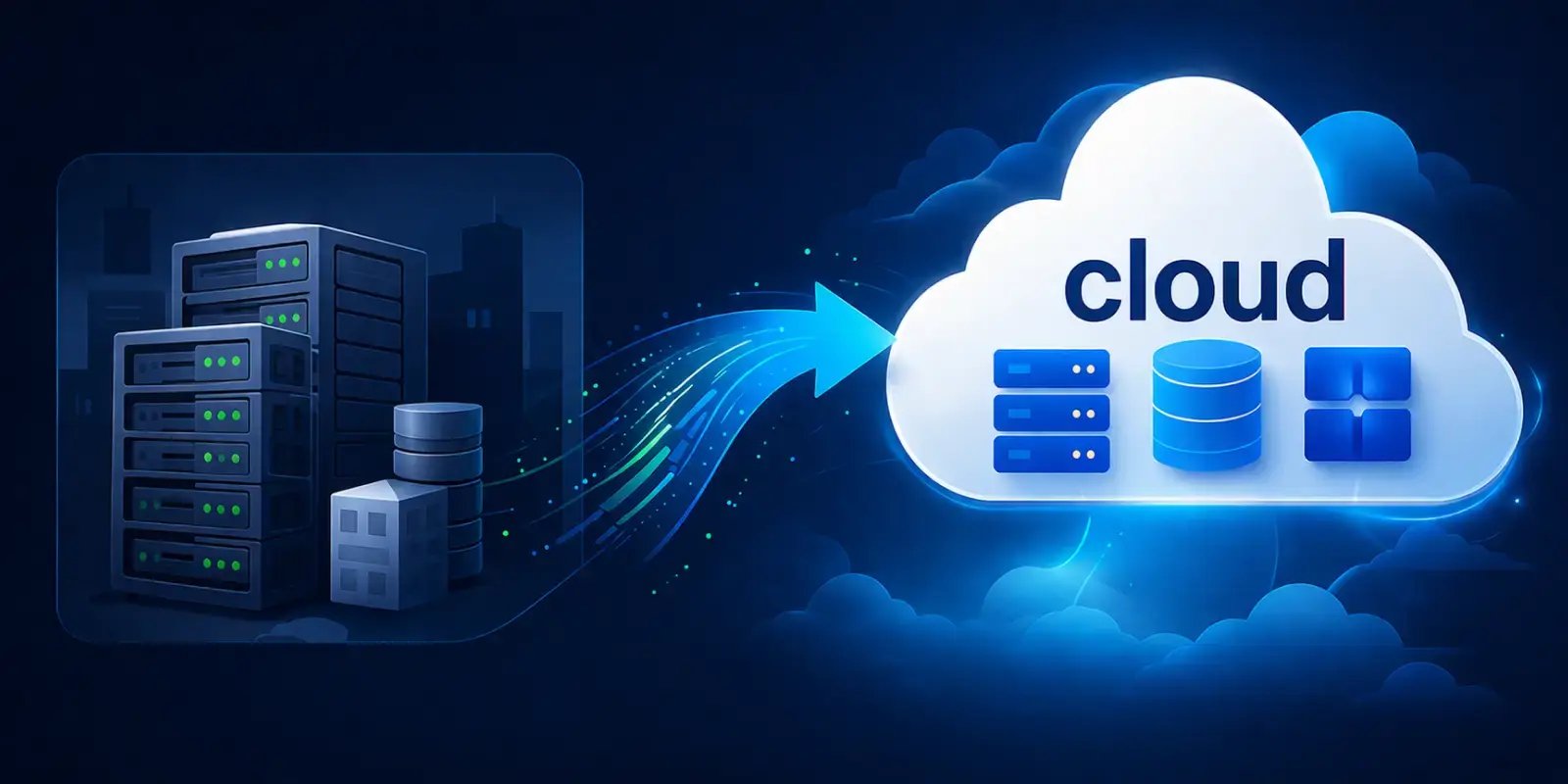
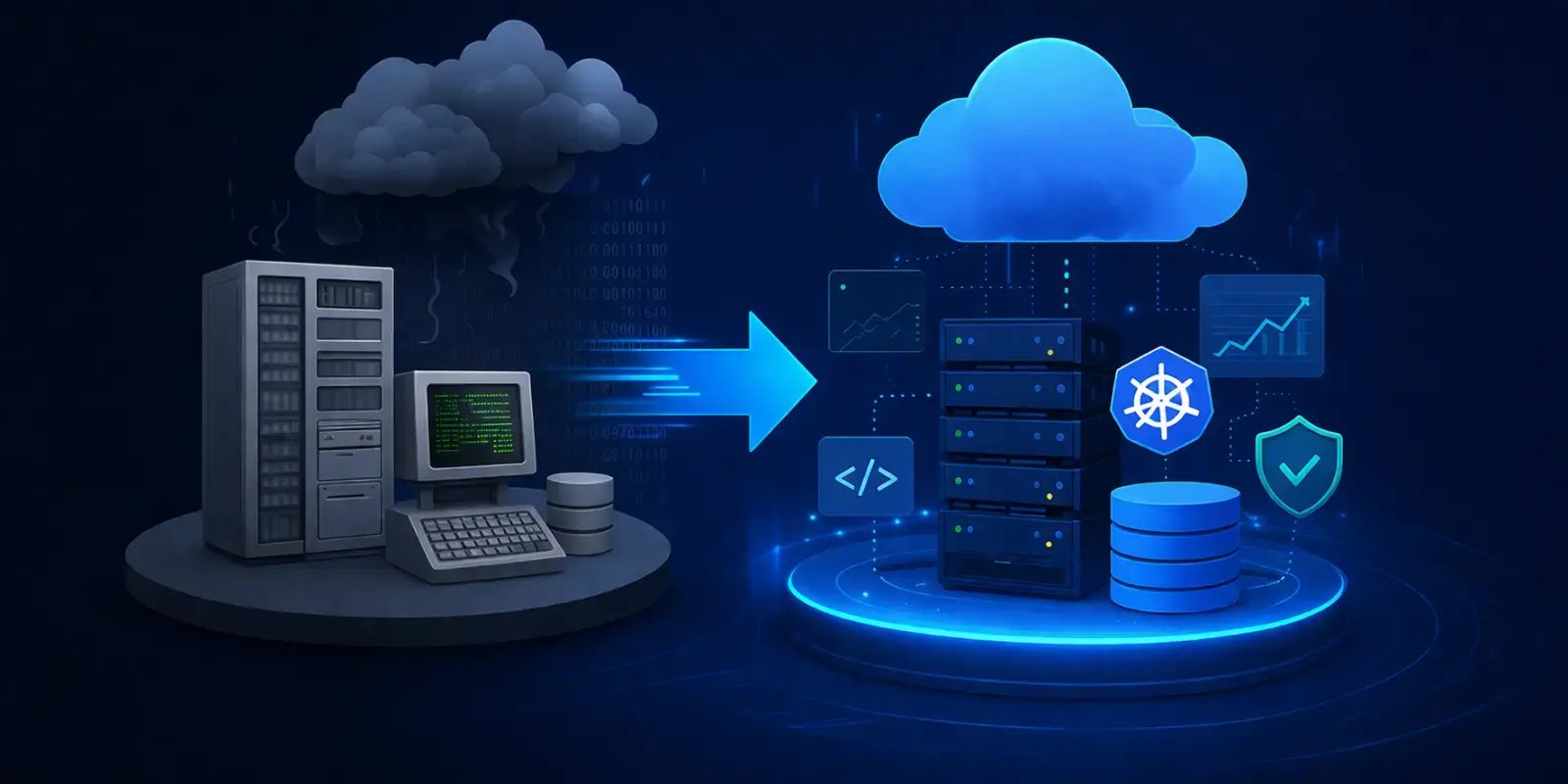
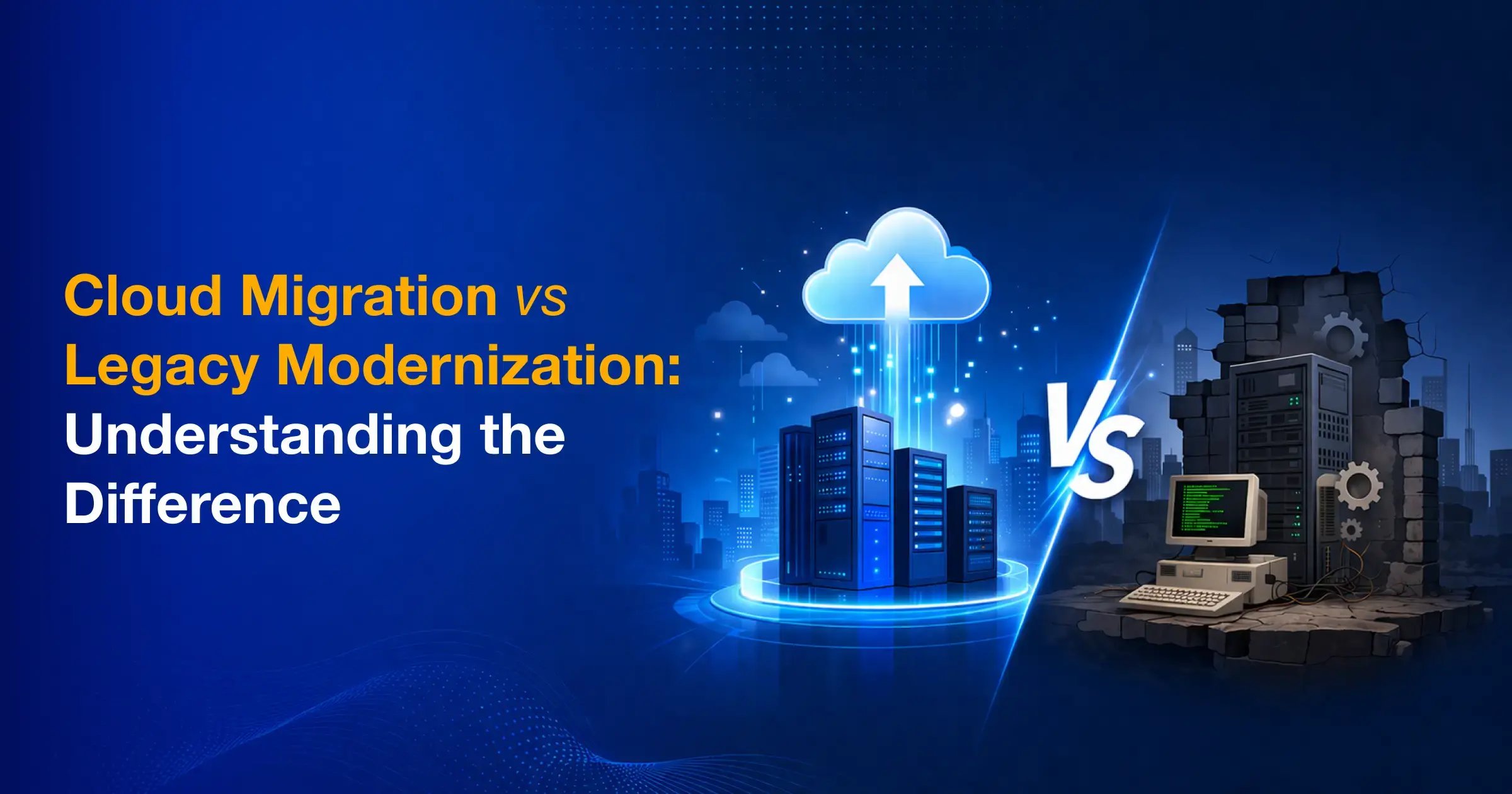
This is where the confusion between cloud migration vs legacy modernization begins. Cloud migration changes where your application runs. Legacy system modernization changes how the application works.
Those are two very different decisions.
Still, many organizations start a cloud migration strategy expecting it to solve deeper problems like technical debt, slow development cycles, or fragile integrations.
Months later, the same problems remain. The system now runs in the cloud, but the architecture is still outdated.
Why does this confusion happen so often?
A few reasons stand out:
The result can be expensive. Companies spend millions migrating legacy systems to cloud infrastructure without improving the underlying application.
According to Markets and Markets, the global cloud migration services market size is estimated to grow to USD $29.2 billion by 2028. On the other hand, legacy modernization market is estimated to reach USD $66.21 billion by 2031, as per Mordor Intelligence findings.
The key difference between cloud migration and software modernization is simple. Cloud migration focuses on infrastructure. Modernization focuses on application architecture.
Many companies assume cloud migration automatically modernizes their systems. This is not true.
Here, we will break down the difference between cloud migration and modernization, explore when each approach makes sense, and help you decide which strategy your business actually needs.
So, to sum up:
Cloud migration means moving existing applications to cloud infrastructure. Legacy modernization means transforming outdated systems through approaches like application refactoring, microservices architecture, and cloud-native modernization to improve scalability, maintainability, and long-term innovation.

Many leaders hear the term cloud migration and assume it means a complete technology upgrade. That assumption causes a lot of confusion in the cloud migration vs legacy modernization debate.
Let’s slow down and look at what cloud migration actually means.
Cloud migration simply means moving applications, data, or workloads from on-premise infrastructure to cloud platforms like AWS, Azure, or Google Cloud.
That’s it.
The application itself may stay exactly the same. The code may stay the same. The architecture may stay the same. Only the hosting environment changes.
Think of it like moving your office from one building to another. The location changes. The desks, processes, and people stay the same. This is why many experts say:
Cloud migration changes where applications run. It does not automatically change how they work.
Companies usually pursue a cloud migration strategy for practical reasons:
Quick Definition
Cloud migration is the process of moving applications, data, and workloads from on-premise infrastructure to cloud environments without necessarily redesigning the application architecture.
When done right, migrating legacy systems to cloud platforms can solve several infrastructure challenges.
For example:
For many companies, these benefits alone justify cloud adoption. But this is where an important reality check comes in.
Many companies assume cloud migration automatically modernizes their systems. This is not true. Moving a legacy application to the cloud does not magically remove its problems.
If your system had architectural issues before migration, those issues still exist after migration.
Cloud migration does not fix:
This is why many organizations eventually explore application modernization after migration.
Different systems require different migration approaches. Over the years, most enterprises have adopted the 6 Rs framework.
|
Strategy |
Description |
When It Is Used |
|
Rehost |
Move the application without code changes |
Fast migrations and data center exits |
|
Replatform |
Make small optimizations during migration |
Improve performance with minimal effort |
|
Refactor |
Redesign parts of the application |
Prepare for cloud-native architecture |
|
Repurchase |
Replace the system with a SaaS product |
Standard business functions |
|
Retire |
Remove applications that are no longer useful |
Reduce cost and complexity |
|
Retain |
Keep some systems on-premise temporarily |
Compliance or dependency reasons |
Each approach plays a role in a broader cloud transformation journey. The right strategy depends on business priorities, technical constraints, and long-term modernization goals.

Here is something we have seen many times in real enterprise projects.
A company moves its systems to the cloud. The migration completes. The dashboards look modern. Costs even improve for a while. Then the same complaints return.
Development is slow. Integrations break. New features take months. Engineers avoid certain parts of the code. At that point leaders start asking a new question.
“Didn’t we already modernize this system?”
This is where the confusion between legacy modernization vs cloud migration becomes clear.
Legacy modernization is about changing how an application is built and maintained. Cloud migration changes the environment. Legacy system modernization changes the system itself.
In simple terms, modernization improves the architecture, codebase, and development workflow so the system can evolve easily.
In many enterprises, this involves work like:
Legacy modernization improves how applications are built and maintained. That improvement drives faster innovation and better system scalability.
How do you know your system needs more than a cloud migration strategy? Look at the daily friction your teams experience. Ask simple questions.
Does any of this sound familiar?
These are classic signals of aging architecture. In many cases the real issue is not infrastructure. It is outdated application design.
Work with Tech.us to choose an approach that supports long-term growth, not just short-term fixes.
Different systems require different modernization paths. Experienced teams usually evaluate options like these:
|
Approach |
What It Means |
Business Impact |
|
Rehosting |
Move system to cloud with minimal changes |
Fast infrastructure relief |
|
Refactoring |
Improve code structure and remove technical debt |
Easier maintenance |
|
Rearchitecting |
Shift from monolith to microservices |
Better scalability |
|
Rebuilding |
Rebuild application using modern frameworks |
Long term flexibility |
|
Replacing |
Replace system with SaaS solution |
Lower operational burden |
Each path supports a broader legacy modernization strategy. The right approach depends on system complexity, business goals, and the pace of digital transformation modernization.
The key difference between cloud migration and legacy modernization is this.
In other words, cloud migration changes where applications run. Legacy modernization changes how those applications are built, maintained, and scaled.
Once you see this difference, many technology decisions start making more sense.
Here is a simple way to understand the difference between cloud migration and modernization:
|
Factor |
Cloud Migration |
Legacy Modernization |
|
Primary Goal |
Move workloads to cloud infrastructure |
Transform outdated applications |
|
Focus |
Hosting environment |
Software architecture |
|
What Changes |
Infrastructure and servers |
Codebase, architecture, workflows |
|
Speed |
Faster implementation |
Longer transformation effort |
|
Technical Complexity |
Moderate |
Higher engineering effort |
|
Business Outcome |
Infrastructure scalability |
Faster innovation and adaptability |

Over the years, we have seen many organizations invest heavily in cloud programs and modernization initiatives. Some succeed quickly. Others struggle for years.
Why does that happen?
In many cases, the problem is not technology. The real problem is how the transformation is planned.
Teams confuse goals. Leaders rush into decisions. Systems get migrated without solving the deeper architectural problems.
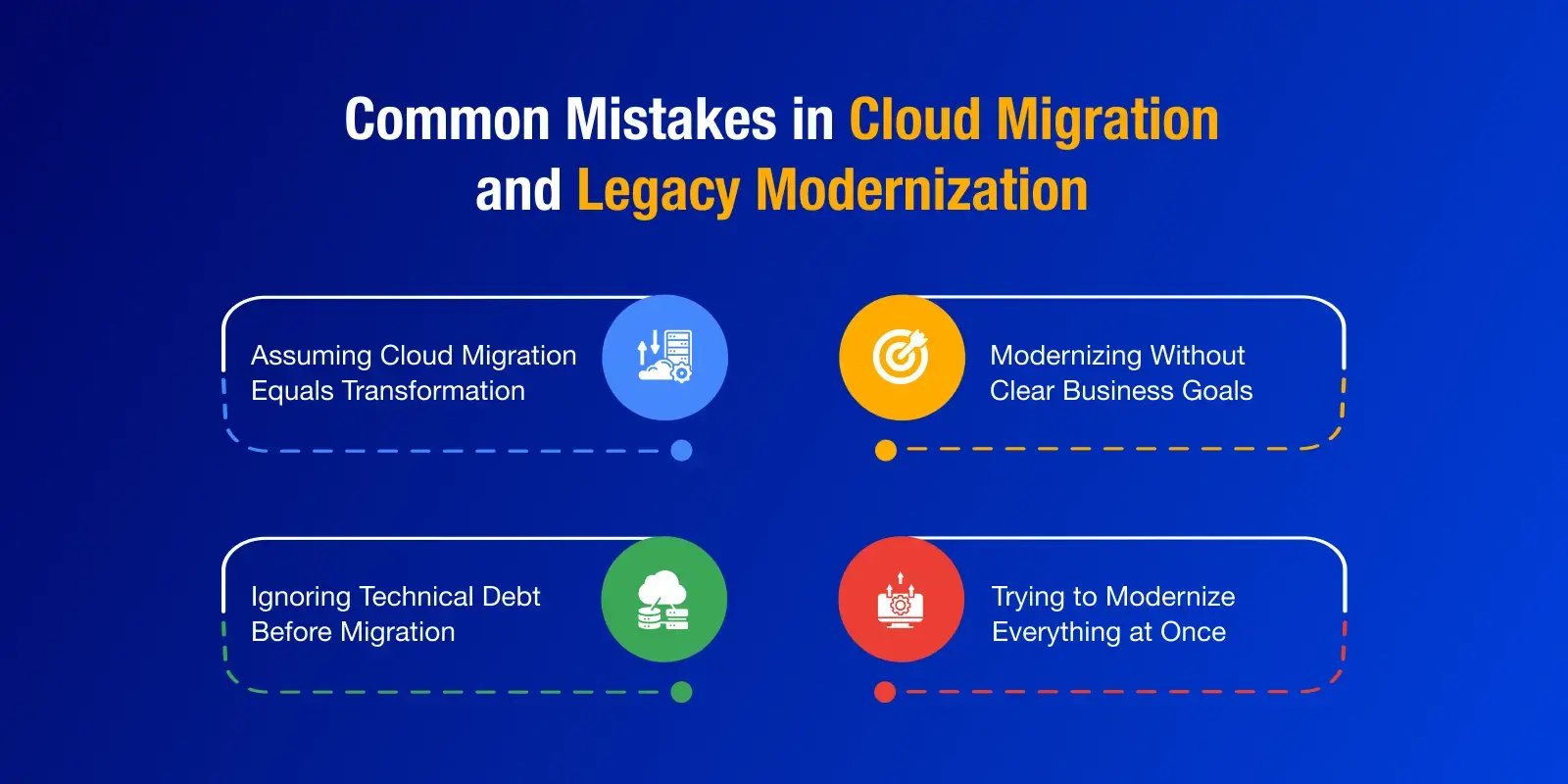
Let’s look at some common mistakes companies make when dealing with cloud migration vs legacy modernization.
This is probably the most common misunderstanding. A company announces a big cloud initiative. Servers move to AWS or Azure. Infrastructure dashboards look modern. Yet daily operations remain the same.
Development is slow. Integrations break. Scaling becomes difficult during peak traffic. Why?
Because cloud migration changes where applications run. It does not change the architecture of the application.
Many companies assume cloud migration automatically modernizes their systems. This is not true. A monolithic system moved to the cloud is still a monolithic system. Without application modernization, the underlying problems stay the same.
Another costly mistake appears during migration planning. Teams focus heavily on infrastructure changes. They spend less time analyzing the health of the application.
According to a Deloitte study, technical debt consumes 21 to 40% of IT budgets on average, hindering innovation even post-migration.
Years of technical debt remain hidden inside the system. Then migration begins. After the system moves to the cloud, the same issues appear again:
Now the company pays cloud costs while still dealing with an outdated architecture. In many cases, some level of application refactoring should happen before or during migration.
Cleaning the system early makes the entire cloud migration strategy far smoother.
Modernization sounds exciting. Many companies launch legacy system modernization initiatives without defining the real objective.
Ask a simple question. What business outcome should modernization deliver?
Common answers include:
Without a clear goal, modernization turns into a never-ending engineering effort. Technology upgrades must connect directly to business value.
That is what makes digital transformation modernization successful.
Large legacy environments often contain hundreds of systems. Some companies try to modernize all of them together. This creates enormous complexity.
Teams get overwhelmed. Budgets increase. Projects slow down. Experienced organizations take a different approach.
They prioritize systems that create the most business impact. Then they modernize gradually.
A common sequence looks like this:
Step by step, the system evolves toward cloud-native applications. Incremental modernization reduces risk. It also keeps innovation moving while transformation continues.
By now, the difference between cloud migration vs legacy modernization should feel much clearer.
One shifts your systems to a new environment. The other improves the way those systems are built and evolve. Both matter. Yet they solve different problems.
Before launching a major transformation program, pause for a moment. Ask a simple question. What is actually slowing the business down?
Is it infrastructure limitations? Or is it the application architecture itself?
That answer will shape your cloud migration strategy, your application modernization roadmap, and your long-term innovation capacity. The smartest organizations treat these as business decisions first and technology decisions second.
No, they’re not. Cloud migration is all about moving applications to cloud infrastructure. On the other hand, legacy modernization fundamentally transforms outdated applications so they become scalable and compatible with modern technologies.
Yes. As cloud migration is essentially different from software modernization, we can modernize legacy systems on-premise without any downtime.
In many cases, businesses prefer partial modernization before migrating to cloud. However, some organizations migrate first and then modernize gradually afterward.
The cost varies for each business and the types and nature of systems they have. Legacy modernization typically requires more development effort; however, it often delivers higher long-term business value.

What is Legacy System Modernization? The Complete...
Get Free Tips
NEWSLETTER
Get Free Tips
Submit to our newsletter to receive exclusive stories delivered to vou inbox!
Thanks for submitting the form.
RECENT POSTS
Cloud Migration vs Legacy Modernization: Understanding the Difference
What is Legacy System Modernization? The Complete Guide for Business...
Top 5 Business Benefits of Enterprise Mobile App Development
Human-in-the-Loop Data Annotation: Why It Matters for AI Accuracy
7 Reasons Why Custom Enterprise Mobile Apps are a Game-Changer for Your...
We build AI-driven solutions that help your business overcome challenges and unlock its full potential. Together, we'll drive growth with innovative technology tailored to your needs.