This is a major shift, which is not driven by technology alone. It is driven by the simple reality that digital risk now mirrors business risk.
Unlike previous times, organizations no longer experience cyber incidents as isolated events. Nowadays, such attacks ripple across different operations, partners, customers, and regulators at once. Even a single disruption can halt revenue and expose leadership decisions to scrutiny, which could permanently alter market confidence. In this environment, cybersecurity cannot function properly as a siloed IT function.
What makes 2026 different? It is the pace and interconnectedness of exposure as current infrastructure has erased clear boundaries of control. And, decisions made at the leadership level can now directly shape the organization’s security posture.
As a result, cybersecurity services have become a leadership discipline, and leaders are no longer judged on whether incidents occur, but on how well the organization anticipates risk and responds to it. So, it becomes clear that in 2026, staying secure is inseparable from staying viable.
Cyber Risk Is Now Systemic, Not Situational
Cyber risk in 2026 has evolved drastically and no longer appears as a rare disruption or an external shock but is woven well into the daily functioning of modern businesses. Nowadays, digital systems underpin revenue generation, customer engagement, supply chains, and decision-making, which makes the impact immediate and far-reaching when those systems are exposed.
Recent reports from Cybercrime Magazine estimate that global cybercrime losses crossed USD $10.5 trillion annually. It reflects the accumulated cost of everything from downtime and regulatory action to recovery effort and lost confidence.
What makes this risk systemic is its predictability. Most organizations will experience incidents and many will face more than one. However, preparedness makes all the difference here. How quickly was the threat detected? How decisively did leadership respond? How clearly were all stakeholders informed?
Cyber risk now behaves like financial risk or operational risk, which compounds silently and surfaces suddenly. To treat it as an occasional security concern can leave businesses unprepared for its true scale. In 2026, resilience begins with accepting that cyber risk is part of doing business, not an exception to it.
Ransomware Has Evolved from Disruption to Strategic Leverage
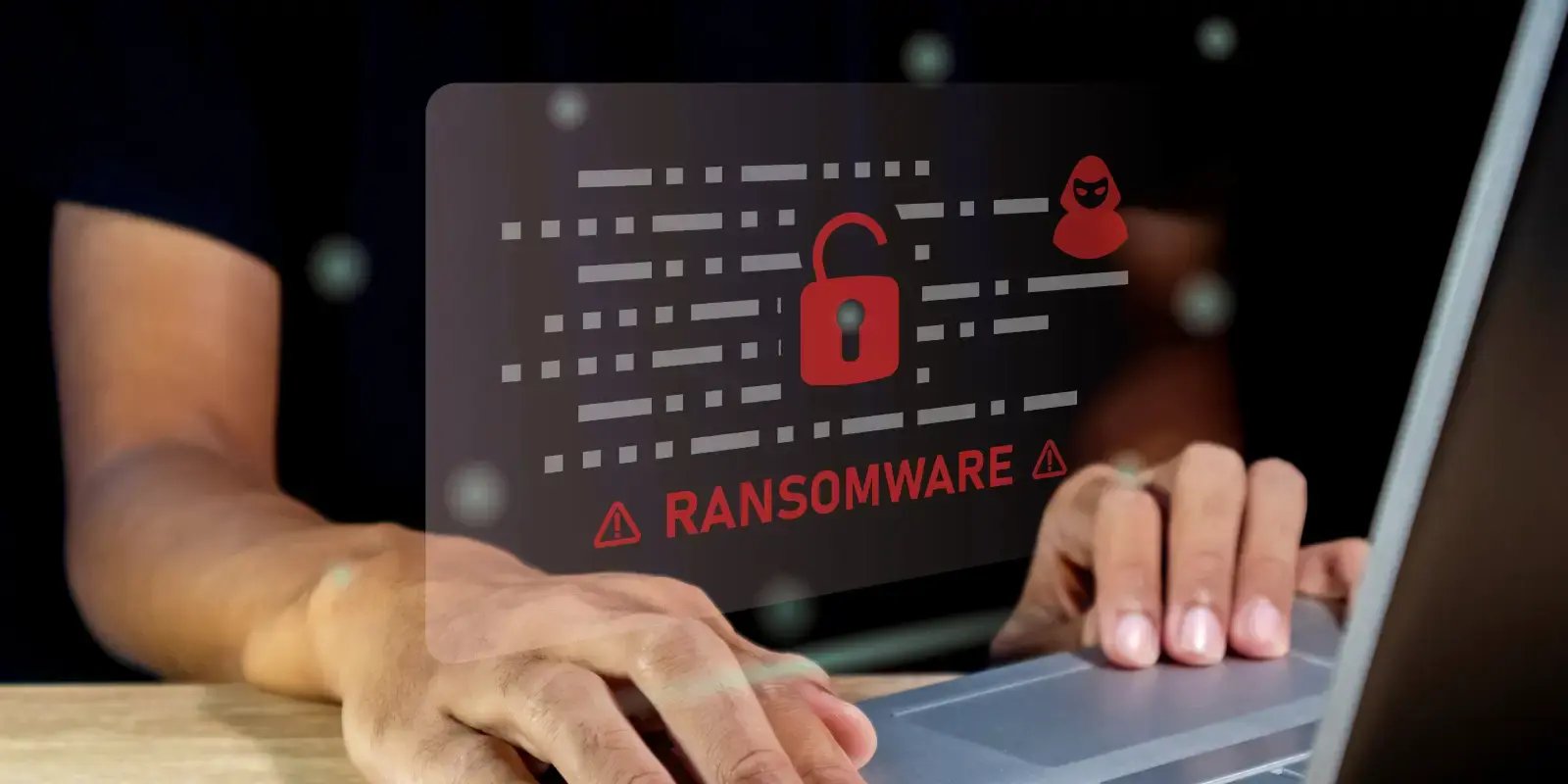
Ransomware remains one of the most persistent and damaging threats that several businesses may face in 2026, but its nature has fundamentally changed. It is no longer designed merely to block access to systems but is engineered to apply sustained pressure across various operations which in turn affect the reputation of a business.
Recent industry findings indicate that ransomware is one of the major contributors to breaches, as its attack methods mature over time.
The shift is not in volume alone, but in intent too. Modern ransomware campaigns routinely combine multiple tactics:
- System encryption to halt operations
- Data exfiltration to create legal and reputational risk
- Public disclosure threats to erode stakeholder trust
- Timed pressure aligned with reporting cycles or peak business periods
The stolen data and prolonged recovery timelines ensure that impact persists well beyond initial containment, not to mention the regulatory scrutiny.
What is emerging in 2026 is a move toward highly targeted attacks. Threat actors increasingly focus on:
- Supply chain choke points
- Industry-specific downtime risks
- Healthcare service continuity
- Financial reporting integrity
This brings cybersecurity managed services to light because it has become imperative for organizations, irrespective of their size, to secure their digital environment.
Identity Has Replaced the Network as the Primary Security Boundary

The erosion of traditional network boundaries has reshaped how businesses must think about security in 2026. The rapid adoption of cloud application development, remote work, SaaS development, and third-party integrations has dissolved the idea of a fixed perimeter.
Industry research consistently shows that stolen or compromised credentials remain the most common initial access vector, which accounts for the largest share of breaches, according to Verizon’s Data Breach Investigations Report and IBM’s Cost of a Data Breach studies. The issue is no longer weak passwords alone. The evolution lies in how identities are exploited.
Identity attacks nowadays are primarily driven by AI-driven phishing, deepfake impersonation, and open-source intelligence among others because they are:
- Faster to execute
- Harder to detect
- Highly contextual and personalized
Organizations that delay modernizing identity infrastructure can remain exposed, regardless of investments in networks or endpoints. As boundaries are expanding, so are security strategies.
Human Risk Is Expanding, Even as Awareness Improves
Despite sustained investment in training and awareness programs, human behavior continues to play a pivotal role in cybersecurity incidents. Multiple studies indicate that approximately 70 to 85 percent of breaches involve a human element, according to analyses cited by IBM Security and Verizon’s Data Breach Investigations Report.
The evolution is not in the existence of mistakes, but in the precision with which they are targeted. AI-driven reconnaissance, open-source intelligence, behavioral profiling, and many others now allow attackers to tailor social engineering campaigns with remarkable accuracy.
It is a common instance nowadays that phishing messages mirror internal language. What once appeared suspicious now blends effortlessly into daily workflows.
This shows that static awareness training is not sufficient anymore. In 2026, effective cybersecurity cultures are defined by measurable behavioral outcomes. Leading organizations are focusing on:
- Observable reduction in risky actions
- Executive participation in live simulations
- Real-time feedback loops tied to user behavior
Human risk has not diminished but has become more strategically targeted. To address it, you now require leadership involvement and a strong cultural approach which treats security behavior as a shared responsibility across the organization.
Supply Chain Exposure Is Now a Board-Level Cyber Risk
There is a sharp rise in third-party involvement in cybersecurity incidents, which reflects a business environment that is deeply interconnected and increasingly interdependent.
Threat actors are no longer focused solely on direct entry but they are compromising suppliers, manipulating software updates, and exploiting service providers which sit quietly inside trusted business workflows.
Industry analysis shows that third‑party and supply chain relationships are implicated in a substantial and rising share of breaches. IBM reports that around 20% of data breaches are linked to third parties, while the World Economic Forum’s Global Cybersecurity Outlook 2025 highlights supply chain cyber risk as a leading concern for large organizations
- Clear visibility into vendor security posture
- Contractual accountability for cyber controls
- Continuous monitoring beyond initial onboarding
AI Is Accelerating Both Defense and Failure
This imbalance is creating a widening gap. Several industry studies report that while enterprises are rapidly adopting AI, many still lack mature governance and security controls to monitor and manage these systems safely.
This is where you should safeguard your digital space with AI-powered cybersecurity practices that will keep up with the proliferation of cyber risks. The risk is not limited to malicious use. Poorly governed AI introduces new attack surfaces, data exposure pathways, and systemic dependencies that are difficult to unwind once embedded.
Quantum Risk Is No Longer Theoretical
This places sensitive information, intellectual property, and regulated data at risk long after it was originally transmitted.
Legacy encryption methods were not designed for this environment. Systems that currently appear secure may become vulnerable without warning, not because of immediate compromise, but because of delayed exposure.
By 2026, cyber maturity will be measured by an organization’s ability to absorb disruption without triggering cascading business failure. Preparation now includes:
- Identifying long-life data assets
- Planning for post-quantum or hybrid cryptography
- Testing response through simulations and executive exercises
Quantum risk reinforces a broader truth. Security is no longer defined by strength alone, but by readiness for change that arrives before systems are built to handle it.
Staying One Step Ahead: Vigilance in 2026
As we move deeper into 2026, it’s important for businesses to recognize that cybersecurity is not just about tools and software, but also about a mindset. You need to be proactive in detecting and addressing vulnerabilities before they become incidents, which will make all the difference.
One of those risks can be the use of proxies, where your online traffic might be rerouted through an intermediary without your knowledge. It's not always obvious, but this could compromise your organization's security.
So, it’s worth taking a moment to check if you’re behind a proxy. You can check if you’re behind a proxy to see whether your HTTP headers show telltale signs of intermediary routing.
Cyber Resilience Is Replacing Breach Prevention as the Core Metric
Nearly every organization now operates with the expectation of disruption. Industry research shows that close to 90 percent of companies experience at least one cyber incident each year, with many facing repeated attacks, according to Splunk’s CISO research.
This reality has shifted the focus away from absolute prevention toward resilience, defined by how quickly threats are detected, contained, and recovered from.
By 2026, cyber maturity will be judged by an organization’s ability to absorb disruption without triggering cascading business failure. Tabletop exercises, live simulations, and executive-level response planning will separate resilient organizations from those that struggle under pressure today globally.
What Business Leaders Must Get Right in 2026
Security can no longer be treated as a downstream IT concern or a reactive function triggered by incidents. It must be embedded into how organizations plan growth, adopt technology, choose partners, and respond to uncertainty.
When leaders understand cyber risk as a business condition rather than a technical anomaly, security decisions become clearer, faster, and more effective. This alignment allows organizations to move with confidence instead of hesitation, even in volatile environments.
To stay secure in 2026, business leaders must consistently get the following right:
- Align cybersecurity with governance, strategy, and risk tolerance
- Treat identity as the foundation of access and trust
- Measure and reduce human risk through behavior, not awareness alone
- Hold suppliers and partners accountable for shared security outcomes
- Apply discipline and oversight to AI adoption and usage
- Plan for disruption through tested resilience and response readiness