Overview
In 2026, enterprise AI in New York is shifting from experimentation to execution.
For years, companies experimented with AI tools like chatbots and copilots. These systems were useful, but they stayed reactive. They waited for prompts. They answered questions. They generated outputs.
Now the conversation is changing.
Enterprises are asking a bigger question.
Can AI actually run parts of our workflows on its own?
That question is driving the rise of agentic AI development in New York.
Instead of simple AI tools, companies are building autonomous AI systems in New York that can:
- analyze incoming information
- make decisions based on rules and context
- interact with internal systems
- complete multi-step tasks across departments
Think about a financial compliance workflow. Traditionally, an analyst reviews transactions, checks regulations, verifies documents, and flags exceptions. It takes time. It also requires constant manual attention.
Now imagine a team of AI agents handling most of that process.
- One agent gathers transaction data.
- Another checks regulatory databases.
- A third flags suspicious patterns and escalates cases that need human review.
This kind of AI workflow automation in New York is becoming more relevant in industries like finance, healthcare, media, and logistics. These sectors manage complex processes that traditional automation struggles to handle.
New York’s ecosystem is also accelerating adoption. Initiatives connected to NYCEDC, NYC AI Nexus, and the Empire AI consortium are pushing applied AI forward across the region.
So, the question for enterprises is simple.
How do you move from AI experiments to production systems that actually run business workflows?
That is exactly what this guide explores.
What is Agentic AI, and How is it Different from Traditional AI Automation?
AI has been part of business software for years. Think about chatbots, rule-based automation, or simple machine learning tools. They help teams move faster. They answer questions. They process data.
But here is the problem. Most of these tools still depend heavily on human instructions.
So what changes with agentic AI?
Agentic AI systems can work toward a goal. They break down tasks into steps. They use tools. They interact with business systems. Then they complete actions with limited human input.
This is why many organizations exploring AI agent development in New York are moving beyond basic automation.
Let’s break this down.
What Makes an AI System “Agentic”?
An AI system becomes agentic when it can operate with a level of autonomy. It does not wait for every instruction.
Instead, it can:
- understand a goal
- plan steps to achieve it
- use tools or APIs
- access business data
- take actions within defined guardrails
For example, imagine a claims processing workflow in healthcare. An agent could:
- collect patient details from the EHR
- verify insurance eligibility
- check policy rules
- submit the authorization request
A human still supervises the process. That is where human-in-the-loop governance becomes important. But the heavy lifting moves to the AI system.
This approach is becoming common in enterprise AI development in New York, especially in regulated industries.
How is Agentic AI Different from Chatbots, Copilots, and RPA?
Many teams confuse these tools with agentic AI. They are related, but they work differently.
Here is a simple way to think about it.
- Respond to prompts
- Respond to prompts
- Require constant human input
RPA systems
- Follow predefined rules
- Automate repetitive tasks
- Struggle when workflows change
- Understand a goal
- Make decisions across multiple steps
- Use business tools and APIs
- Escalate complex cases to humans
| Technology | What it does |
|---|---|
| Chatbots | Respond to prompts |
| RPA | High |
| Agentic AI | Plans, decides, and executes workflows |
This is why companies investing in AI workflow automation in New York are increasingly exploring agent-based architectures.
When Does a Workflow Need One Agent vs Multiple Agents?
A single AI agent can handle straightforward workflows. But enterprise environments are rarely that simple.
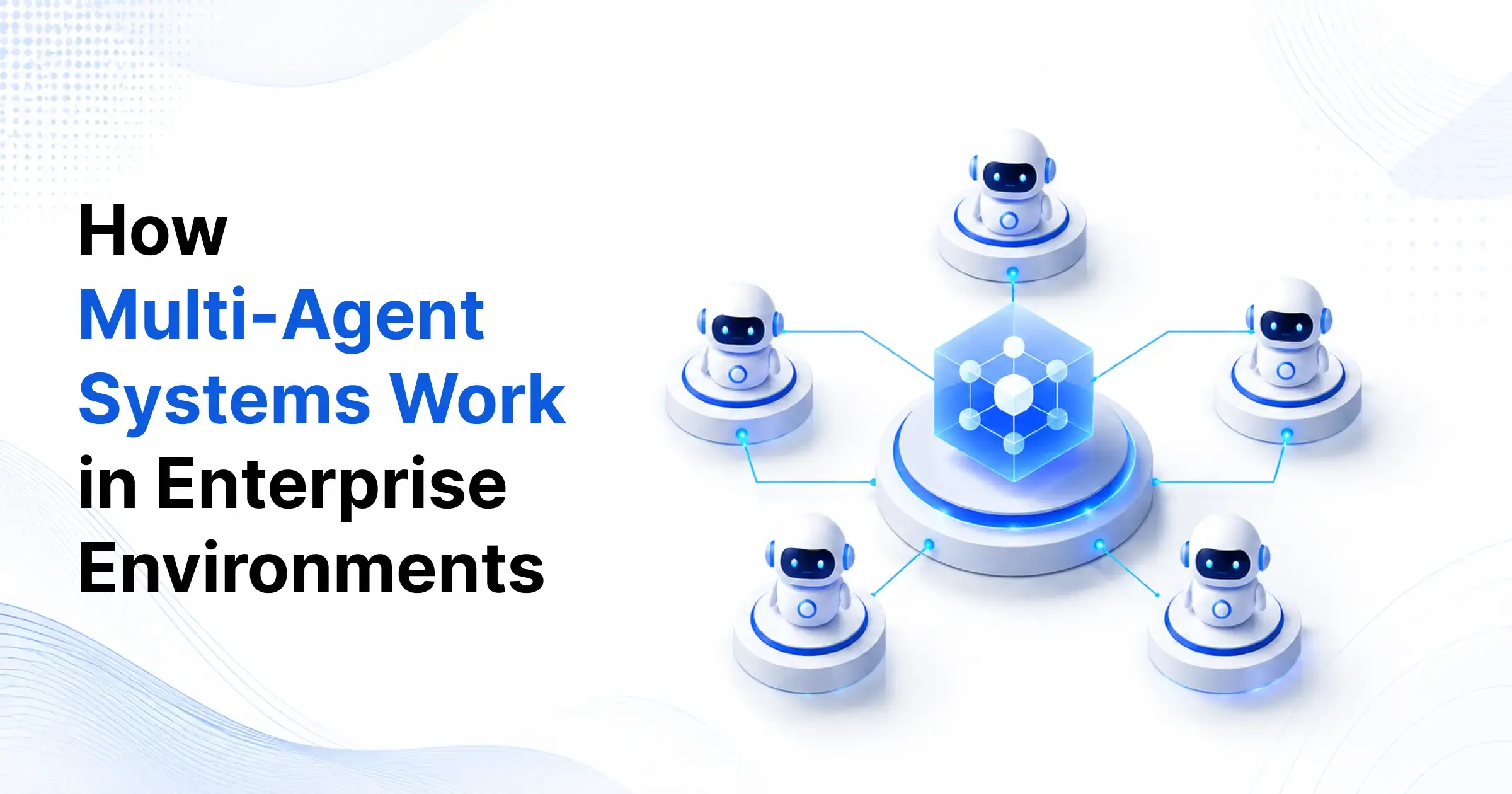
Many organizations are now deploying multi-agent systems in New York enterprises. In this model, several specialized agents collaborate.
For example:
- A research agent gathers data
- An analysis agent validates information
- An execution agent performs actions
- An execution agent performs actions
Frameworks like LangGraph help make these interactions come alive. They allow agents to coordinate tasks while maintaining observability and governance.
The result is a system that behaves more like a digital team than a single tool.
This shift is why custom AI agents for enterprises are becoming a major focus for organizations building production-grade AI systems.
New York is not new to technology innovation. But the city is now entering a new phase. AI is moving from research and experimentation to real business deployment.
So why is this happening in New York right now?
Several forces are coming together at the same time.
A Dense Industry Ecosystem That Needs AI
New York runs on complex industries. Financial services, healthcare, legal services, media, and logistics dominate the regional economy. These sectors rely on heavy documentation, regulatory checks, and multi-step workflows.
That is exactly where AI workflow automation in New York can deliver real impact.
The scale of the tech ecosystem is also significant. According to the New York City Mayor’s Office, the city’s tech sector supports over 360,000 jobs and includes more than 2,000 AI startups and 40,000 workers with AI skills.
For companies exploring AI agent development in New York, this concentration of talent and industry demand creates a powerful environment for innovation.
Strong Public and Private Investment in AI
City and state initiatives are accelerating adoption.
New York City recently launched NYC AI Nexus, an initiative supported by NYCEDC that aims to strengthen collaboration between startups, universities, and enterprise organizations working on AI solutions.
At the state level, the Empire AI consortium is expanding access to advanced computing infrastructure and AI research collaboration across universities such as Columbia, NYU, Cornell Tech, and RPI.
Why Do Most Agentic AI Projects Stall Before they Reach Production?
Many companies are excited about agentic AI. Teams run pilots. Internal demos look promising. Early prototypes even show strong results.
Then progress slows down.
The pilot never becomes a production system. Sound familiar?
This is a common pattern in enterprise AI development in New York. The problem usually is not the AI model. The problem sits inside the organization itself.
Let’s look at where things often break down.
What Governance Gaps Create the Most Risk?
Autonomous systems must operate with clear guardrails. Without governance, risk increases quickly.
Enterprises deploying autonomous AI systems in New York need strong oversight mechanisms.
Key governance controls often include:
- human-in-the-loop review for sensitive decisions
- full decision logging for auditability
- role-based access controls
- monitoring for bias and unexpected outputs
- clear escalation paths for exceptions
Regulations also play a role. In New York, frameworks such as Local Law 144 highlight the importance of responsible AI deployment in areas like employment decision tools.
This is why companies investing in agentic AI consulting in New York focus heavily on governance and system design from day one.
Agentic AI can transform workflows. But production systems require architecture, integration, and oversight. Without those foundations, even the most impressive AI pilot can stall before it delivers real business value.
Which Business Workflows Are Best for Agentic AI in New York?
Every company hears about AI agents today. But a smarter question is this.
Where do they actually create value?
Not every workflow needs an AI agent. Some tasks are simple enough for traditional automation. Others involve decisions, data checks, and coordination across systems. That is where agentic AI becomes useful.
Enterprises exploring AI agent development in New York often start with workflows that involve high volumes of data, repetitive decisions, and multiple systems.
Let’s look at a few industries where autonomous AI systems in New York are already showing real impact.
Financial Services
Financial firms deal with massive volumes of documents, transactions, and regulatory checks. Many processes still require manual review.
AI agents can assist analysts by handling routine verification and monitoring tasks. They gather data, run checks, and flag exceptions for human review.
Common use cases include:
- automated KYC verification and client onboarding
- transaction monitoring and compliance automation
- document analysis for loans and regulatory reporting
This is why AI agents for finance in New York are gaining traction across banks, hedge funds, and fintech companies.
Healthcare
Healthcare systems manage complex administrative workflows every day. Intake, insurance checks, and prior authorization consume large amounts of staff time.
AI agents can support these processes while still keeping humans involved for sensitive decisions.
Healthcare organizations are using agents to:
- verify insurance eligibility during patient intake
- manage prior authorization submissions
- coordinate appointment scheduling and claims support
This is where AI agents for healthcare in New York can reduce delays and help care teams focus more on patients.
Pre-Construction
The pre-construction phase involves constant coordination. Teams review drawings, estimate costs, evaluate suppliers, and prepare bid documents.
AI agents can assist by organizing project data and monitoring changes across documents.
Common agent-supported workflows include:
- automated analysis of construction drawings and specifications
- cost estimation using historical project data
- supplier comparison and bid preparation support
These workflows benefit from AI workflow automation in New York, especially in large infrastructure and commercial development projects.
Logistics
Logistics operations move quickly. Orders change. Routes shift. Exceptions appear daily.
AI agents can monitor supply chain activity and help operations teams respond faster.
Key use cases include:
- real-time shipment tracking and exception alerts
- route coordination and delivery optimization
- automated communication with suppliers and partners
This kind of intelligent coordination is one reason multi-agent systems in New York logistics operations are gaining attention.
Manufacturing
Manufacturing environments generate large volumes of operational data. Equipment sensors, production schedules, and supply chain inputs all feed into daily decisions.
AI agents can help teams analyze this information and keep operations running smoothly.
Typical use cases include:
- predictive maintenance based on machine data
- production scheduling and resource coordination
- automated quality monitoring during production
Manufacturers exploring enterprise AI development in New York are increasingly looking at custom AI agents for enterprises to support these operational workflows.
These examples highlight a simple pattern.
Agentic AI works best when workflows include multiple steps, multiple systems, and frequent decisions. When those conditions exist, AI agents can operate like a digital operations team that supports human experts instead of replacing them.
How Do You Choose the Right Agentic AI Development Partner in New York?
Many companies reach the same moment during their AI journey.
The internal team understands the opportunity. Leadership wants to move forward. A few pilot ideas already exist.
Then the next question appears.
Who should actually build the system?
Choosing the right partner for agentic AI development in New York is not a small decision. Enterprise AI systems interact with sensitive data, critical workflows, and regulated environments. The wrong partner can leave you with a prototype that never reaches production.
So what should you look for?
Let’s break it down.
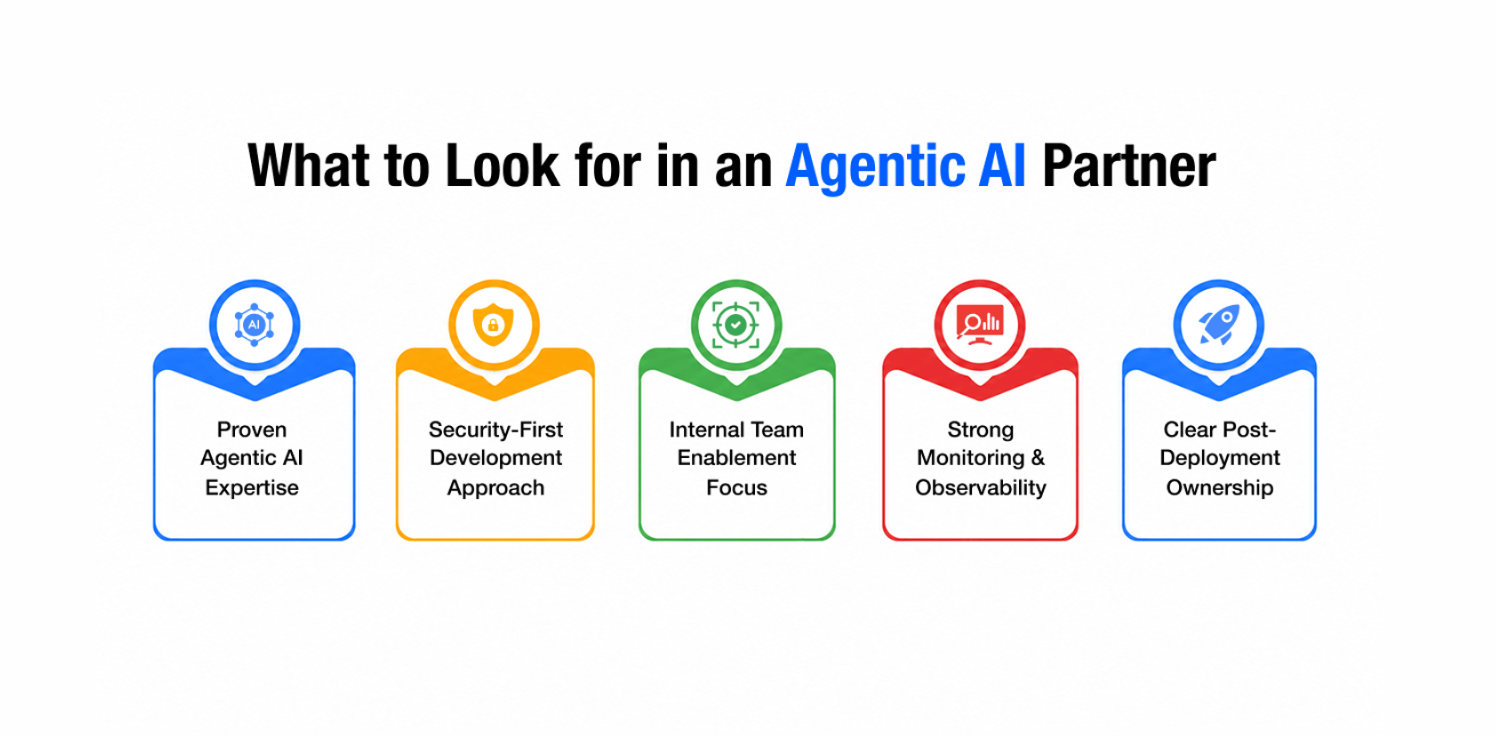
1. What Technical Capabilities Should an Agentic AI Partner Have?
Many vendors claim they build AI agents. But building a demo is very different from deploying a production system inside an enterprise environment.
A strong New York AI development company should understand how to design systems that operate reliably across real business infrastructure.
Ask a few practical questions.
Can they design multi-agent systems that coordinate tasks across tools and APIs?
Do they understand orchestration frameworks such as LangGraph?
Have they deployed systems that interact with existing enterprise platforms?
Look for partners that demonstrate experience in:
- building production-grade AI agents, not experimental prototypes
- designing multi-agent architectures for complex workflows
- integrating agents with ERP, CRM, and internal APIs
- implementing strong observability and monitoring systems
When these capabilities exist, AI workflow automation in New York enterprises becomes much easier to scale.
2. What Governance and Compliance Experience Matters Most?
Autonomous systems require strong guardrails. Governance like HIPAA compliance should be part of the architecture from day one.
This is especially important for organizations operating in finance, healthcare, and other regulated industries.
A capable agentic AI consulting team in New York should understand how to build responsible AI systems.
Look for experience with:
- human-in-the-loop decision checkpoints
- detailed logging and audit trails
- role-based access controls for AI tools
- monitoring systems that detect unusual agent behavior
- regulatory awareness, including policies such as Local Law 144
These practices support long-term AI governance and reduce operational risk.
3. What Red Flags Should You Watch For?
Sometimes the warning signs appear early.
A vendor may show impressive demos but struggle to explain how the system would work inside your environment.
When evaluating partners, watch for a few common red flags.
- solutions that rely heavily on generic chatbots instead of real agent workflows
- limited experience integrating AI with legacy systems
- no clear strategy for monitoring or observability
- vague answers about governance or compliance
- little understanding of the industries that drive the New York economy
A strong partner should speak the language of your business. They should understand how autonomous AI systems in New York enterprises operate in real conditions.
In the end, the best partners do more than build technology.
They help organizations design systems that work safely, scale gradually, and deliver measurable business outcomes.
Is Your Organization Ready for Agentic AI Development in New York?
Many companies think they need dozens of AI agents to see results. That is rarely the case. Most successful projects start with one high-value workflow.
Ask a simple question. Which process consumes the most time in your organization today?
New York offers the right environment for enterprise AI development. Strong talent. Industry demand. Growing focus on AI governance.
The companies that move ahead are the ones that stop experimenting and start building. One workflow. One agent. Then scale with confidence.
FAQs
Agentic AI refers to AI systems that can plan, make decisions, and take actions to complete a task with limited human guidance.
This is highly unlike traditional AI that usually responds to prompts. Agentic AI, however, works differently. It can break a goal into steps, use tools or APIs, and carry out tasks across systems.
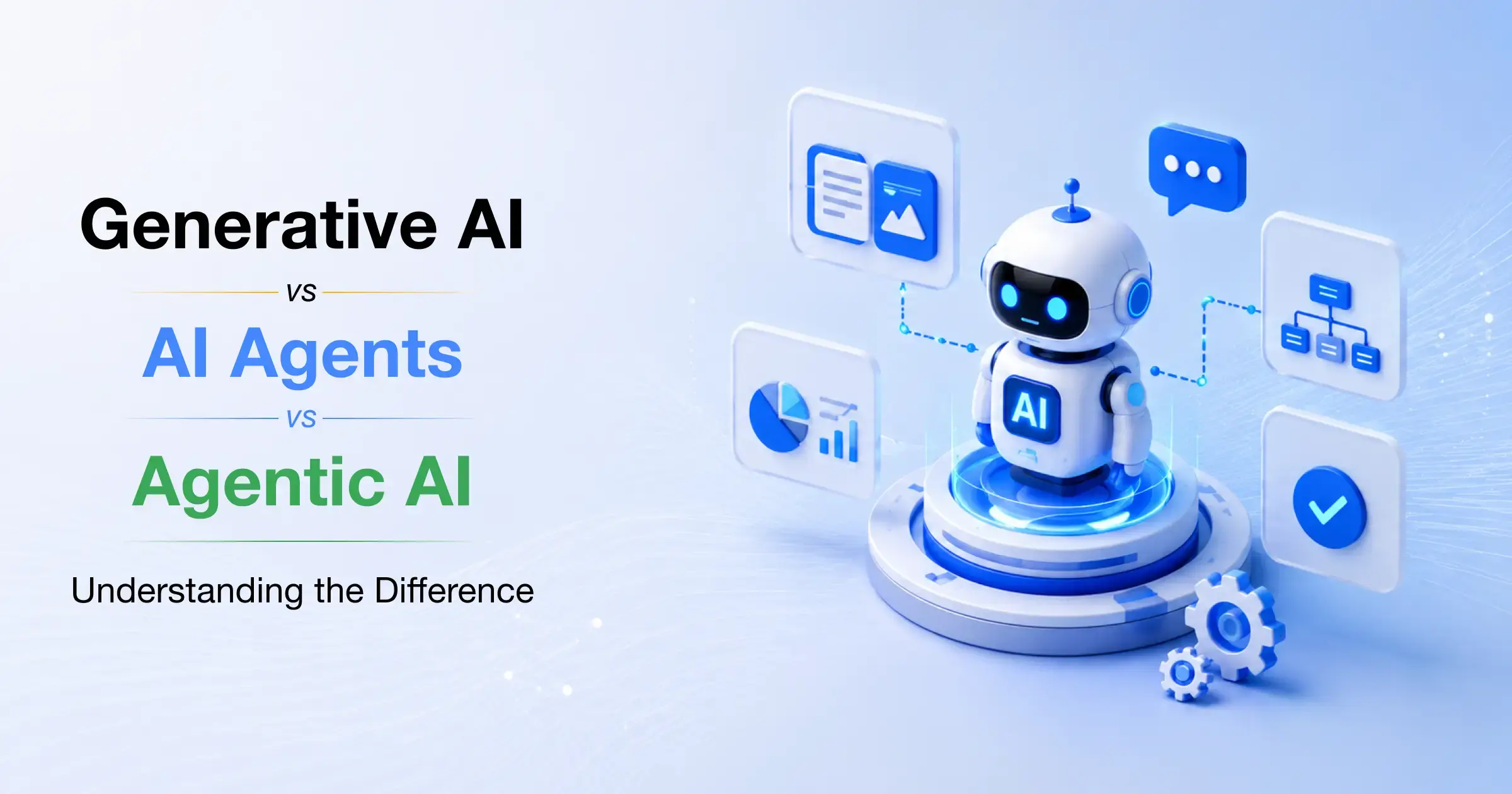
Generative AI or chatbots mainly respond to prompts and generate content. Agentic AI goes further. It can plan steps, use tools, and complete tasks across systems with minimal human input.
No. Most organizations do not replace their legacy systems to deploy AI agents. Instead, AI agents connect through APIs, integration layers, or automation bridges that allow them to work with existing systems.
This approach lets enterprises add agentic AI capabilities without rebuilding their entire tech stack.
A single AI agent handles one task or workflow on its own. It performs all the steps needed to complete that job.
On the other hand, a multi-agent system uses several AI agents that work together. Each agent focuses on a specific task, and they coordinate to complete a larger workflow more efficiently.