blog-img

POPULAR POSTS

  • 01

    How To Improve Document Processing Accuracy Using Document AI

  • 02

    11 Proven Benefits of AI Chatbots for Businesses in 2025

  • 03

    The Guide to Chatbot Development & What to Seek while Hiring a Company

  • 04

    What Digital Transformation Means for Businesses in 2026

  • 05

    Top 10 Companies Offering Software Modernization Consulting Services in 2026

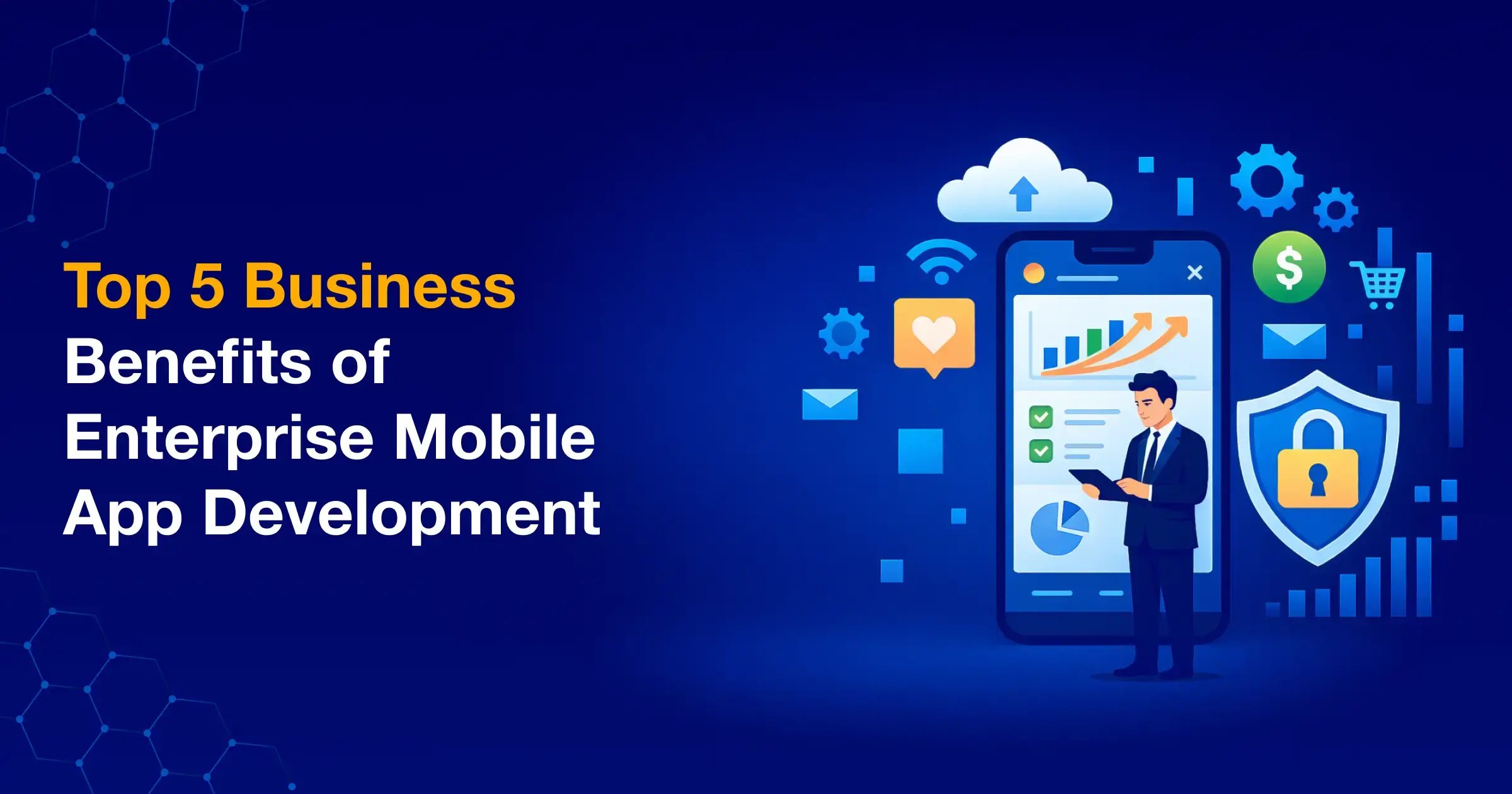
Top 5 Business Benefits of Enterprise Mobile App Development

Written by: Tech.us Category: Mobile App Development software product development saas Enterprise Mobile App Mobile Apps

tech.us-recognized-by-mobile-app-daily

Overview


Think about how work happens inside most organizations today. Teams are spread across offices, homes, client sites, warehouses, and factories. Decisions move fast. Data changes constantly. Yet many companies still rely on systems designed for desktops.


That gap is exactly why enterprise mobile apps are gaining so much attention.


Enterprise mobile app development focuses on building secure, purpose-built applications that connect employees with critical business systems on their mobile devices. These apps integrate with different platforms that include CRM, ERP, analytics tools, and internal databases, which allow teams to access workflows and data wherever they are.


Why are so many companies investing in enterprise mobility now?


Because work itself has changed.


According to a study conducted by Fortune Business Insights, the global enterprise mobility management (EMM) market is projected to grow from USD 50.14 billion in 2026 to USD 256.86 billion by 2034 at a 22.7% CAGR.


Employees no longer sit at a desk all day. Sales teams meet customers on the move. Field technicians work across multiple locations. Operations leaders need quick visibility into performance metrics. Waiting to access systems from a laptop often slows things down.


Enterprise mobile apps help businesses solve this problem by bringing essential business tools directly to the workforce.


Here is what that often looks like in practice:


  • Sales teams pull up customer records before a meeting.
  • Managers approve requests from their phones.
  • Field workers update service reports instantly.
  • Executives review real-time dashboards while traveling.

Simple actions like these make a huge difference in day-to-day operations.


This shift is part of a broader enterprise mobile transformation. Organizations are realizing that mobile access is no longer a convenience. It is becoming a core part of enterprise mobility strategy.


Another important factor is integration. Modern business mobile applications connect deeply with internal systems. Through enterprise app integration, employees can work with the same data that exists in company platforms. The difference is that they can now access it instantly from their phones.


So what does this really mean for businesses?


Enterprise mobile apps help businesses operate faster, collaborate better, and respond quickly to changing conditions. They enable enterprise mobility for business operations in a way that traditional systems cannot.


Enterprise mobile apps are no longer simple productivity tools. They are becoming strategic platforms that support everyday decision making and execution.


The next sections explore the most important enterprise mobile app benefits and explain how enterprise mobile solutions for modern businesses create measurable value across teams and operations.


What is Enterprise Mobile App Development and How is it Different from Regular Mobile Apps?

A Simple Definition to Start With


Enterprise mobile app development refers to the process of building secure mobile applications designed specifically for internal business operations. These apps connect employees to enterprise systems such as CRM, ERP, analytics platforms, and internal databases. The goal is simple. Help teams access workflows, data, and tools directly from their mobile devices.


So when people ask, what is enterprise mobile app development, the answer is fairly straightforward. It is about creating custom enterprise mobile apps that support how a business actually operates.


But this raises another important question.


Why do enterprises build mobile apps when thousands of mobile apps already exist?


The answer lies in how businesses function.


Why Do Businesses Build Enterprise Mobile Apps?


Most public apps are built for consumers. They focus on engagement, downloads, and usability for a wide audience.


Businesses operate very differently.


Companies deal with complex workflows, sensitive data, and multiple internal systems. This is where enterprise mobile application development becomes essential.


Enterprise mobile apps help businesses bring their internal systems directly to employees' devices. Instead of logging into multiple platforms from a desktop, teams can complete tasks from their phones.


For example:


  • A sales representative accesses CRM data before a client meeting
  • A field technician updates a service report on-site
  • A warehouse manager checks inventory levels instantly
  • A manager approves requests while traveling

These are everyday scenarios where enterprise mobile apps for business operations create real efficiency.


How are Enterprise Apps Different from Consumer Apps?


At first glance, a business mobile application may look similar to a regular mobile app. But under the hood, the differences are significant.


Consumer Mobile Apps

Enterprise Mobile Apps

Built for the general public

Built for employees, partners, or internal teams

Focus on engagement and usability

Focus on productivity and workflows

Limited integration with systems

Deep enterprise app integration with CRM, ERP, and other platforms

Standardized features for mass users

Custom features aligned with enterprise mobility strategy

Public data usage

Secure access to sensitive business data


In simple terms, consumer apps serve customers, while enterprise mobile solutions support business operations.


That distinction explains why companies increasingly invest in enterprise mobility platforms and custom enterprise mobile apps. These tools are designed to support how modern organizations work, collaborate, and make decisions in real time.


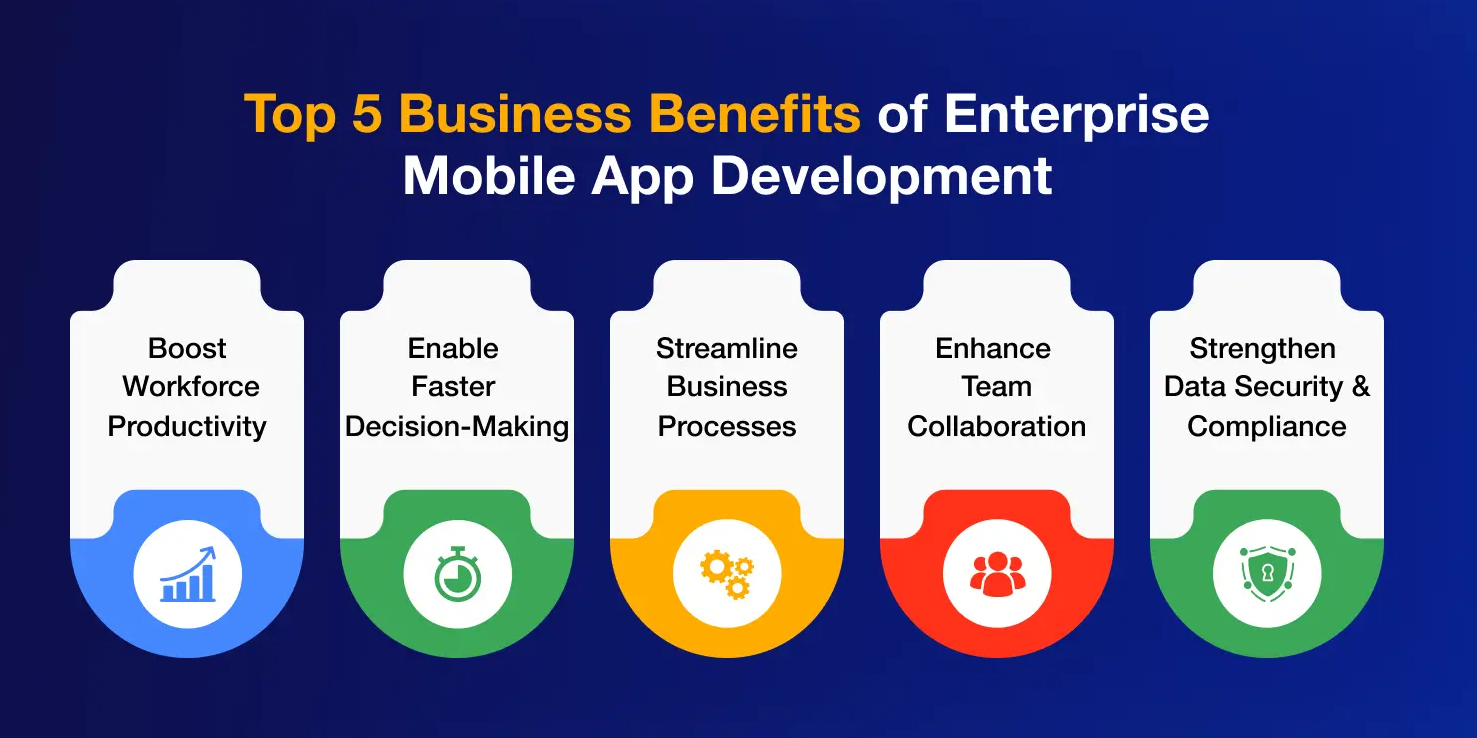
5 Powerful Business Benefits of Enterprise Mobile App Development

tech.us-recognized-by-mobile-app-daily

Enterprise leaders often ask a simple question. What real business value do enterprise mobile apps deliver?


The answer becomes clear when you look at how modern organizations operate. Teams move fast. Data changes constantly. Employees work from many locations. Desktop-only systems struggle to keep up with this reality.


That is where enterprise mobile app development becomes important. Well-designed enterprise mobile apps connect employees, workflows, and business data directly to their mobile devices. The result is faster execution, better visibility, and smoother collaboration.


Let us look at the five most meaningful enterprise mobile app benefits that businesses experience in practice.


1. How Do Enterprise Mobile Apps Improve Workforce Productivity?


Productivity often depends on access. If employees cannot reach the tools or data they need, work slows down. Many organizations still depend heavily on desktop systems. This creates friction.


Enterprise mobile apps solve this by bringing internal systems directly to the workforce.


Imagine a field technician finishing a repair. Instead of returning to the office to log the report, they update the job instantly from their phone. The system records it immediately. Managers see the update in real time.


Small improvements like this quickly add up.


Many companies adopt enterprise mobility solutions specifically to support mobile employees. Sales teams, technicians, operations managers, and supervisors all benefit from instant access to systems.


Key capabilities that improve workforce productivity include:


  • Mobile access to CRM and ERP platforms
  • Real-time dashboards and reporting tools
  • Task updates directly from mobile devices
  • Remote approvals for internal workflows
  • Mobile access to documents and project data

These features transform everyday workflows.


Ask yourself a simple question. How much time do employees lose switching between systems or waiting to access information? Enterprise mobile apps remove many of these delays.


Summary


Enterprise mobile apps improve workforce productivity by giving employees secure access to business tools, workflows, and real-time data directly from their mobile devices. This is one of the most important benefits of enterprise mobile applications for organizations with distributed teams.


2. How Do Enterprise Mobile Apps Enable Faster Decision-Making?


Business decisions depend on timely information. When data is locked inside internal systems, leaders often wait for reports or updates. That delay slows down operations.


Enterprise mobile apps change this dynamic.


Through enterprise app integration, mobile applications connect directly with analytics platforms, operational systems, and business databases. This means decision-makers can view insights the moment they need them.

Consider a supply chain manager monitoring delivery timelines. A disruption appears in the system. With a mobile dashboard, they see the issue immediately and respond before it escalates.


Enterprise mobile solutions for modern businesses often provide several tools that support faster decision-making.


Key features include:


  • Real-time mobile dashboards for business metrics
  • Instant alerts and notifications for operational events
  • Mobile access to analytics and performance reports
  • Live updates from enterprise systems
  • Data visualization optimized for mobile screens

These capabilities create visibility across the organization.


Think about executives traveling between meetings. Instead of waiting for a daily report, they can check sales numbers instantly. Operations leaders can track system performance on the go.


Summary


Enterprise mobile apps enable faster decision-making by delivering real-time business insights and analytics directly to stakeholders. This allows organizations to respond quickly to operational changes and improve overall enterprise mobility for business operations.


3. Can Enterprise Mobile Apps Streamline Business Processes?


Many organizations still run critical processes through emails, spreadsheets, and manual paperwork. This slows teams down and increases the risk of errors.


Enterprise mobile apps simplify these workflows.


With the right enterprise mobility platform, employees can complete routine processes directly from their phones. This reduces friction across departments and speeds up execution.


Consider a logistics company managing deliveries across multiple cities. Drivers complete delivery confirmations using a mobile app. Photos, signatures, and timestamps are uploaded instantly. Operations teams see updates in real time.


Mobile applications often streamline processes such as:


  • Field service reporting
  • Inventory updates and stock checks
  • Expense approvals and reimbursements
  • Service ticket creation and resolution
  • Customer support case updates

These workflows become faster and more reliable.


Ask yourself another practical question. How many steps does it take for an employee to complete a simple task today? Enterprise mobile solutions reduce unnecessary steps and improve workflow efficiency.


Summary


Enterprise mobile apps streamline business processes by digitizing workflows, reducing manual tasks, and enabling faster execution across departments. This operational efficiency represents a major business value of enterprise mobile applications.


4. How Do Enterprise Mobile Apps Improve Collaboration Across Teams?


Modern organizations rarely operate from one location. Teams are spread across offices, project sites, warehouses, and remote work environments.


This creates communication challenges.


Enterprise mobile apps help solve this by giving employees a shared platform for collaboration. Everyone can access the same data, workflows, and updates regardless of location.


For example, a construction project team may include engineers, field supervisors, procurement teams, and project managers. Through a mobile application, they can share updates instantly.


Enterprise mobile apps support collaboration through features such as:


  • Shared dashboards for project tracking
  • Internal messaging and communication tools
  • Workflow updates visible across teams
  • Mobile access to shared documents
  • Real-time progress updates from field teams

These capabilities bring teams closer together.


Think about field employees who rarely sit at a desk. Mobile apps allow them to stay connected with office teams and leadership.


Summary


Enterprise mobile apps improve collaboration by providing a unified platform where employees can access shared information, communicate easily, and coordinate tasks across locations. This is why enterprise apps for workforce productivity are central to many modern enterprise mobility strategies.


5. How Do Enterprise Mobile Apps Strengthen Data Security and Compliance?


Security is one of the biggest concerns for enterprise leaders adopting mobile technologies. Business systems often contain sensitive data such as customer records, financial information, and operational insights.

Enterprise mobile apps are designed with strong security frameworks to address this challenge.


Unlike consumer apps, custom enterprise mobile apps follow strict enterprise security policies. These policies control how users access systems, how data is transmitted, and how devices interact with company infrastructure.


Common security capabilities include:


  • Role-based access control for different user groups
  • Encrypted communication between devices and servers
  • Secure authentication methods such as multi-factor login
  • Mobile device management and security policies
  • Secure APIs for enterprise system integration

These features help organizations maintain control over sensitive information.


Consider employees accessing internal systems from different locations. Enterprise mobile applications ensure that only authorized users can view or update critical data.


Summary


Enterprise mobile apps strengthen security by enabling organizations to enforce strict authentication policies, encrypted communication, and role-based access control. These safeguards protect sensitive business information while supporting secure enterprise mobile apps for business operations.


How to Know If Your Business Needs an Enterprise Mobile App


Many leaders ask a practical question at some point. Do we really need an enterprise mobile app?


It is a fair question. Not every organization needs one immediately. But many businesses reach a stage where mobile access to systems becomes critical for smooth operations.


Think about how work happens inside your company today. Where do employees face delays? Where do teams depend on manual updates? Where do decisions slow down because the right data is not available at the right time?


These situations often signal the need for enterprise mobile app development.


A Quick Checklist


If several of the following statements sound familiar, your organization may benefit from enterprise mobile application development.


  • Employees depend on spreadsheets or emails to manage workflows
  • Field teams cannot access internal systems in real time
  • Managers wait for reports before making decisions
  • Teams struggle to track updates across departments
  • Internal approvals slow down daily operations
  • Employees frequently switch between multiple systems
  • Your workforce increasingly operates outside the office


If your organization checks several of these boxes, it may be time to explore enterprise mobile apps for business operations.


Still wondering how to leverage enterprise mobile apps to increase productivity?


In a Nutshell


Enterprise mobility is changing how modern organizations operate. Teams expect instant access to systems. Leaders expect real-time insights. Traditional desktop workflows struggle to keep up with this pace.


This is why many companies are investing in enterprise mobile app development.


Enterprise mobile apps help businesses improve daily operations by:


  • giving employees mobile access to business systems
  • improving workforce productivity
  • enabling faster decisions with real-time data
  • strengthening collaboration across teams

Ask yourself a simple question. If your workforce is already mobile, should your business systems stay tied to desks?


Organizations that adopt enterprise mobile solutions for modern businesses are building a more responsive and efficient future.


FAQs


How much does it cost to build an enterprise mobile app?


There is no fixed number. The cost depends on how complex the app is and how many systems it connects with. A simple internal app may take a smaller budget, while a large enterprise platform can require a bigger investment.


Can enterprise mobile apps work without an internet connection?


Yes, many enterprise mobile apps support offline use. Employees can still capture data, fill forms, or update tasks when they are offline. Once the device reconnects, the app syncs everything automatically.


Should businesses build native apps or cross-platform apps?


It depends on what the business needs. Native apps usually offer stronger performance and device features. Cross-platform apps are faster to build and can run on both Android and iOS with a single codebase.


Who usually uses enterprise mobile apps inside a company?


Many teams rely on them. Sales teams check customer data, field technicians update job reports, and managers review dashboards. Anyone who needs quick access to business systems on the move can benefit from these apps.


What should companies plan before starting enterprise mobile app development?


Start with the basics. Identify the business problem you want the app to solve. Then look at workflows, system integrations, and who will use the app daily. Clear goals make the development process much smoother.


Do enterprise mobile apps need regular updates?


Yes, they do. Business systems evolve, security standards change, and users request new features. Regular updates keep the app secure, stable, and aligned with how the organization actually works.

Human-in-the-Loop Data Annotation: Why It Matters for AI Accuracy

Human-in-the-Loop Data Annotation: Why It Matters for...

NEWSLETTER


RECENT POSTS


blog-img

Top 5 Business Benefits of Enterprise Mobile App Development

blog-img

Human-in-the-Loop Data Annotation: Why It Matters for AI Accuracy

blog-img

7 Reasons Why Custom Enterprise Mobile Apps are a Game-Changer for Your...

blog-img

Why Data Annotation is Critical for Building Enterprise AI Applications

blog-img

How IoT Services Boost Enterprise Efficiency in 2026