Reduce Repetitive Development Work
Use better tooling to handle routine coding tasks and give engineers more time for architecture, product logic, and difficult implementation decisions.
Tech.us helps businesses develop software with engineering workflows designed to reduce repetitive work, shorten feedback cycles, and keep more attention on the parts that require real technical judgment.
The result is a development process that can move efficiently without giving up code quality, maintainability, or control.
Projects Delivered
Years of Engineering
Industries Served
TRUSTED BY ORGANIZATIONS THAT DEPEND ON TECHNOLOGY



WHAT CHANGES
Software development slows down when too much engineering time goes into repeated setup, manual review, routine documentation, or tracing issues through large codebases.
Use better tooling to handle routine coding tasks and give engineers more time for architecture, product logic, and difficult implementation decisions.
Bring useful feedback closer to the point where code is written so issues can be addressed before they move further through the delivery cycle.
Make large or unfamiliar codebases easier to navigate when teams need to understand dependencies, existing behavior, or the impact of a change.
Productivity should not come at the expense of maintainability. Reviews, testing, architecture standards, and release controls remain part of the delivery process.
OUR SERVICES
We combine experienced software engineering with development practices that help teams move through planning, implementation, testing, and ongoing improvement with less unnecessary effort.
Turn business requirements into a clearer technical direction before development begins. We use the discovery phase to define scope, identify dependencies, and reduce uncertainty around the work ahead.
Define the structure of the application around performance, maintainability, integration needs, and future change. Architecture decisions remain grounded in the actual product rather than generated from a generic pattern.
Build web, enterprise, SaaS, and internal applications with engineering workflows that support faster implementation while keeping developers responsible for the final code.
Work more effectively inside existing applications by making code relationships easier to understand and identifying the areas that need attention before changes are made.
Expand test coverage and accelerate routine test creation while keeping validation focused on the behavior users and business workflows actually depend on.
Support engineers with earlier checks around implementation quality, consistency, and potential issues before code reaches later stages of review.
Keep technical documentation closer to the software as it changes so teams spend less time reconstructing how important parts of the system work.
Use production issues, support patterns, and code changes to make ongoing maintenance more focused rather than treating every problem as an isolated ticket.
Selected Work
See how Tech.us turns complex business needs into practical solutions designed for real-world use.
View All Case Studies

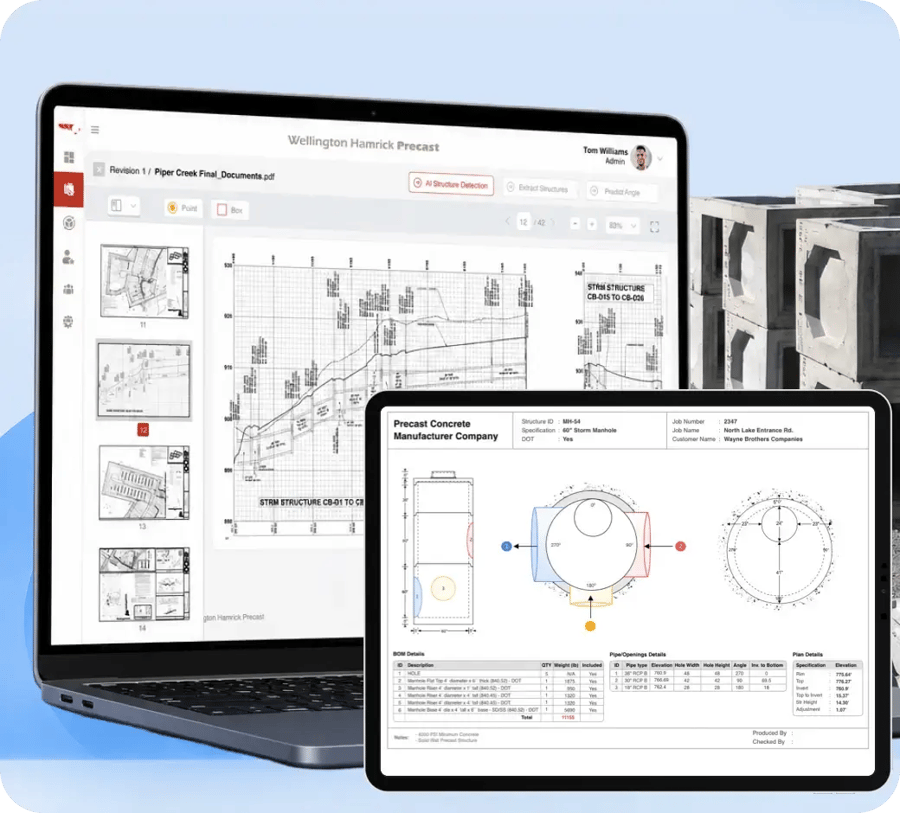
A precast concrete manufacturer partnered with Tech.us to bring AI into the estimating workflow. The system uses OCR, computer vision, and generative AI to identify, extract, and visualize structures, pipes, and components from complex construction drawings.
Read the Case Study

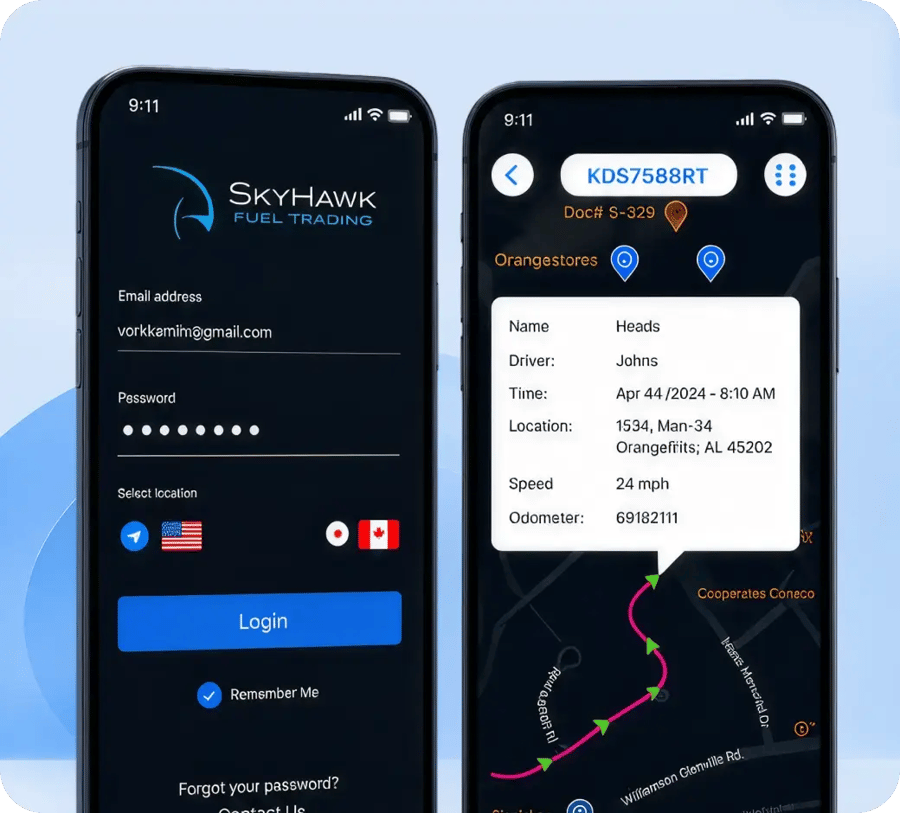
SkyHawk by TELUS needed a streamlined mobile experience for its Connect Anywhere platform. Tech.us built the core experience around real-time asset tracking, fleet activity, secure configuration, and map-based operational visibility.
Read the Case Study

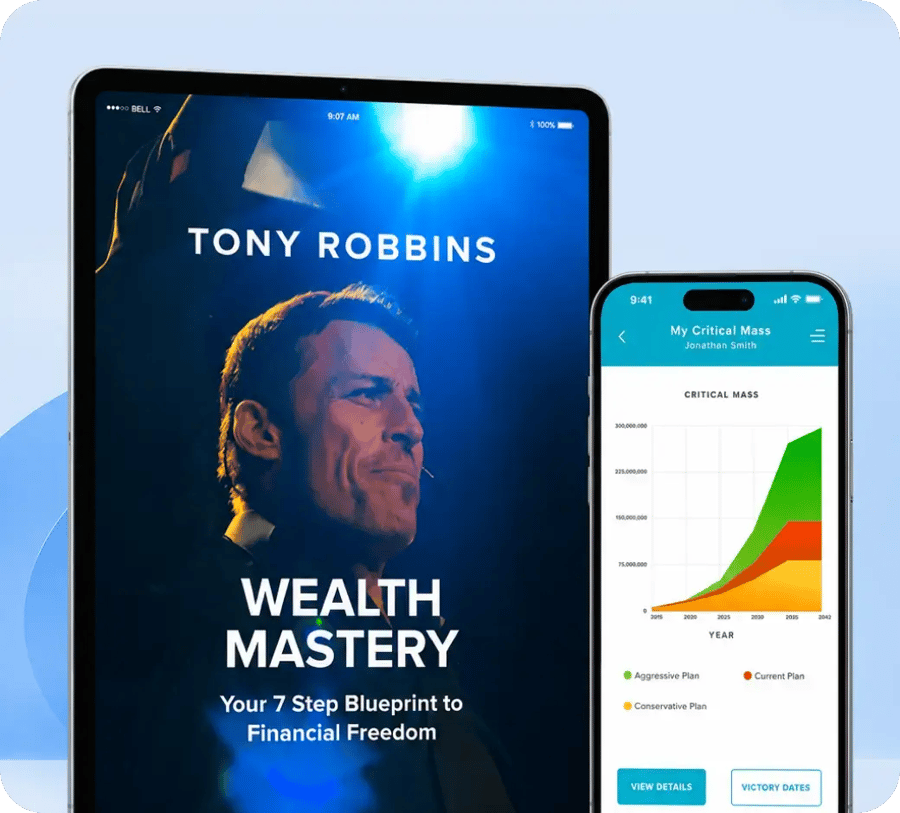
Tech.us helped bring Wealth Mastery to life as a digital platform that puts personalized financial planning tools directly in users' hands while supporting a large and growing audience.
Read the Case Study
WHY TECH.US
Better engineering comes from combining useful automation with people who understand architecture, product requirements, and the consequences of technical decisions.
Tools can assist with implementation or analysis, but experienced engineers still make the decisions that affect architecture, maintainability, security, and product behavior.
Not every engineering task benefits from the same level of assistance. We use it where it can reduce unnecessary effort without adding more review work later.
The approach can support new development or established applications where engineers first need to understand years of existing code and business logic.
Testing, review, observability, and release practices stay in the process. Faster implementation does not replace the checks required for production software.
Useful engineering output depends on requirements, architecture, existing code, and business rules. We provide that context rather than treating each task as an isolated prompt.
The software should remain understandable to the team that inherits it. We avoid creating code that is quick to produce but difficult to maintain once the original project team moves on.

HOW WE WORK
Each stage is designed to reduce avoidable effort while preserving the engineering work that determines whether the software will hold up in production.
We establish what the software needs to do, how users will work with it, and which technical constraints matter before implementation starts.
We define application boundaries, integrations, data flows, and deployment requirements so development has a clear technical direction.
Engineers develop focused parts of the product and use supporting tools to reduce routine implementation work where appropriate.
Code review and testing happen throughout development rather than waiting until the end of a large build.
We test how the application behaves across real user journeys, system boundaries, and operating conditions.
The software moves into production with monitoring in place, giving the team real usage information for the next round of improvements.
Engineering Control
The most useful development process is not the one that automates the most work. It is the one that knows which work can be accelerated safely.
Routine code patterns, test scaffolding, documentation support, and similar tasks can often be completed with less manual effort.
For larger changes, the value is often in helping engineers understand code or explore implementation options rather than generating a finished answer.
Architecture, security-sensitive logic, major data changes, and important business rules still require deliberate technical review.
Remove avoidable development overhead and give engineers more room to focus on architecture, business logic, and product improvement.
Talk To Our Expert →WAYS TO WORK WITH TECH.US
You do not need to redesign your entire engineering organization to use a more efficient development approach.
Build a new application with the engineering workflow designed into the project from the beginning.
Add features to an established product while improving how engineers understand, test, and change the existing codebase.
Add engineers who can work inside your current delivery process and contribute without introducing a separate development model.
INDUSTRY EXPERIENCE
Development practices may improve, but the software still needs to reflect the rules, workflows, and constraints of the industry where it will be used.
Explore All Industries
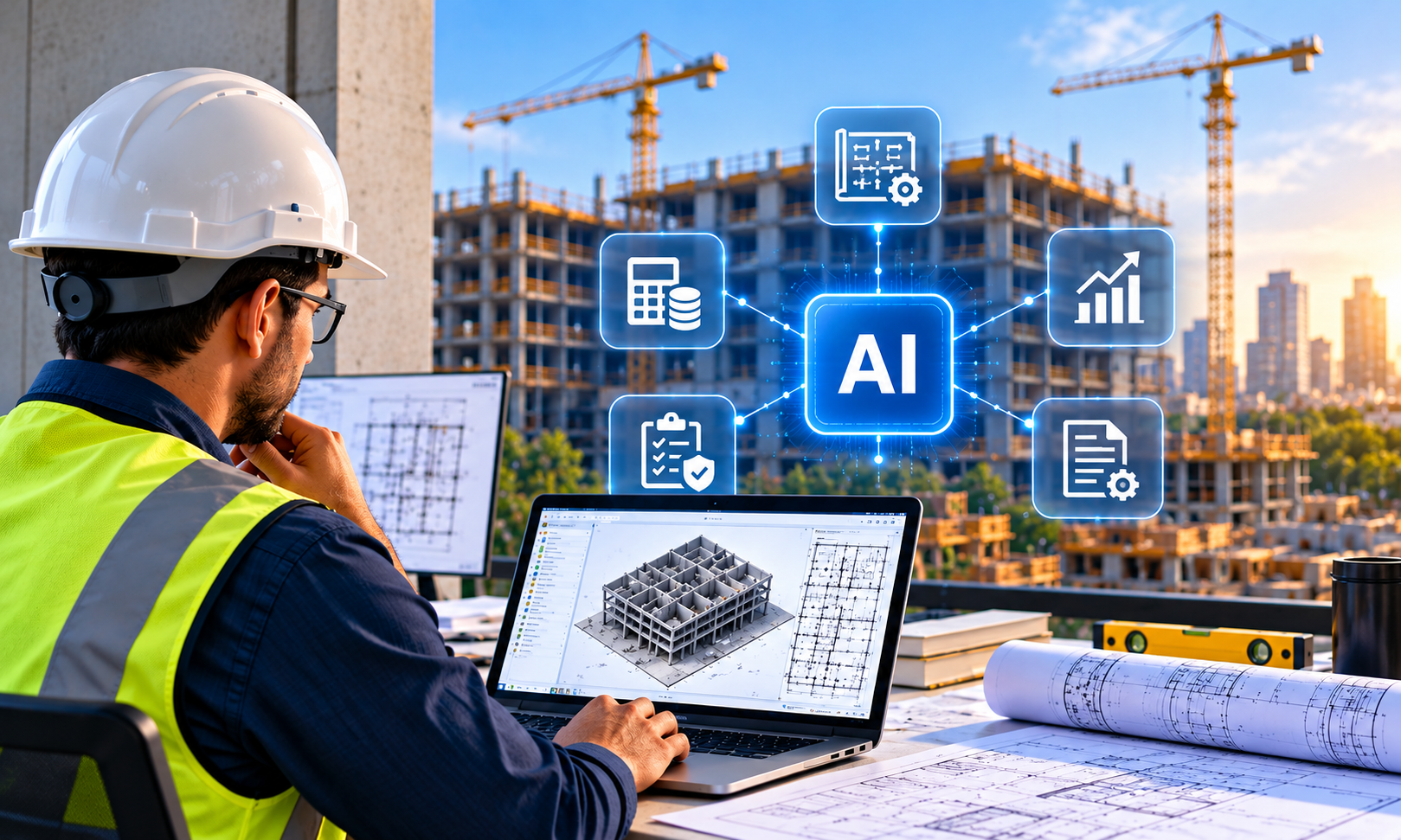
Preconstruction
Build applications around estimating, takeoff, document workflows, bid management, and the information preconstruction teams need to move projects forward.
Explore Preconstruction→
Healthcare
Develop software around clinical and administrative workflows where usability, sensitive data, and reliable system behavior require careful engineering.
Explore Healthcare →
Finance
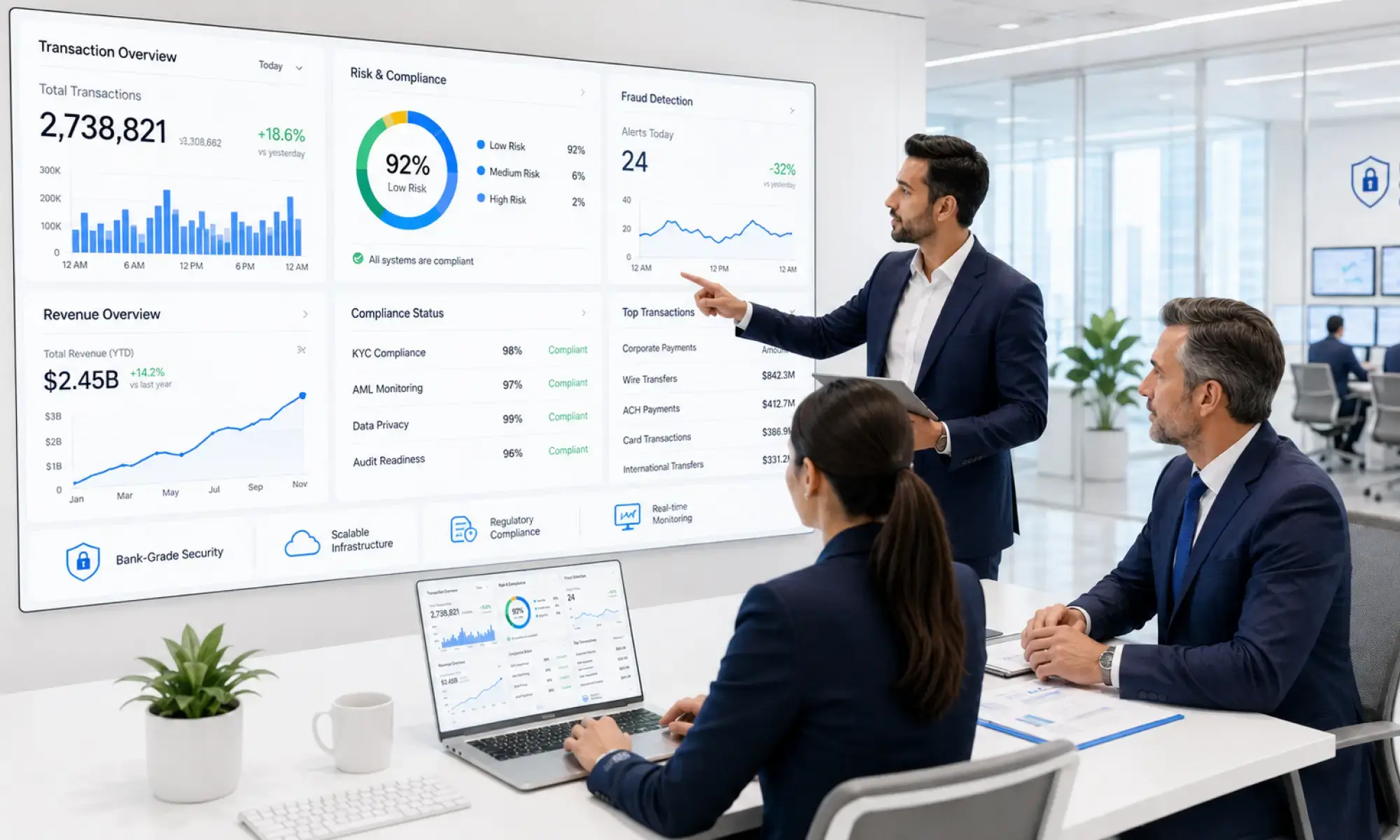
Build financial applications around workflows where accuracy, access control, auditability, and dependable business logic remain important throughout development.
Explore Finance→
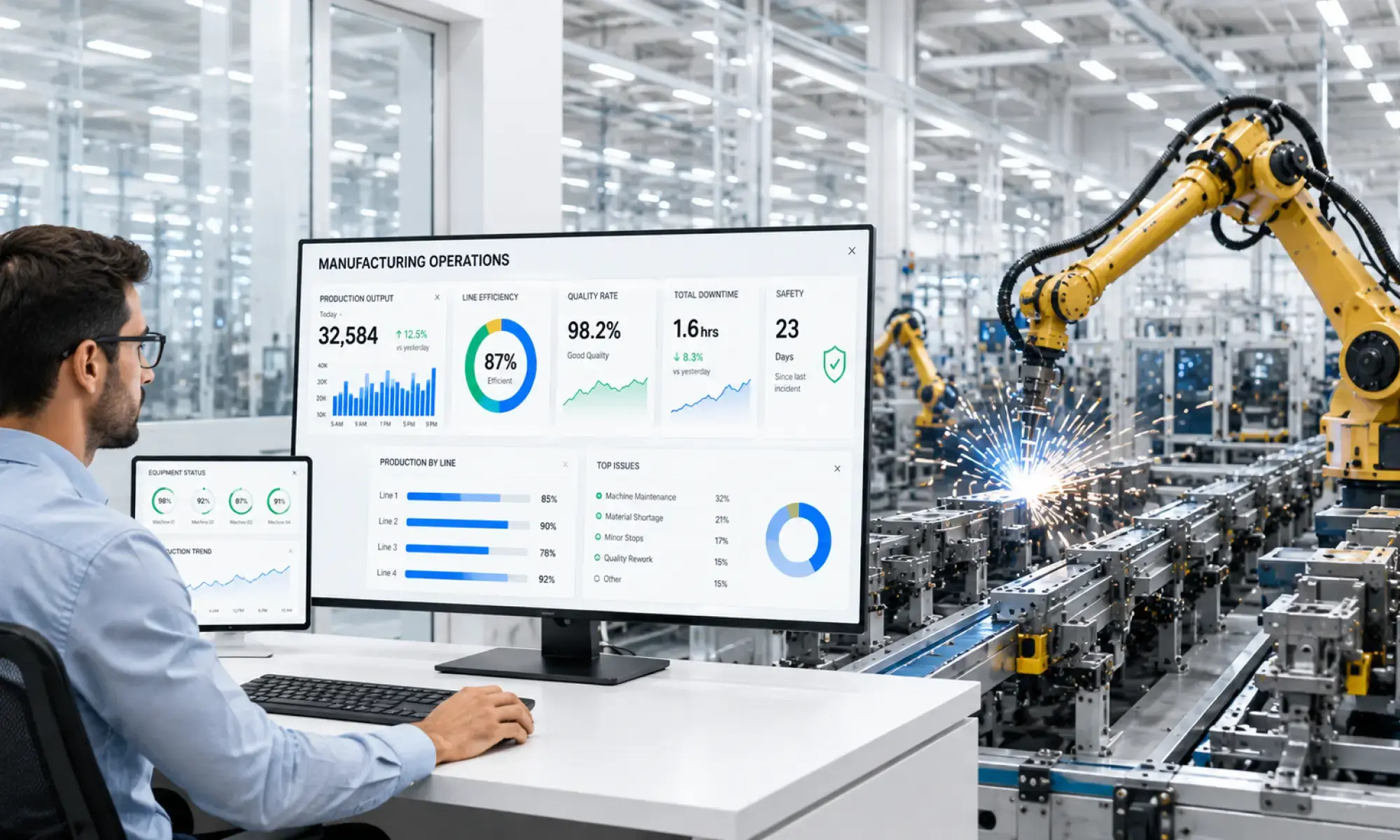
Manufacturing
Develop software that connects with production, planning, quality, maintenance, and operational systems without ignoring the technology already in place.
Explore Manufacturing→
Real Estate
Build applications around property, leasing, transactions, CRM, and portfolio workflows where teams need easier access to connected information.
Explore Real Estate→
Retail & Ecommerce
Develop commerce software across storefronts, inventory, orders, marketplaces, fulfillment, and customer workflows while keeping the experience connected to the systems behind it.
Explore Retail & Ecommerce→
TECH STACK
We work across modern application frameworks, cloud platforms, databases, testing tools, development environments, and engineering assistants.
The stack is selected around the architecture, team, and long-term needs of the product rather than around a single development tool.
Agentic AI & Orchestration
Agentic AI
AI Agents
Multi-Agent Systems
Agentic Workflow Automation
Model Context Protocol (MCP)
Agent-to-Agent Protocol (A2A)
Agent Memory and Reasoning
Generative AI & Foundation Models
Large Language Models
GPT
Claude
Gemini
Llama
Generative AI
Multimodal Foundation Models
Diffusion Models
Small Language Models
Model Fine-Tuning
Prompt & Context Engineering
Machine Learning & Deep Learning
Machine Learning
Deep Learning
Predictive Analytics
Recommendation Systems
Anomaly Detection
Time-Series Analysis
Data & AI Platforms
AI-Ready Data Platforms
Data Lakes and Lakehouse
Data Engineering
AI Frameworks & Libraries
PyTorch
TensorFlow
Scikit-learn
Hugging Face Transformers
LangChain
LangGraph
MLOps, LLMOps & AgentOps
MLOps
LLMOps
AgentOps
Model Deployment and Serving
Agent Deployment
Model and Agent Observability
Prompt and Response Tracing
AI Cost Optimization
AI Evaluation, Safety & Governance
LLM Evaluations
Agent Evaluations
RAG Evaluations
AI Guardrails
Prompt-Injection Protection
Red Teaming
Responsible AI
AI Governance
Cloud AI Technologies
Google Cloud
Vertex AI
Gemini Models
Agent Studio
Vertex AI Agent Builder
Agent Development Kit
Vertex AI Vector Search
Google Cloud Document AI
Google Cloud Vision AI
Microsoft Azure
Microsoft Foundry
Microsoft Copilot Studio
Microsoft Agent Framework
Azure AI Document Intelligence
Azure AI Speech and Vision
Microsoft Fabric
Microsoft Purview
Language, Vision, Speech & Document AI
NLP, NLU and NLG
STT, TTS and ASR
Conversational AI
Document Intelligence
Computer Vision
RAG, Search & Knowledge Systems
Enterprise RAG
Agentic RAG
Multimodal RAG
Enterprise Search
Semantic & Hybrid Search
Vector Databases
Knowledge Graphs
Reranking and Retrieval Optimization
RECOGNITION
Tech.us has been recognized by leading industry platforms for the quality and consistency of its technology work.
FAQ
AI augmented software development uses intelligent tools to support engineers with coding, testing, review, documentation, code understanding, and maintenance while keeping technical decisions with the development team.
The engineering fundamentals stay the same, but teams can spend less time on repetitive work and more time on architecture, product behavior, integration, and complex technical problems.
No. AI can assist with parts of development, but engineers remain responsible for architecture, security, integrations, testing, maintainability, and the final software.
Yes. It can help teams understand unfamiliar code, trace dependencies, add tests, and make changes to established applications with less manual investigation.
Yes. AI-assisted code should go through the same review and testing standards as any other production code, with engineers responsible for the final implementation.
Yes. It can support test generation, test scaffolding, scenario coverage, and failure analysis while engineers ensure testing reflects actual product requirements.
Yes. AI-assisted development tools can help engineers understand large codebases and component relationships, making it easier to work with older applications while preserving important business logic.
It depends on the tools and deployment approach. For sensitive code or data, the development environment should be selected with appropriate access controls and security requirements in mind.
It can reduce effort in areas such as routine implementation, code navigation, testing, and documentation, although complex architecture and business logic still require deliberate engineering work.
Yes. Tech.us can work alongside your existing developers and adapt to your repositories, tools, review standards, and release process.
Improve how work moves from requirements to release while keeping experienced engineers responsible for the final result.
Talk To Our Expert →We value your privacy
By continuing to use this website, you agree to our Privacy Policy.
If you decline, your information won’t be tracked when you visit this website. A single cookie will be used in your browser to remember your preference not to be tracked.
Necessary cookies keep the site running and are always on. Turn the others on or off to control how Tech.us uses them.
Required for the site to function. Cannot be disabled.
Help us measure traffic and see how visitors use the site so we can improve it. All information is aggregated.
Used to deliver and personalize ads, measure campaign performance, and share data with advertising partners (including Retention.com and RB2B).
For residents of California and other states with similar rights. Turning this on opts you out of the sale or sharing of your personal information for targeted advertising (this also disables Advertising cookies).
Learn more in our Cookie Policy and Privacy Policy. You can change these settings at any time.