
blog-img

POPULAR POSTS

  • 01

    How To Improve Document Processing Accuracy Using Document AI

  • 02

    Top 10 Companies Offering Software Modernization Consulting Services in 2026

  • 03

    11 Proven Benefits of AI Chatbots for Businesses in 2025

  • 04

    What Digital Transformation Means for Businesses in 2026

  • 05

    What is Data Mining

7 Ways AI Is Transforming Cybersecurity for Modern Businesses

Published Date: May 26, 2026 , Written by: Tech.us , Category: AI, CyberSecurity

tech.us-recognized-by-mobile-app-daily

The Real Shift Happening in Cybersecurity


For years, cybersecurity teams focused heavily on prevention. Firewalls, antivirus tools, and rule-based monitoring systems were designed to block known threats before they entered enterprise environments.


But modern attacks no longer follow predictable patterns.


According to Gartner, worldwide end-user spending on information security is projected to reach $213 billion in 2025 and is estimated to increase 12.5% in 2026 to total $240 billion, driven by rising threats and the expanding use of AI by both internal users and attackers.


Today’s attackers use stolen credentials, AI-generated phishing campaigns, low-and-slow intrusion techniques, and legitimate cloud services to blend into normal business activity. In many cases, the challenge is no longer identifying whether activity exists as it’s determining whether that activity is dangerous.


This is where AI is changing cybersecurity operations fundamentally.


Instead of relying only on static rules and signatures, AI-driven security systems continuously evaluate behavioral patterns, contextual anomalies, identity activity, and attack correlations in real time. The result is a shift from reactive monitoring toward adaptive, intelligence-driven cyber defense.

How Is AI Used in Cybersecurity Today?


AI in cybersecurity helps businesses detect, analyze, and respond to threats much faster than traditional security systems. Instead of relying only on manual monitoring, AI-powered cybersecurity tools continuously analyze user behavior, network activity, and system patterns to identify suspicious actions in real time.


Today, businesses use artificial intelligence in cybersecurity for:


  • AI threat detection and real-time threat monitoring
  • AI phishing detection and malicious email analysis
  • Behavioral threat detection and insider threat monitoring
  • AI-driven fraud prevention in banking and e-commerce
  • Automated threat detection for ransomware and zero-day attacks
  • AI incident response and security workflow automation
  • Vulnerability management and predictive cybersecurity
  • AI-assisted threat hunting across cloud and endpoint security systems
  • AI security analytics for faster decision-making in Security Operations Centers

According to IBM's 2025 Cost of a Data Breach Report, organizations using AI and automation extensively throughout their security operations saved an average of $1.9 million in breach costs and reduced the breach lifecycle by an average of 80 days.


This shift is helping businesses build scalable cybersecurity operations, reduce response times, and strengthen modern cyber defense against evolving threats.


Why AI Cybersecurity Can Initially Create More Work for Security Teams


One of the biggest misconceptions about AI in cybersecurity is that it immediately reduces operational pressure.


In reality, many organizations initially experience the opposite.


When AI security systems are first deployed, they often generate a large volume of alerts because the models have not yet fully learned normal user behavior, business workflows, or network baselines.


Security teams may temporarily face increased investigation workloads while tuning detection thresholds and validating behavioral anomalies.


This is especially common in environments with:


  • inconsistent telemetry
  • fragmented security tools
  • unmanaged endpoints
  • poor identity governance
  • rapidly changing cloud infrastructure

AI becomes significantly more effective over time as the system continuously learns operational patterns and analysts refine detection logic.


The organizations that see the strongest long-term results are usually the ones that combine AI-driven automation with mature security operations processes rather than relying on AI alone.


The 4 Layers of AI-Driven Cyber Defense


Modern AI cybersecurity systems typically operate across four major layers of defense:


Layer

Primary Goal

Example Functions

Detection Layer

Identify suspicious activity

Behavioral analytics, anomaly detection

Prioritization Layer

Reduce analyst overload

Risk scoring, alert correlation

Automation Layer

Accelerate containment

Account isolation, workflow automation

Predictive Layer

Anticipate future threats

Threat intelligence, attack trend analysis


Most organizations begin at the detection layer but gradually mature toward predictive security operations as AI models gain access to larger datasets and stronger telemetry.


7 Powerful Ways AI Is Reshaping Modern Cybersecurity Operations

tech.us-recognized-by-mobile-app-daily

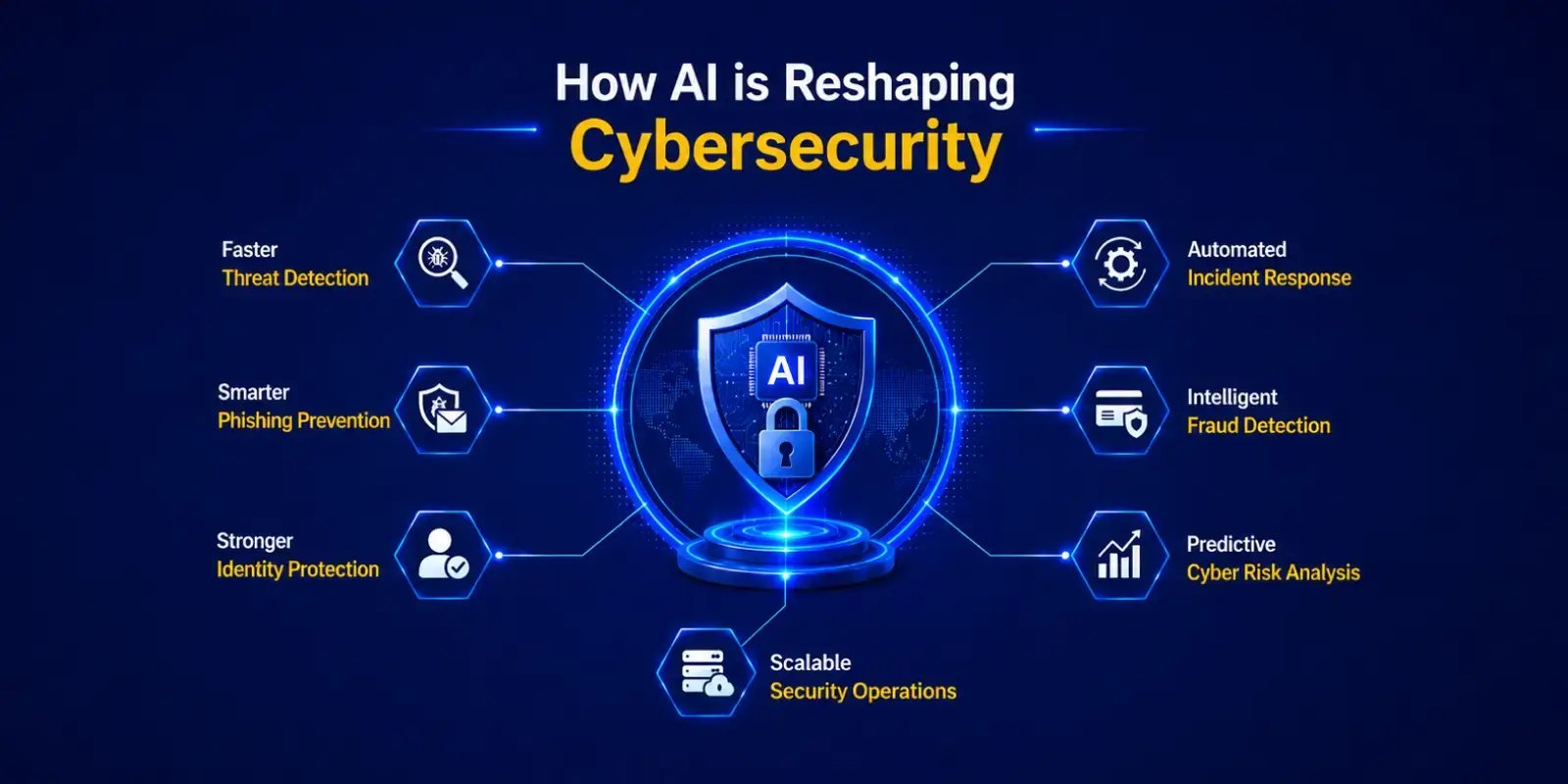
Cyber threats are getting smarter. Security teams are expected to respond faster than ever. But how do businesses keep up when attacks happen around the clock? Here are 7 ways how AI in cybersecurity plays out. Here is a complete cybersecurity guide for businesses in 2026.


1. How Does AI Help Businesses Detect Cyber Threats Faster?


Why Traditional Threat Detection Struggles with Modern Attacks


Traditional cybersecurity tools mostly rely on predefined rules and known threat signatures. Think about it.


Can a security team manually monitor thousands of login attempts, devices, cloud apps, and network activities every single day? That’s difficult even for large enterprises.


This is why many businesses are shifting toward AI-powered cybersecurity and automated threat detection. AI security systems look beyond fixed rules and analyze behavior, context, and activity patterns in real time.


How AI Detects Threats Before They Escalate


AI in cybersecurity continuously studies network traffic, user behavior, endpoint security activity, and access patterns. If something unusual happens, the system quickly flags it through real-time threat detection.


For example, AI threat detection tools can identify:


  • Sudden spikes in data transfers
  • Logins from suspicious locations
  • Unusual employee access behavior
  • Signs of ransomware detection or insider threat monitoring

This type of behavioral threat detection helps businesses identify threats earlier and reduce response delays.


2. How Is AI Improving Incident Response and Security Automation?


Why Security Teams Are Struggling with Alert Fatigue


Modern businesses generate an overwhelming number of security alerts every day. Some are serious threats. Many are false alarms.


That’s why businesses are investing in AI security operations and cybersecurity automation. AI-powered cybersecurity tools help filter noise and prioritize threats based on severity, behavior, and context-aware security analysis.


How AI Speeds Up Incident Response


AI incident response systems can analyze suspicious activity in seconds. Instead of waiting for manual investigation, intelligent cybersecurity systems automatically take action when threats are detected.


For example, AI-driven security tools can:


  • Block suspicious IP addresses
  • Isolate compromised accounts
  • Quarantine infected devices
  • Trigger automated security response workflows
  • Escalate high-risk incidents to analysts immediately

This level of security workflow automation helps businesses contain threats faster before they spread across systems.


3. Can AI Prevent Phishing and Social Engineering Attacks?


Why Traditional Email Security Is Falling Behind


Phishing attacks are getting harder to spot. Some emails now look almost identical to legitimate business communication. Attackers are even using AI-generated messages, deepfake audio, and highly personalized spear phishing campaigns to trick employees.


So, what happens when a fake email looks completely real? Manual review alone is no longer enough.


Traditional spam filters mostly rely on predefined rules and blacklisted domains. Modern phishing attacks easily bypass those systems. This is where AI phishing detection becomes far more effective.


How AI Detects Suspicious Communication Patterns


AI-powered cybersecurity tools analyze language patterns, sender behavior, login history, and communication anomalies in real time. Instead of checking only keywords, AI-driven phishing detection systems study the overall context of the interaction.


For example, AI security systems can flag:


  • Unusual payment requests from executives
  • Emails sent from suspicious locations
  • Sudden changes in communication tone
  • Fake login pages and malicious links
  • Business Email Compromise attempts targeting finance teams

This type of intelligent threat analysis helps businesses identify phishing attempts before employees interact with them.


4. How Does AI Strengthen Identity and Access Management?


Why Identity-Based Attacks Are Becoming a Bigger Problem


Passwords are no longer enough to protect business systems. Employees reuse passwords. Credentials get stolen through phishing attacks. Session hijacking and unauthorized access attempts happen constantly across cloud platforms and remote work environments.


Here’s the bigger issue. Attackers often log in using valid credentials. That makes detection much harder for traditional security systems.


How AI Uses Behavioral Intelligence to Detect Suspicious Access


AI-powered cybersecurity systems study how users normally behave. They analyze typing speed, device usage, login timing, access locations, and browsing patterns continuously.


If something unusual happens, AI security systems trigger alerts or additional verification steps automatically.


For example, AI-driven security tools can detect:


  • Logins from unfamiliar devices
  • Sudden location changes
  • Unusual access to sensitive files
  • Abnormal user activity late at night
  • Multiple failed authentication attempts

This approach is called behavioral threat detection. It strengthens identity access management without slowing down legitimate users.


As identity-based attacks continue to grow, AI-assisted access control is becoming a critical part of modern cyber defense and proactive cybersecurity strategy.


5. How Is AI Transforming Fraud Detection for Businesses?


Why Traditional Fraud Detection Systems Miss Modern Fraud Patterns


Traditional fraud detection systems mainly depend on fixed rules. For example, they may block transactions above a certain amount or flag payments from unusual locations. The problem? Fraud tactics evolve much faster than static rules.


Attackers constantly test new methods to bypass security systems. Some transactions look completely normal on the surface. That makes manual reviews slow and unreliable.


How AI Detects Suspicious Transaction Behavior Faster


AI-powered cybersecurity systems continuously study transaction history, device activity, user behavior, and access patterns. If something looks unusual, the system quickly generates alerts through real-time threat detection.


For example, AI security analytics can identify:


  • Multiple transactions from different locations within minutes
  • Unusual spending behavior
  • Suspicious device fingerprint changes
  • Login attempts linked to known fraud patterns
  • Abnormal account activity across digital channels

This type of behavioral threat detection helps businesses stop fraud before financial damage increases.


Industries like banking, fintech, insurance, and e-commerce are heavily using AI cybersecurity solutions for faster fraud prevention. Why? Because response speed matters. Even a few minutes can make a huge difference during fraudulent transactions.


6. How Does AI Help Predict and Prevent Future Cyberattacks?


What Predictive Cybersecurity Actually Looks Like


Most traditional security systems react after an attack begins. But modern cyber threats move too fast for that approach. Businesses now need systems that can anticipate risks before damage happens.


This is where predictive cybersecurity becomes extremely valuable.


AI in cybersecurity studies massive amounts of historical threat data, attack behavior, network activity, and cyber threat intelligence to identify patterns that humans may miss. Over time, machine learning security models learn how attacks evolve and detect early warning signs faster.


For example, AI-powered security monitoring can identify:


  • Vulnerabilities attackers may target next
  • Suspicious activity linked to known attack trends
  • High-risk devices or user accounts
  • Emerging ransomware detection patterns
  • Unusual network anomaly detection signals

How Businesses Use Predictive Insights to Reduce Risk


AI cybersecurity solutions help businesses move from reactive defense to proactive cybersecurity strategy. Instead of waiting for incidents, security teams can prioritize risks earlier and strengthen weak areas before attackers exploit them.


Many companies now use predictive threat intelligence for:


  • Vulnerability prioritization
  • Risk scoring and cyber risk management
  • AI-assisted threat hunting
  • Security workflow automation
  • Faster incident preparation across enterprise environments

Why does this matter so much? Because cyberattacks are becoming more adaptive every year.


7. How Is AI Helping Security Teams Handle Large-Scale Cybersecurity Operations?


Why Manual Cybersecurity Monitoring No Longer Scales


Modern businesses operate across cloud platforms, remote devices, mobile apps, and distributed networks. Every login, file transfer, and user action generates security data. The volume is massive.


Now imagine a security team trying to manually track all this activity 24/7. That’s almost impossible.


AI-powered security monitoring helps organizations track:


  • Endpoint security activity across devices
  • Network anomaly detection signals
  • Suspicious cloud access behavior
  • Insider threat monitoring patterns
  • High-risk alerts across enterprise environments

How AI Improves Security Operations at Scale


AI-enhanced security operations help Security Operations Centers work faster and more efficiently. Instead of manually reviewing every alert, analysts receive prioritized insights through intelligent threat analysis and context-aware security analysis.


AI cybersecurity solutions also support:


  • Continuous threat monitoring
  • Security workflow automation
  • Faster incident investigations
  • Automated threat prioritization
  • AI-assisted threat hunting

Another major advantage? AI helps reduce cybersecurity skill gaps. Many organizations struggle to hire experienced security professionals. AI-driven security tools assist analysts by automating repetitive work and simplifying investigations.


Traditional Security vs AI-Driven Security Operations


To understand AI capabilities better, let’s compare how AI-driven cybersecurity mechanism performs against traditional security systems.


Traditional Security

AI-Driven Security

Rule-based detection

Behavioral analysis

Reactive investigations

Continuous monitoring

Static thresholds

Adaptive risk scoring

Manual triage

Automated prioritization

Signature matching

Pattern correlation

Slower incident response

Real-time anomaly detection


How Proxy Servers Support AI-Driven Cybersecurity


Modern AI cybersecurity systems rely heavily on secure traffic management and real-time visibility. This is where proxy servers play an important role.


They help businesses route traffic securely, mask IP addresses, monitor suspicious requests, and support AI-powered security monitoring across large networks.


Businesses also use proxy infrastructure for cyber threat intelligence gathering, malicious activity detection, automated testing, and safer data collection processes.


In many cases, AI-assisted threat hunting systems depend on stable proxy environments to analyze external threats without exposing internal systems directly.


Using reliable high speed mobile proxies for secure traffic managementcan also improve scalability, connection stability, and safer network operations.


As AI-driven security continues to evolve, proxy technologies are becoming a valuable part of modern cyber defense and scalable cybersecurity operations.


What Are the Biggest Challenges of Using AI in Cybersecurity?


AI in cybersecurity offers major advantages, but businesses still need to understand the challenges that come with AI-driven security systems. Here’s a glimpse into that.


Can AI Produce False Positives?


Yes, and this is one of the biggest concerns businesses face with AI-powered cybersecurity systems. Sometimes AI security analytics may flag legitimate user activity as suspicious behavior. A late-night employee login or unusual file access could trigger alerts even when there’s no actual threat.


Too many false positives can overwhelm security teams and reduce operational efficiency. That’s why intelligent cybersecurity systems need continuous learning, tuning, and human validation.


What Happens When Attackers Use AI Too?


Cybercriminals are becoming more sophisticated with AI-driven attacks. They now use AI-generated phishing emails, automated malware, and deepfake scams that are harder to detect through traditional defenses.


This creates a constant security race. As attackers evolve, businesses need adaptive cybersecurity systems and predictive threat intelligence that can respond quickly to changing attack patterns.


Why Human Oversight Still Matters


Can AI replace cybersecurity professionals completely? Not really.


AI-assisted threat hunting and automated security response can speed up investigations, but human expertise is still critical for strategic decisions and context-aware security analysis. Security teams help validate threats, manage complex incidents, and improve cyber risk management.


Is AI Cybersecurity Expensive for Small Businesses?


Some enterprise cybersecurity AI platforms can be expensive to implement initially. Costs may include software, infrastructure, integration, and skilled professionals. Still, many businesses see long-term value through cybersecurity risk reduction and faster threat detection.


Operational Challenges Businesses Often Encounter


While AI cybersecurity tools can significantly improve threat detection, implementation challenges are common.


Security teams often struggle with:


  • integrating AI tools into legacy infrastructure
  • tuning behavioral detection thresholds
  • managing alert fatigue during early deployment
  • handling fragmented security telemetry
  • maintaining explainability for compliance requirements

Organizations operating across multi-cloud environments may also face visibility gaps that reduce model accuracy.


Because of this, AI cybersecurity adoption is usually most effective when introduced gradually alongside existing security operations processes.


What Businesses Should Consider Before Adoption


Before investing in AI cybersecurity solutions, businesses should evaluate:


  • Existing security gaps
  • Integration with current systems
  • Scalability requirements
  • Compliance needs
  • Internal cybersecurity expertise

The best results usually come from combining AI-driven security with experienced security teams and a proactive cybersecurity strategy.


What Most Businesses Misunderstand About AI Cybersecurity


Many organizations assume AI cybersecurity tools function as fully autonomous protection systems. In practice, AI works more effectively as a decision-support layer within broader security operations.


AI models still depend heavily on:


  • data quality
  • telemetry visibility
  • analyst validation
  • incident response workflows
  • identity governance maturity

Poorly configured AI systems can generate excessive false positives, overlook business-context risks, or struggle with highly customized enterprise environments.


The strongest cybersecurity outcomes typically come from combining:


  • AI-driven threat analysis
  • experienced security teams
  • well-structured response processes
  • continuous monitoring strategies

AI improves operational speed and visibility, but cybersecurity resilience still depends heavily on organizational maturity.


How Tech.us Helps Businesses Navigate AI-Driven Cybersecurity


Getting started with AI in cybersecurity can feel overwhelming.


Which tools actually make sense for your business? Where should you even begin? That’s where Tech.us can help.


From identifying security gaps to building practical AI-powered cybersecurity strategies, Tech.us works closely with businesses to create scalable solutions that fit real operational needs instead of adding unnecessary complexity.


FAQs


What is AI in cybersecurity?


AI in cybersecurity uses intelligent cybersecurity systems to spot suspicious behavior faster and improve real-time threat detection before attacks spread across business networks.


How does AI improve threat detection?


AI threat detection tools continuously study user activity and network behavior to identify unusual patterns that traditional security systems often miss.


Can AI stop cyberattacks automatically?


Many AI-powered cybersecurity platforms can trigger automated security response actions instantly when malicious activity detection crosses predefined risk thresholds.


Is AI cybersecurity suitable for small businesses?


Yes. Modern AI cybersecurity solutions help small businesses strengthen cyber risk management without building large in-house security operations teams.


What are the benefits of AI-powered cybersecurity?


AI-powered security monitoring helps businesses reduce response delays and improve business cybersecurity resilience against fast-moving cyber threats.


Can AI detect phishing attacks?


AI phishing detection systems analyze communication patterns and behavioral anomalies to identify suspicious emails before employees interact with them.


What are the risks of using AI in cybersecurity?


AI-driven security systems can still generate false positives and require human oversight for accurate context-aware security analysis during investigations.


Does AI replace cybersecurity professionals?


No. AI-assisted threat hunting supports security teams by reducing repetitive work while analysts focus on complex cyber risk management decisions.


What is predictive cybersecurity?


Predictive cybersecurity uses AI threat intelligence and machine learning security models to identify possible attack risks before exploitation happens.


Can AI detect insider threats?


Yes. AI behavioral analytics can identify unusual employee behavior and suspicious access activity linked to insider threat monitoring risks.


What is the future of AI in cybersecurity?


The future of AI in cybersecurity will focus heavily on predictive threat intelligence and faster enterprise security automation for modern cyber defense.

How AI in Healthcare Optimizes Clinical Operations

How AI in Healthcare Optimizes Clinical Operations

7 Critical Factors to Consider Before Investing in Custom Software Development

7 Critical Factors to Consider Before Investing in...

NEWSLETTER


RECENT POSTS


blog-img

7 Critical Factors to Consider Before Investing in Custom Software...

blog-img

7 Ways AI Is Transforming Cybersecurity for Modern Businesses

blog-img

How AI in Healthcare Optimizes Clinical Operations

blog-img

Top 10 AI Healthcare Solution Providers in the USA for 2026

blog-img

How to Choose the Best Custom Software Outsourcing Company in 2026