Most AI tools are great at the exciting part.
Ask any LLM, let’s say, ChatGPT to plan a business trip and it will hand you a beautifully structured itinerary with all venues, timings, even restaurant suggestions.
Sounds useful. Until you find out the cafe it recommended shut down two years ago, the hotel it suggested is fully booked, and now you are the one stuck making calls, checking availability, and doing all the unglamorous work the AI skipped.
That is the gap that is seldom talked about. Generative AI does the thinking. You do the doing. Agentic AI development service flips that.
Gartner projects that by 2028, 33% of enterprise software applications will include agentic AI, up from less than 1% in 2024.
What is agentic AI?
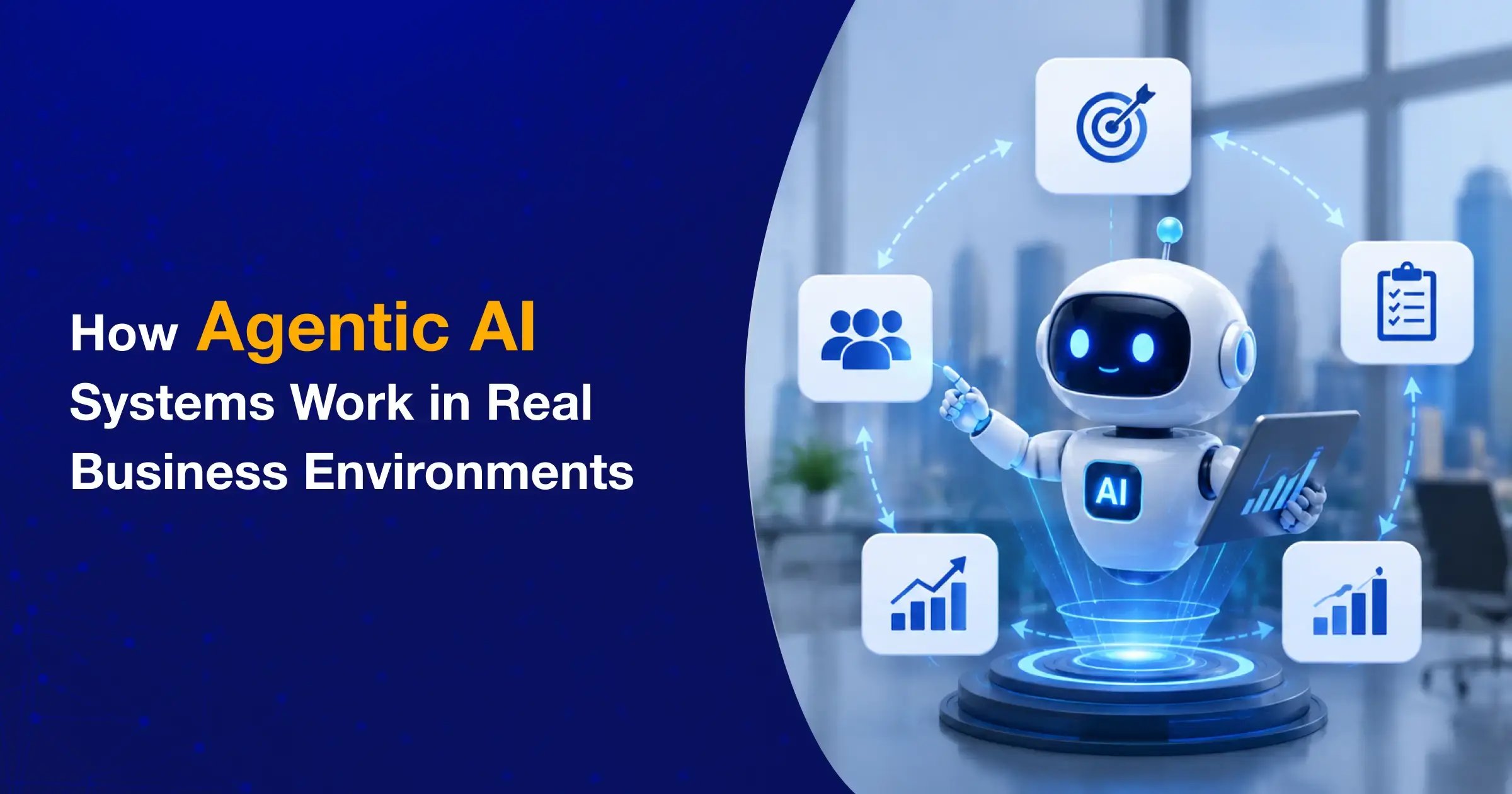
Agentic AI is an AI system that can make decisions and take actions on its own to achieve a goal without being told exactly what to do at every step. It does not stop at generating a response and handing things back to you. It keeps going. It uses tools, checks its own work, adjusts course, and delivers a completed outcome.
Businesses are now deploying agentic AI systems to handle entire workflows autonomously. Not parts of a process. The whole thing. Sales teams, operations leaders, HR departments, customer support functions are all finding real use for AI agents that actually execute work rather than just assist with it.
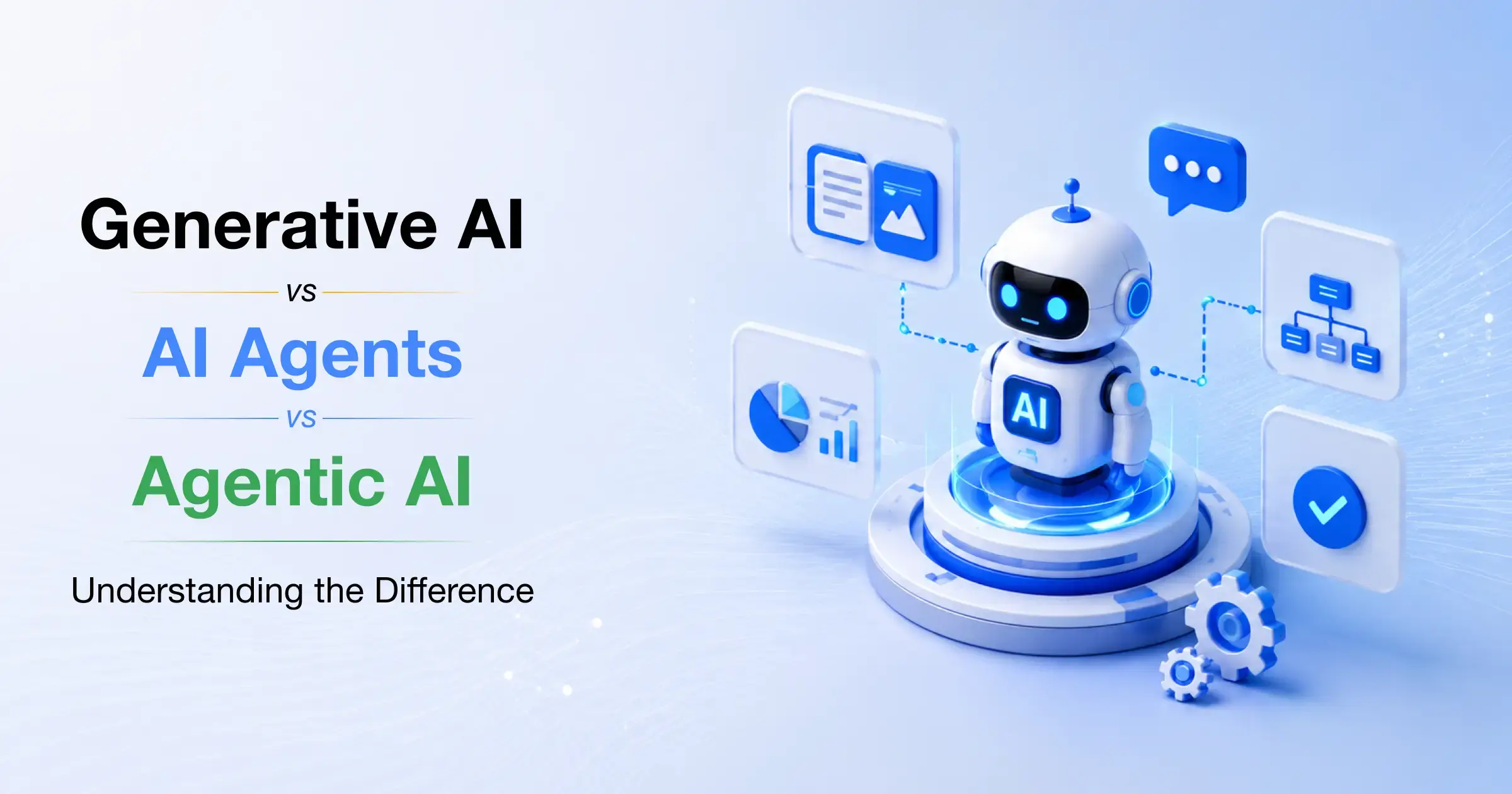
What is the Difference Between Generative AI and Agentic AI?
Most people using AI tools today are using generative AI services. ChatGPT, Claude, Midjourney, Gemini. These tools are genuinely useful. They write, brainstorm, summarize, and create. But here is the thing nobody tells you upfront.
Once they give you the output, the work lands back in your lap.
Think of generative AI as a smart adviser. It gives you ideas, drafts, and recommendations. Agentic AI is more like an assistant who actually follows through. It does not just tell you what to do. It does it.
Generative AI vs Agentic AI: The Core Difference
| Generative AI | Agentic AI | |
|---|---|---|
| What it does | Creates content, answers questions | Completes multi-step tasks autonomously |
| What happens after | You do the follow-up work | The AI does the follow-up work |
| Decision making | Responds to your prompt | Reasons, plans, and acts on its own |
| Connected to real tools | Rarely | Yes: calendars, CRMs, email, apps |
| Best for | Brainstorming, drafting, ideating | Executing end-to-end workflows |
In short, generative AI helps you think. Agentic AI helps you execute.
Why are Businesses Paying Attention to Agentic AI Now?
For a while, businesses were happy with AI that could draft an email or summarize a report. That novelty wore off quickly.
The frustration is straightforward. AI does the interesting part and stops. You are left verifying, formatting, sending, following up, updating records. The creative work goes to the machine. The tedious work stays with the human. That is the wrong way around.
Agentic AI systems were built to fix exactly that. Instead of generating a response and stepping back, an autonomous AI system stays in the loop. It connects to your tools. It takes the next step. And the one after that.
That shift, from AI that drafts to AI that executes, is why agentic AI has moved from a technical conversation to a business one.
What makes an AI system "agentic"?
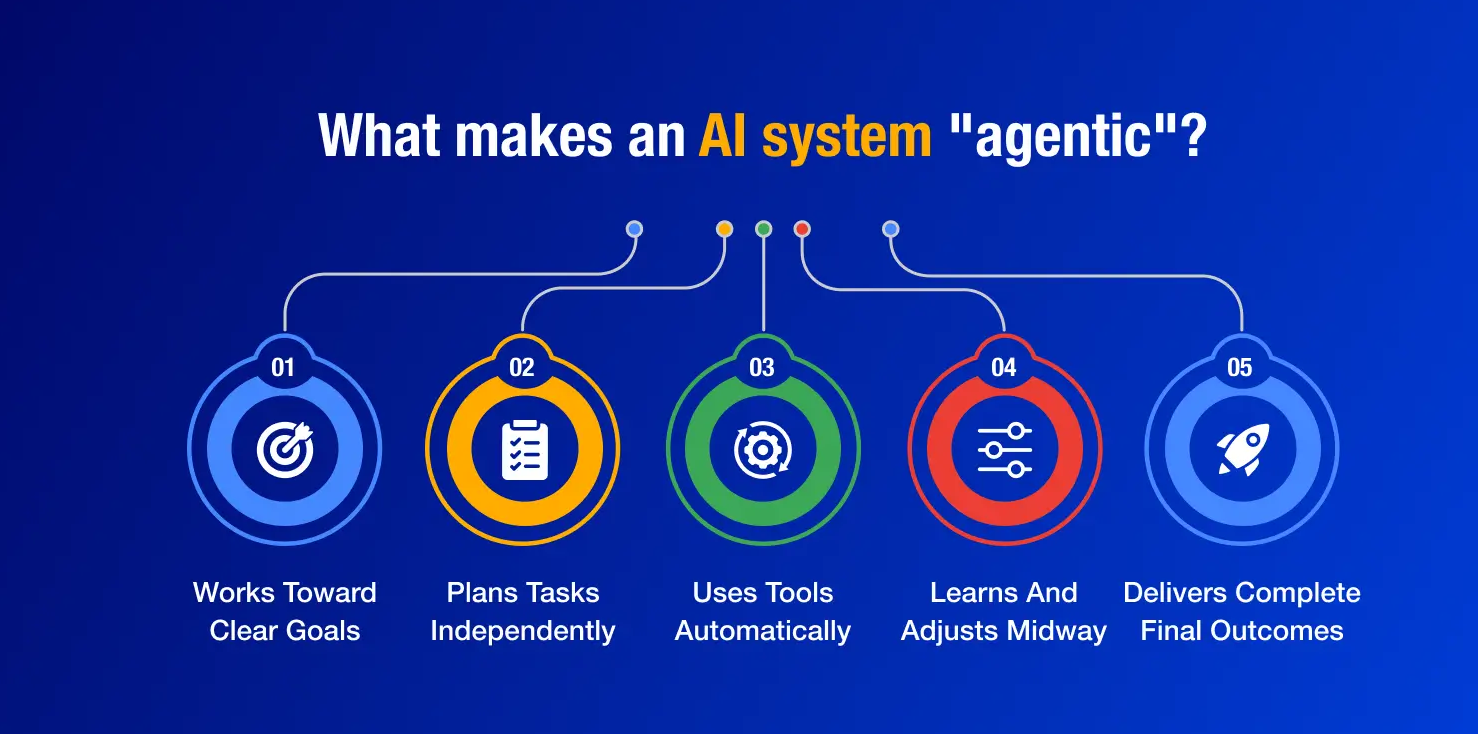
Here are the defining traits:
- It works toward a goal, not just a single prompt
- It breaks that goal into steps without being told how
- It uses connected tools to take real actions
- It checks its own output and adjusts mid-task
- It delivers a completed outcome, not a draft
Most AI tools hand you something to finish. But agentic AI actually executes the task from end-to-end and finishes it as it is goal-oriented.
How Does Agentic AI Actually Work?
Here is the simplest way to understand it.
A regular AI tool waits for a question. It answers. Done. An agentic AI system receives a goal and figures out everything in between on its own.
No step-by-step instructions. No hand-holding. Just a goal, and the system works toward it.
How an agentic AI system works, step by step:
- It receives a goal, not just a question
- It breaks that goal into a sequence of steps on its own
- It selects and uses the right tools to complete each step
- Simple FAQ bots sit at the lower end. Context-aware enterprise copilots with memory and multi-system integrations sit much higher.
- It evaluates its own output and course-corrects if something is off
- It delivers a finished outcome, not a draft waiting for your review
That cycle of planning, acting, checking, and adapting is what makes an AI system agentic. It is not a chatbot. It is closer to a capable employee who understands what needs to happen and figures out how to get there.
What Does "Goal-Oriented AI" Actually Mean for a Business?
Consider a real scenario. An HR manager tells the system: prepare for Sara's maternity leave.
That is a goal, not a question. And a goal like that has a dozen moving parts underneath it. Who covers her client meetings? What briefings does her team need? Which HR documents need to be filed? What deadlines are affected?
A standard AI tool would answer a question about maternity leave policy if you asked one. An agentic AI system takes the goal and starts working through all of it.
It does not wait to be told which step comes next. It reasons through the problem the same way a competent operations manager would.
That is goal-directed AI in a business context. It understands the destination and maps its own route.
What Tools Can an AI Agent Actually Connect To?
This is where agentic AI starts to feel tangible for business leaders.
An AI agent does not work in isolation. It connects to the tools your business already runs on. Think of it like onboarding a new team member. You give them access to the systems they need to do their job. An AI agent works the same way.
Depending on the workflow, an AI agent can connect to:
- Email and calendar platforms
- CRM systems like Salesforce or HubSpot
- Project management tools like Asana or Monday
- Communication tools like Slack
- Databases and internal documentation
- Booking and scheduling systems
- HR and payroll software
Once those connections are in place, the agent does not just read from these tools. It acts within them. It schedules. It updates. It sends. It retrieves. It flags.
That ability to take real actions inside real business systems is what separates agentic AI from every AI tool that came before it.
What is the "Reasoning Loop" Everyone Talks About?
You may hear technical people mention reasoning and planning when they describe how AI agents work. Here is what that actually means in practice.
When an agentic AI system receives a goal, it runs through a continuous loop:
- It looks at the goal and decides what the first logical step is
- It takes that action
- It looks at what happened
- It asks itself: did that work? Is this moving toward the goal?
- If yes, it moves to the next step
- If no, it adjusts and tries a different approach
This loop runs repeatedly until the task is complete. Agentic AI problem-solves within the boundaries you set and keeps moving forward.
What Does Agentic AI Look Like in a Real Business?
Here are three ground-level examples where autonomous AI systems are already changing how work gets done. According to a PwC survey of 300 senior executives, 79% say AI agents are already being adopted in their companies, and of those, 66% report measurable productivity gains.
How is Agentic AI Being Used in Healthcare Operations?
Clinical teams spend a significant chunk of their day on work that has nothing to do with patient care. Prior authorizations, referral coordination, follow-ups, documentation.
Take referral coordination. Without agentic AI, multiple people touch the same file across several days. With an AI agent handling it, the entire sequence runs autonomously.
- Retrieves patient history from the EHR
- Checks insurance eligibility in real time
- Submits the authorization request and monitors the response
- Updates the care team and escalates only when human judgment is needed
Skilled staff stay in the loop for clinical decisions. Everything else moves without them.
How are Finance Teams Using Agentic AI?
Month-end close is the same demanding process every single month. Pulling data, reconciling accounts, chasing missing entries, flagging discrepancies.
An agentic AI system compresses what used to take a week into roughly a day.
What the agent handles:
- Pulls data from the ERP and cross-references transactions
- Identifies entries that do not reconcile
- Sends automated requests for missing information
- Flags anomalies for human review with full context attached
How is Agentic AI Changing Preconstruction?
Bid preparation involves reviewing drawings, pulling cost data, coordinating subcontractors, and compiling everything into a package under serious time pressure.
- Reads the RFP and extracts scope items
- Cross-references historical cost data to generate a preliminary estimate
- Coordinates subcontractor outreach and tracks responses
- Populates the bid template as pricing comes in
The estimator still owns strategy and final pricing. The agent eliminates the coordination work that consumed most of their time before they even started.
AI Workflows, AI Agents, and Multi-Agent Systems: What is the Difference?
Not every business problem needs the same solution. One of the most common mistakes companies make when adopting agentic AI is treating all of it as one thing. It is not.
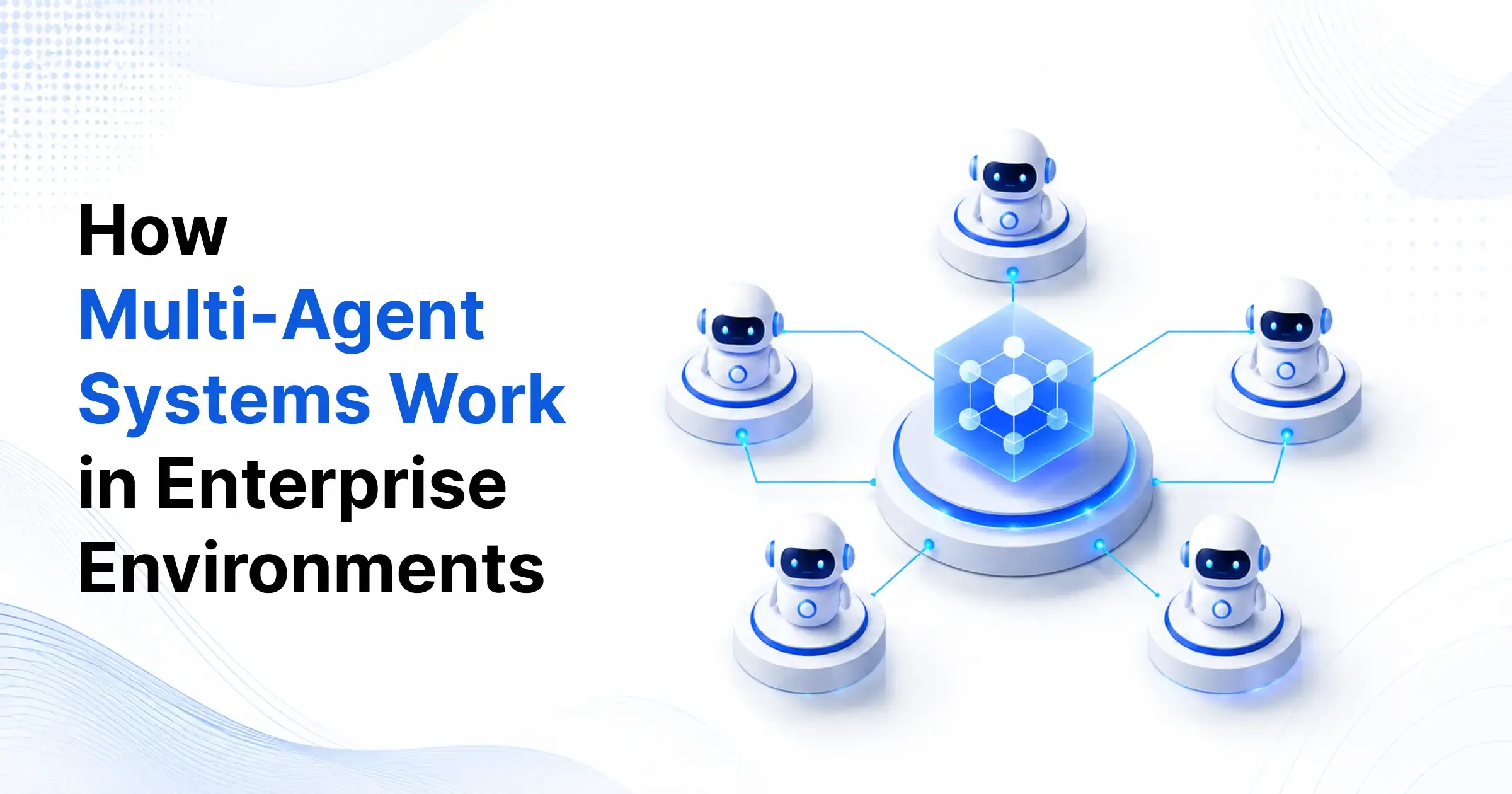
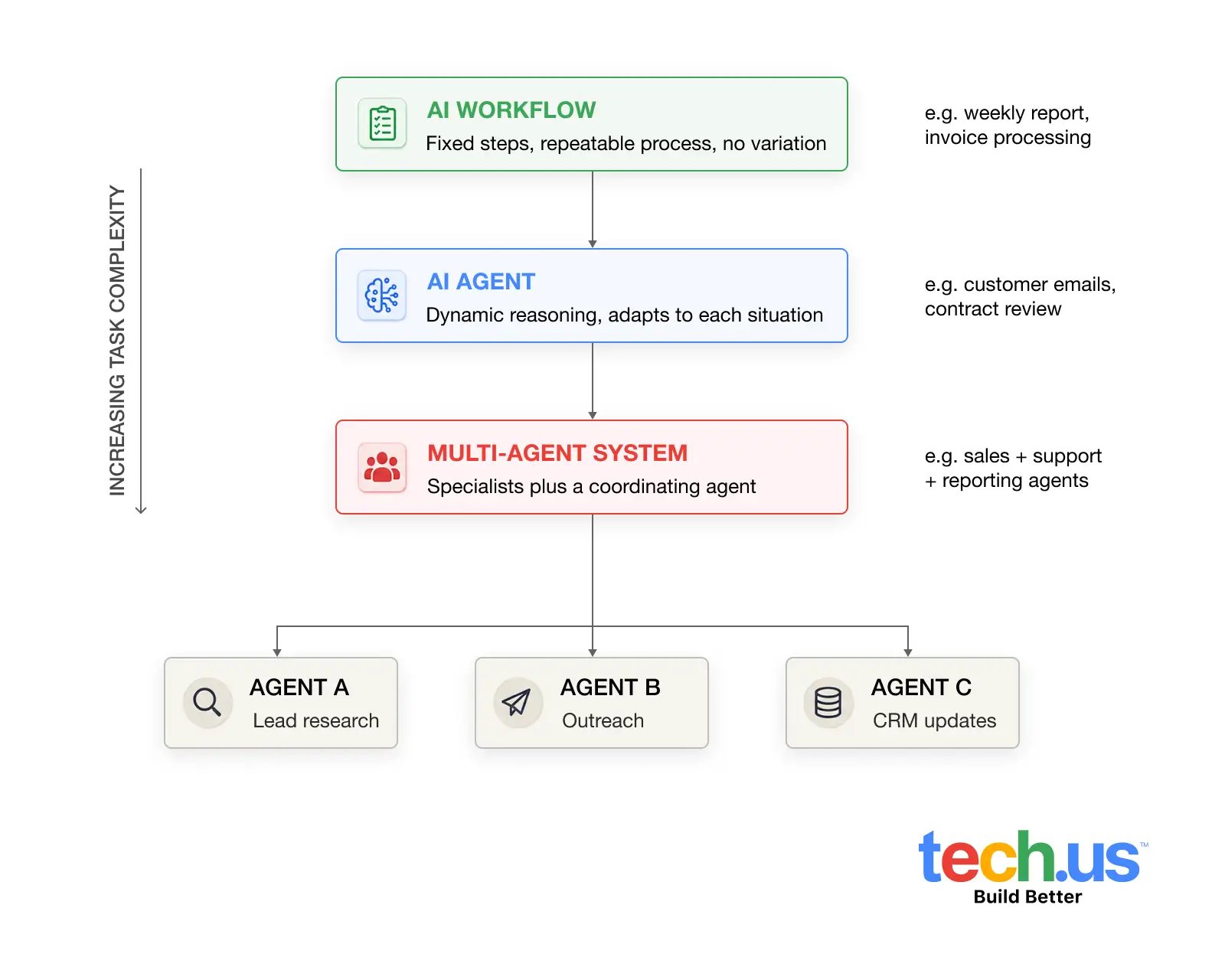
All three levels – AI workflows, AI agents, and Multi-agent systems are forms of agentic AI. The difference is not in what they are, but in how complex the task is and how many agents are needed to handle it.
There are three distinct levels. Understanding which one fits your situation saves a lot of wasted effort.
What is an AI Workflow?
An AI workflow is the most straightforward of the three. You define every step in advance. The system follows them in order, every time, without deviation.
It is reliable, predictable, and exactly right for processes that never change.
Good fit for AI workflows:
- Sending a weekly performance report to leadership
- Processing a standard vendor invoice
- Triggering an onboarding email sequence when a new client signs up
- Generating a daily inventory summary from warehouse data
Think of it as an automated assembly line. Every station does the same job in the same sequence. No surprises, no decisions. Just consistent execution.
The limitation is obvious. The moment the process changes or an exception appears, a rigid workflow breaks down. That is where agents come in.
What is an AI Agent?
An AI agent is built for situations that are not entirely predictable. Instead of following a fixed script, AI agents help businesses by reasoning through the problem and decides what to do based on what it finds.
So where a workflow asks "what is step three?", an agent asks "what makes sense here given what I know?"
- Responding to customer inquiries where every situation is different
- Researching a prospect and preparing a personalised outreach
- Reviewing a contract and flagging clauses that need attention
- Coordinating a project update across multiple team inputs
The trade-off is that with more autonomy comes less predictability in the exact output. Which is why guardrails and human oversight matter, especially early in deployment.
What is a Multi-Agent System?
Here is something counterintuitive. Giving one AI agent too many responsibilities actually makes it perform worse.
Research and real-world deployments consistently show that a single agent managing too many goals loses accuracy and reliability. The better approach is to break the work into specialized agents, each focused on one function, with a coordinating agent overseeing the whole operation.
It mirrors how a well-run team works. You do not hire one person to handle sales, accounting, customer service, and legal. You hire specialists and give them a manager.
- Agent 1 handles a specific function, such as lead research
- Agent 2 handles another, such as outreach and follow-up
- Agent 3 handles a third, such as CRM updates and reporting
- A coordinating agent manages handoffs and monitors overall progress
Larger enterprises are increasingly adopting multi-agent AI architectures because they scale cleanly, allow teams to improve individual agents without disrupting the whole system, and produce more consistent results than one overloaded agent trying to do everything.
Which One Does Your Business Actually Need?
A simple way to think about it:
| Situation | Right Approach |
|---|---|
| Process is fixed and repeatable | AI Workflow |
| Process has variations and needs judgment | AI Agent |
| Multiple complex functions need to work together | Multi-Agent System |
AI Agent vs Agentic AI
These two terms are often used interchangeably, but they are not the same thing.
An AI agent is a single system built to handle a specific task. It reasons, uses tools, and completes work autonomously within a defined scope.
Agentic AI is the broader category. It refers to any AI system that operates with goal-directed autonomy, whether that is a single agent, a coordinated group of agents, or a hybrid of workflows and agents working together.
Think of it this way. Every AI agent is an example of agentic AI. But agentic AI as a whole is bigger than any single agent.
| AI Agent | Agentic AI | |
|---|---|---|
| What it is | A single autonomous system | The broader category of goal-directed AI |
| Scope | One function or task | One or many agents working toward a goal |
| Example | An agent that handles invoice processing | The full system managing finance operations autonomously |
| Relationship | A component | The umbrella term |
When businesses talk about adopting agentic AI, they are talking about the category. When they talk about building or deploying an agent, they are talking about one working unit within that category.
Is Agentic AI Safe to Use in Business Operations?
Agentic AI is not perfect. And the businesses getting the best results are the ones who say that out loud before they start.
This is not a reason to hold back. It is a reason to go in with the right expectations.
McKinsey's 2025 State of AI report found that 62% of organizations are either actively scaling or experimenting with AI agents, yet fewer than 10% have scaled agents across any single business function.
What Kind of Tasks is Agentic AI Not Ready For?
Autonomous AI systems perform well when the task has clear inputs, defined steps, and predictable outputs. The more a task depends on nuance, accumulated judgment, or organisational context, the more carefully it needs to be scoped.
Tasks where agentic AI should not operate without close human oversight:
- Decisions involving legal liability or regulatory compliance
- Communications that carry significant relationship risk, such as client escalations or sensitive negotiations
- Financial transactions above a defined threshold
- Any situation where the cost of a wrong output is hard to reverse
This is not a limitation unique to AI. It is the same boundary you would draw for any new team member during their first few months.
You would not hand a new hire the company credit card and tell them to sort out vendor payments unsupervised. The same logic applies here.
How Do Businesses Keep Control Over What an AI Agent Does?
Control is built into how agentic AI systems are deployed, not bolted on afterward.
Practical guardrails businesses use in real deployments:
- Permission boundaries: the agent only has access to the tools and data it needs for its specific function, nothing more
- Approval gates: for high-stakes actions such as sending external communications or updating financial records, a human reviews before the agent proceeds
- Audit trails: every action the agent takes is logged so it can be reviewed, corrected, or rolled back
- Scope limits: one agent handles one function, reducing the risk of unintended consequences across systems
The key principle in enterprise AI deployment is this. The agent operates within the boundaries you define. Expanding those boundaries happens gradually, as trust is established through demonstrated performance.
Does Agentic AI Have a Learning Curve?
Yes. And that is actually a sign it is working correctly.
Agentic AI systems improve through real-world feedback. The first few weeks of deployment will produce imperfect outputs. An agent handling customer support responses may miss context it has not encountered before.
An agent coordinating procurement may flag things that do not need flagging. That is expected behaviour, not a failure.
Think of it the way you would think about onboarding a capable new employee. On day one, they do not fully understand your business, your tone, or your edge cases.
By month three, they are operating with considerably more confidence and accuracy. The difference is that an AI agent documents every interaction and learns from it systematically.
Businesses that get the best results from agentic AI do three things consistently:
- They start with lower-stakes workflows while the system learns
- They give the agent clear feedback when outputs are off
- They expand the agent's scope only after performance is stable
The learning curve is real. It is also finite. And the businesses that manage it well end up with AI agents that outperform what any manual process could deliver at scale.
The Shift Has Already Started
The AI revolution is no longer about generating content. It is moving toward autonomous AI systems that execute real work, end to end, without waiting for a human to pick up where the AI left off.
Businesses that move early on agentic AI will not just save time. They will operate at a different speed entirely.
Tech.us works with businesses navigating exactly this shift. From identifying the right workflows to deploying and scaling agentic AI systems, the team brings both the technical depth and the business context to make it work. If your business is ready to move from AI that assists to AI that executes, let's talk.
FAQ
Give it a goal, not a question. Agentic AI figures out the steps, uses the tools it needs, checks its own work, and delivers a finished outcome. You are not guiding it through the process. You are just telling it where to end up.
Agentic AI connects to real tools and completes tasks autonomously. ChatGPT and similar tools generate a response and stop. Agentic AI is the colleague who stays, sends the email, updates the CRM, follows up, and files the report. Same intelligence. Completely different level of involvement.
Agentic AI does not replace employees. It handles the repetitive, process-heavy work that consumes time without requiring human judgment. The people stay. They just stop doing the work that was slowing them down.
One agent doing everything is like asking your best salesperson to also handle accounting and customer support. Performance drops fast. A multi-agent system gives each function its own specialist, with one agent coordinating the whole operation. Same logic as building a real team.
The technical barrier is lower than most people expect. The harder part is the thinking: which process to start with, what good output looks like, and where a human needs to stay involved. That is a business problem, not a coding problem.
Simple agentic AI workflows can show measurable results within weeks. More complex deployments involving multiple agents or systems typically take two to three months to stabilize and perform consistently. The businesses that rush past the scoping phase are the ones that end up waiting the longest.
When you build an AI agent, every action it takes is logged, making mistakes traceable and correctable. Mature deployments build approval gates into high-stakes actions so errors do not reach the outside world unchecked. Mistakes in the early phase are expected. That is not a flaw in the system. That is the system learning.
Robotic process automation (RPA) is a well-trained machine that falls apart the moment something unexpected happens. Agentic AI reads the situation and figures out what to do next. One executes instructions. The other understands intent. That difference matters every time the real world does not go according to plan.

Continue reading the blog
with a Tech.us subscription
You’re now subscribed!