Overview
What is a Custom Enterprise Software Development Company?
- Custom-built solutions for enterprise goals
- Seamless integration with current tools
- Strong security and data protection
- Long-term support for continuous improvement
The 7 Qualities to Look for in a Custom Enterprise Software Development Company in 2026
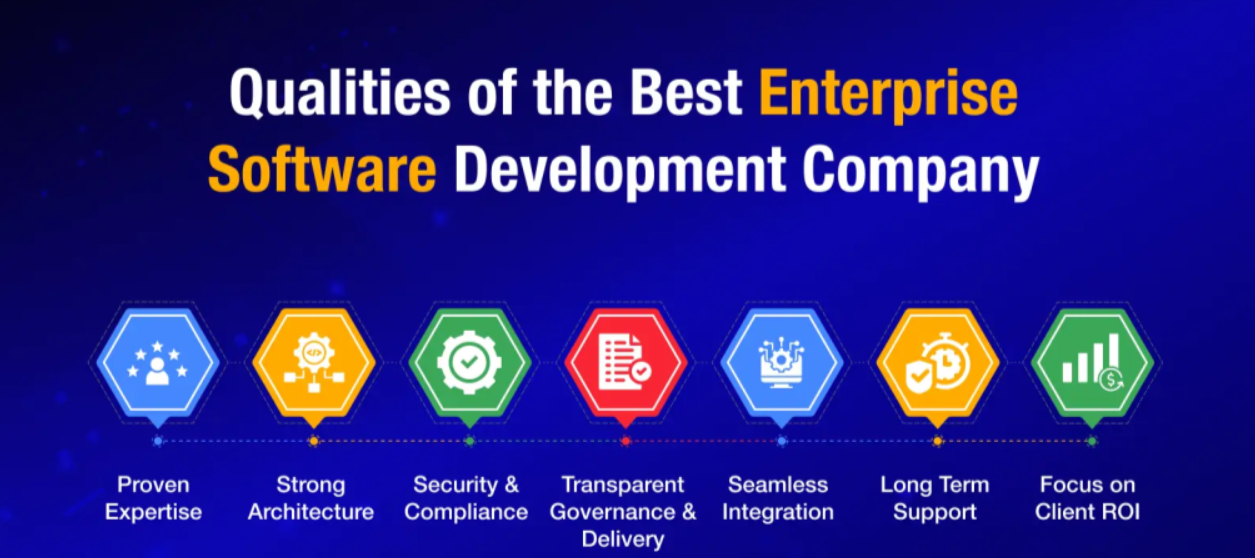
1. Proven Enterprise Expertise and Industry Understanding
65% of tech leaders rated their alignment between business and engineering teams as "strong" when their software partner understood industry requirements.
- Experience with large scale projects
- Strong knowledge of your industry
- Portfolio that reflects real results
- Ability to ask the right questions early
2. Strong Architecture and Engineering Maturity
- Solid cloud engineering skills
- Clean structure that supports growth
- DevOps culture for fast delivery
- Tools that make monitoring simple
3. Security First Mindset and Compliance Readiness
- Awareness of threats and strong safeguards
- Secure coding standards
- Data protection at all levels
- Support with compliance checks
4. Transparent Delivery and Strong Project Governance
- Simple and open communication
- Clear project ownership
- Honest visibility into progress
- Predictable timelines and cost tracking
5. Ability to Modernize and Integrate With Existing Systems
- Smooth upgrades to legacy tools
- Fast and stable system connections
- API skills for easier data flow
- Experience improving old platforms
6. Long Term Support and Continuous Innovation
- Reliable post launch support
- Clear SLAs for response time
- Upgrades that help with future goals
- Regular performance improvements
7. Focus on Business Outcomes and Real Impact
- Alignment with success metrics
- Strong focus on user experience
- Clear plan for adoption and training
- Ideas that support revenue and growth
In-House Team vs Custom Software Development Company
In-House Team vs Custom Software Development Company
| Criteria | In-House Team | Custom Enterprise Software Development Company |
|---|---|---|
| Cost Control | Salaries, benefits, and training create rising costs | Flexible pricing based on project needs |
| Talent & Expertise | Hard to cover all skills | Access to specialists in each area |
| Speed to Market | Slower delivery due to hiring and onboarding | Faster execution with ready teams |
| Scalability | Expansion takes long time | Scale up resources as needed |
| Security Knowledge | May lack advanced security skills | Strong knowledge of secure engineering |
| Innovation Pace | Can fall behind fast-moving tech | Continuous learning and modern practices |
| Tooling & Process | Limited exposure to new methods | Mature delivery frameworks that reduce delays |
| Risk & Accountability | Higher project risk sits inside the company | Shared responsibility and expert guidance |
Real-World Impact
Precision Manufacturing – Custom Shopfloor–ERP Integration
Here are some highlights:
- Drawing validation and approval saw about a 91% efficiency increase, with automated routines handling tasks in seconds.
- Transport guide processing dropped from an average of 30 minutes to about 5 minutes, an 83% improvement in efficiency.
- Traceability of non-conformities improved by around 70%, thanks to better registration and tracking in the custom system.
- This is a strong example of how a tailored application, built around real workflows, can unlock speed, traceability, and smarter operations in manufacturing.
Media & AdTech – Custom Affiliate Management Platform
In a Nutshell
FAQs
They build software tailored to how your business works. They start by understanding your needs. Then they design, develop, integrate, and maintain a solution that fits your workflows. You get tools that match your processes instead of changing your team’s way of working.
You need custom software if off-the-shelf tools force you to change processes often. If you have specific workflows, heavy integration needs, data sensitivity, or scalability demands, custom software can serve you better. It adapts as your business grows and avoids compromises.
he right team includes specialists for all needed roles: backend engineers, frontend developers, QA testers, DevOps/cloud experts, and maybe UX designers, depending on needs.
You want people who have worked together before. That ensures smoother delivery and accountability.
You can ask for their portfolio and past projects in your industry or scale. Look for evidence of:
- well-planned architecture
- secure and stable builds
- successful integrations
- long-term support
Also check if they follow clear processes and keep communication transparent.
A good company works with flexible development methods and good governance. They adapt the scope when needed and keep you updated. They use processes that allow safe changes while maintaining stability and timelines.
No. You don’t need deep tech knowledge to work with a good vendor. You only need to explain what business problem you want to solve. A professional team should guide you through planning, design, and delivery clearly.

Continue reading the blog
with a Tech.us subscription
You’re now subscribed!